
Macon‑Bibb Commission tables decision on 478 Lounge alcohol license after heated debate
Get AI-powered insights, summaries, and transcripts
Subscribe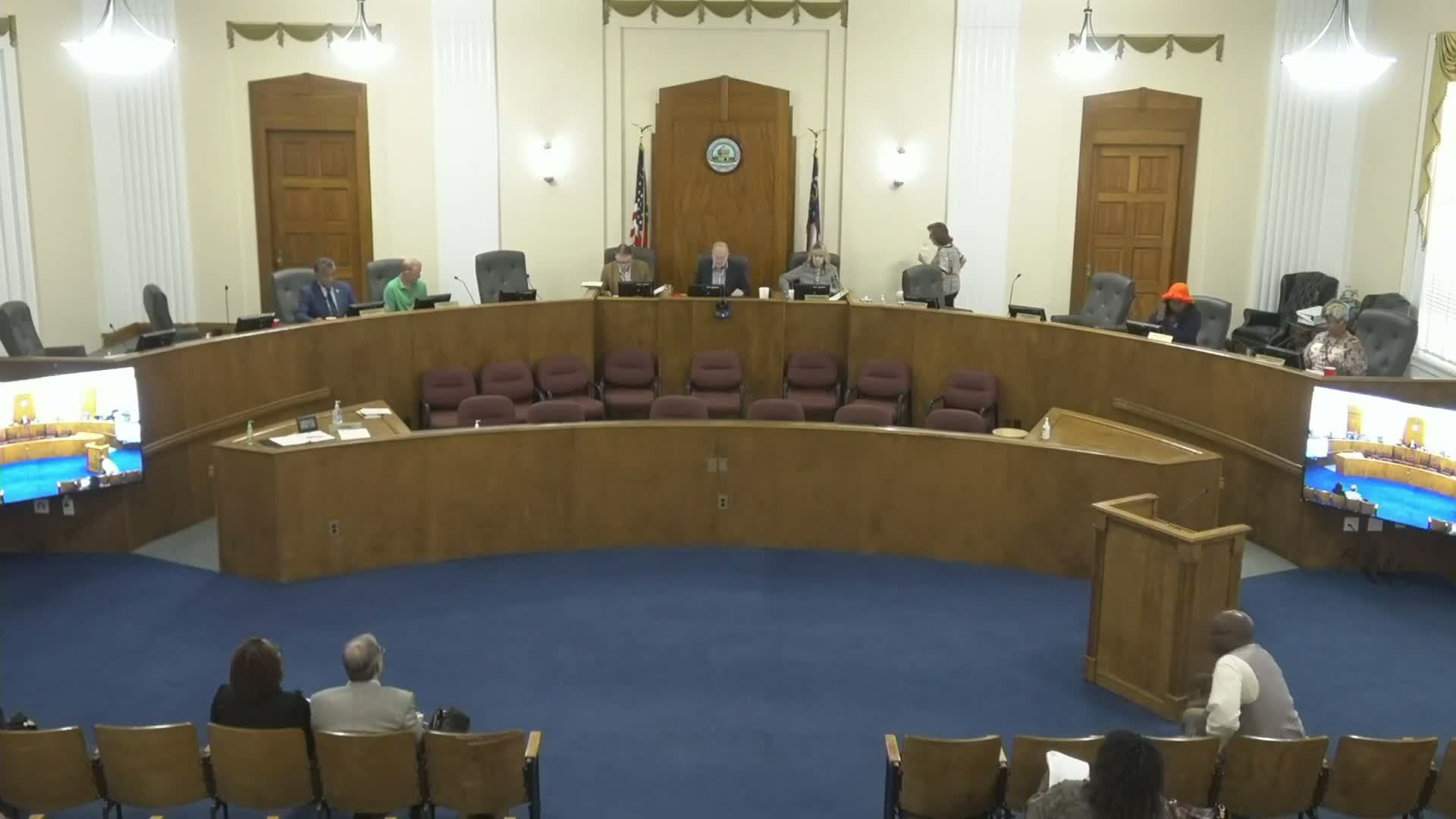
Summary
After a lengthy hearing that revisited a 2022 shooting and conflicting votes at a precommission meeting, the Macon‑Bibb County Commission on Feb. 17 tabled final action on the permanent alcohol license for the 478 Lounge, instructing staff to notify the applicant and attorney to return for further consideration.
The Macon‑Bibb County Commission on Feb. 17 tabled a final decision on a permanent alcohol license for the 478 Lounge after extended debate about public‑safety history and enforcement conditions.
The Committee of the Whole had earlier recommended approval with conditions at its precommission session; that roll call recorded a 5‑3 vote to advance the license with stipulations. At the full commission meeting the item prompted renewed debate over a 2022 drive‑by shooting at the applicant’s prior location that killed a security guard and whether the owner met requirements for security and camera systems.
Attorney (Rickert) summarized the applicant’s account and the record before the commission, saying the applicant had voluntarily surrendered the prior license after the sheriff’s investigation found the bar’s camera system could not retrieve prior footage. "She is most concerned about the safety of her patrons and people in the general vicinity," Rickert said, adding the new Sherling Plaza location is fitted with a system that can both record and retrieve video.
Several commissioners said public safety outweighed other considerations. Commissioner Bailey urged caution, saying the county cannot tolerate another shooting and asking the owner to "be really cognizant" of operations. Commissioner Bryant and others identified a slate of conditions they wanted attached — an operating camera system that can retrieve prior images, certified security inside and outside the premises, prohibitions on outside loitering, and a one‑year probationary review — and said violations should be grounds for revocation.
Procedurally the council grappled with competing motions. The precommission approval (5‑3) advanced the license with conditions; at the full commission an attempt to deny failed procedurally and the body ultimately passed a motion to table the final vote. County counsel clarified that a denial at the full meeting would not prevent the applicant from reapplying immediately and that license fees are nonrefundable; staff later summarized typical annual licensing costs for on‑premises sales as roughly $700–$2,700 depending on beverage type plus a $300 application fee.
The commission directed that the applicant and counsel be notified to appear again for a full discussion at a subsequent meeting. The license matter will return to the commission with the written stipulations to be prepared by the county attorney’s office; commissioners said the sheriff’s office would be the primary agency to monitor compliance.
What happens next: the matter is tabled for a future meeting; the applicant may reapply and must be notified to return with counsel so the commission can complete the final vote.