Get AI Briefings, Transcripts & Alerts on Local & National Government Meetings — Forever.
Senate committee moves to decriminalize suicide after public testimony from mental‑health groups
Summary
HB43 would abolish the common‑law crime of suicide and delay enactment to allow an insurance review; supporters said decriminalization would reduce stigma and aid people seeking mental‑health help, while some faith‑based and other speakers raised concerns about messaging and insurance implications.
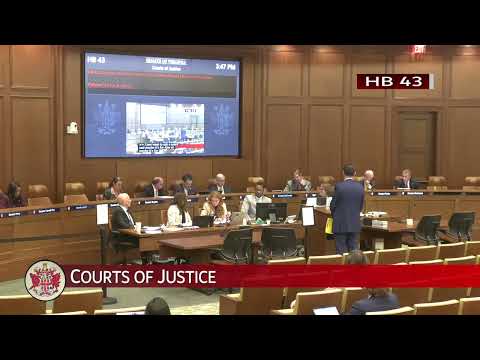
Delegate Simon presented House Bill 43 to the Senate Courts of Justice Committee, describing the measure as abolishing the common‑law crime of suicide and adding enactment language that would delay abolition for one year while the Bureau of Insurance studies potential insurance consequences. "This bill simply we've inherited our common law," Simon said, arguing the criminalization of suicide is an anachronism that can stigmatize grieving families and create barriers to care.
The committee heard several witnesses. Alex Macaulay of the National Alliance on Mental Illness (NAMI) Virginia said the organization supported the bill, arguing criminal penalties stigmatize people and families. "We would submit that it's time to stop stigmatizing these families," Macaulay said. Disability advocates and mental‑health groups also testified in favor, saying decriminalization would encourage people to seek help.
Opponents from faith communities questioned whether removing criminal penalties would harm societal norms and raised insurance‑payout concerns; a speaker cited Virginia Code 38.2‑3106 and argued family benefits would still be paid in most cases. Committee members asked whether decriminalization would impede death investigations or prevent civil risk orders; legal staff and others responded that investigations and civil emergency orders remain available and that decriminalization would not prevent law enforcement from investigating deaths.
After testimony and questions, the committee voted to report HB43 to the next stage. Senators said the bill is not intended to address physician‑assisted suicide, which involves different legal actors and standards.