
Residents urge Wilson County leaders to oppose reported ICE detention facility; ask for formal resolution and transparency
Get AI-powered insights, summaries, and transcripts
Sign Up Free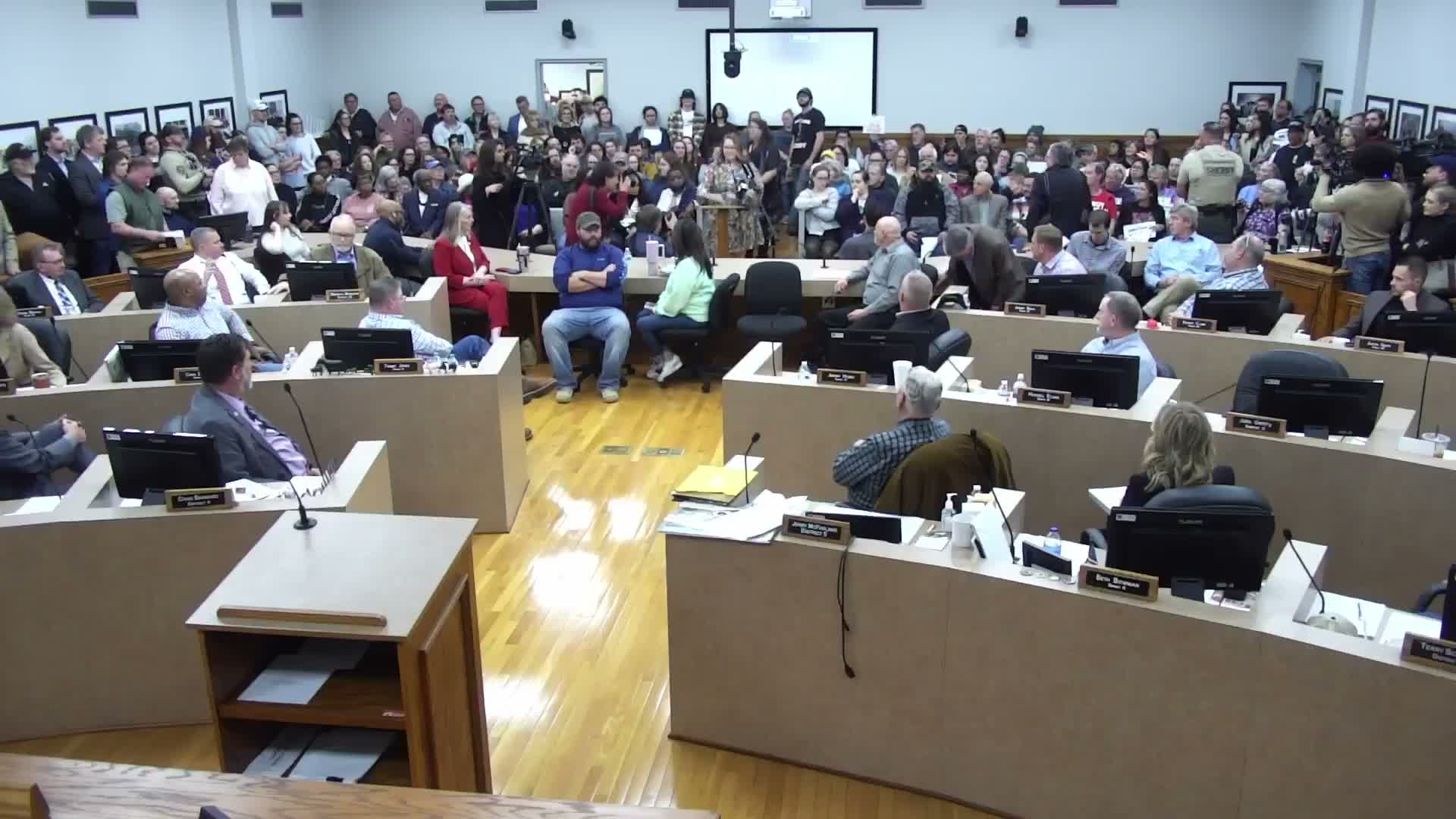
Summary
Dozens of Wilson County residents told county leaders at a Feb. 17 meeting they oppose reports that U.S. Immigration and Customs Enforcement plans a detention facility in Lebanon and called for transparent information and a formal county resolution opposing it.
Dozens of Wilson County residents on Feb. 17 urged county elected officials to oppose reports that U.S. Immigration and Customs Enforcement plans to open a detention facility in Lebanon, saying the community deserves transparent information and formal action even if no purchase has been confirmed.
Speakers at the county commission’s public comment session described a mix of local research, media reporting and first‑hand accounts that, they said, justified immediate attention. "If there's even a possibility this facility could open in Wilson County, the public deserves to know what proactive steps are being taken now," Paige Cook told commissioners, and she asked the body to provide regular updates and to consider a resolution stating that Wilson County does not support placement of an ICE detention facility in the community.
Multiple speakers pointed to a cooperative agreement between the Wilson County Sheriff's Office and federal immigration authorities known as a 287(g) agreement as a reason the community should press for answers. "This agreement agrees that local deputies will be trained and county resources will be spent enforcing immigration," Robert Moxley said, noting he had provided copies of the agreement to the commission.
Others described conditions and harms they associated with ICE detention facilities elsewhere, citing reports of inadequate medical care, deaths in custody, and the separation of families. "These are not violent threats — these are moms at grocery stores," Jennifer Bartlett said, urging commissioners to pass a formal statement opposing a facility. Several speakers described personal encounters or volunteer work at sites with ICE activity to explain their concerns about operations and detainee treatment.
Commissioners and the mayor said they had asked staff and local officials to search property and deed records and had received no confirmation of a sale to ICE or DHS as of the meeting. The mayor reiterated that the county government does not have authority over purchases within the city of Lebanon but said the commission would listen to residents' concerns and share information as it becomes available.
Residents asked for specific actions: publicly recorded updates from county staff, a requirement that county taxpayer dollars not subsidize any facility, participation in any community‑impact studies, and a formal resolution declaring the county’s opposition. Several speakers suggested zoning or tax ordinance changes to discourage a federal facility from locating in the county should the federal government attempt to proceed.
The public comment period closed after roughly three hours of testimony and the meeting moved on to other business. The commission did not vote on any resolution related to ICE at the Feb. 17 meeting; numerous residents said they will return if no formal county action follows.