Get Full Government Meeting Transcripts, Videos, & Alerts Forever!
Get email alerts on the Design Guidelines topic
No spam. Unsubscribe anytime.
Carmel-by-the-Sea planning commissioners endorse steering-committee draft as more usable, call for content audit and clearer fire references
Summary
The Planning Commission favored the steering-committee'revised Design Traditions 1.5 as more usable than the consultant'produced draft and urged a content audit, clearer code cross-references and explicit fire-resilience language before Council consideration.
Carmel-by-the-Sea
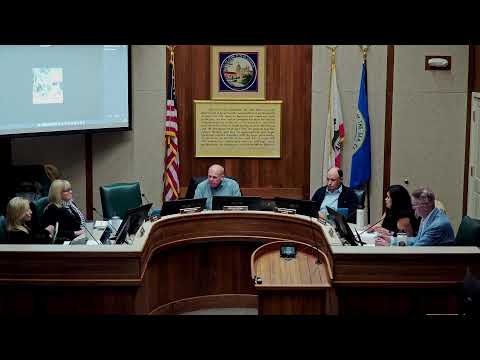
The Planning Commission on a special-call hearing reviewed two competing updates to the city's Design Traditions "1.5" document and told City Council it views the steering committee'draft as a more functional, usable package for future project reviews while urging a formal content audit and clearer cross-references to superior authorities.
The commission's public hearing and staff presentation centered on whether to prefer the consultant-produced Nori Winter draft or the steering committee'refined version, which staff said had been reorganized under six core principles, reduced redundancy and augmented with indexes, hyperlinks and a narrative application form to help applicants explain how projects meet the principles. "The council directed us to come back to the Planning Commission and get feedback on which draft would be more usable for them," staff told the commission.
Why it matters
Commissioners and many members of the public said usability matters because the guidelines serve as a primary interpretive tool alongside the General Plan and Municipal Code. Several speakers also stressed that design guidance must explicitly account for wildfire risk in Carmel's wildland-urban interface. "We strongly urged the city to adopt the 0 to 5 feet defensible space standard, regardless of whether the state mandates it," public commenter Renata Perry said, arguing that local topography and recent reclassification to a very-high fire hazard severity zone demand firmer local steps.
What was decided and what remains open
After presentations and extensive public comment, the commission informally polled members and expressed a clear preference for forwarding the steering committee'draft to City Council as the more usable option. Commissioners stopped short of a formal adoption vote at the hearing; staff and commissioners agreed a formal content audit, a matrix that tracks every change from predecessor documents, and clearer linking to the Municipal Code, General Plan and required Coastal Commission documentation will be prepared before any adoption steps.
Public and professional feedback
Public commenters and local design professionals strongly endorsed the steering committee'version'or at least the approach of local stewardship'while raising discrete content issues. Architect Adam Jeselnik said the draft is "very intuitive" but suggested reversing some image/text placements and enlarging diagrams for readability. Kevin Roose praised the inclusion of fire-hardening criteria but urged the document make explicit how it interacts with "superior documents" such as the General Plan and Municipal Code, and flagged a potentially long Track 2 response timeline he read in the draft.
Steering committee rationale
Victoria Beach and other steering committee members said the revisions aimed to preserve long-standing design principles while making the document easier to use and enforce. Beach listed five focused clarifications in the revised draft (including fences and material-quality language, explicit metal-roof guidance, and glass-use guidance) and said those changes were intended to clarify rather than change the original intent.
Staff follow-up and next steps
Staff committed to preparing the change matrix that a future adoption phase and Coastal Commission review will require, to circulate materials through commissioners' official city email addresses, and to keep a small production group in place to refine content between hearings. The commission's referral will go to City Council for its March meeting (staff noted Council asked for the Planning Commission's directional preference), and staff said more detailed hyperlinking to relevant code sections and a content audit will precede any formal adoption process.
No binding vote was taken at the hearing; the session ended with an informal poll in which most commissioners signaled support for the steering committee draft and at least one commissioner withheld a position pending further information.
What to watch next
Expect the Planning Commission to receive a published change matrix and a staff-led content audit, and for City Council to consider the Commission's preference at its next scheduled review. Further hearings will address any outstanding content conflicts with the Municipal Code, the certified historic context statement, and Coastal Commission expectations.