Get Full Government Meeting Transcripts, Videos, & Alerts Forever!
Get email alerts on the Budget topic
No spam. Unsubscribe anytime.
Avon Grove’s first look at 2026–27 budget flags PCA cost growth and an illustrative 4% tax path
Summary
District finance staff presented a first look at the 2026–27 preliminary budget: a $127.56M draft (5.7% increase) with major drivers including rising PCA costs, charter tuition and salaries; an illustrative 4% tax increase was used to balance the draft but administrators said they aim to reduce that number through further budget work.
Finance director Eric (presenter) provided a “first look” at the 2026–27 preliminary budget, highlighting 2024–25 actuals, 2025–26 year‑to‑date trends and top cost drivers for next year.
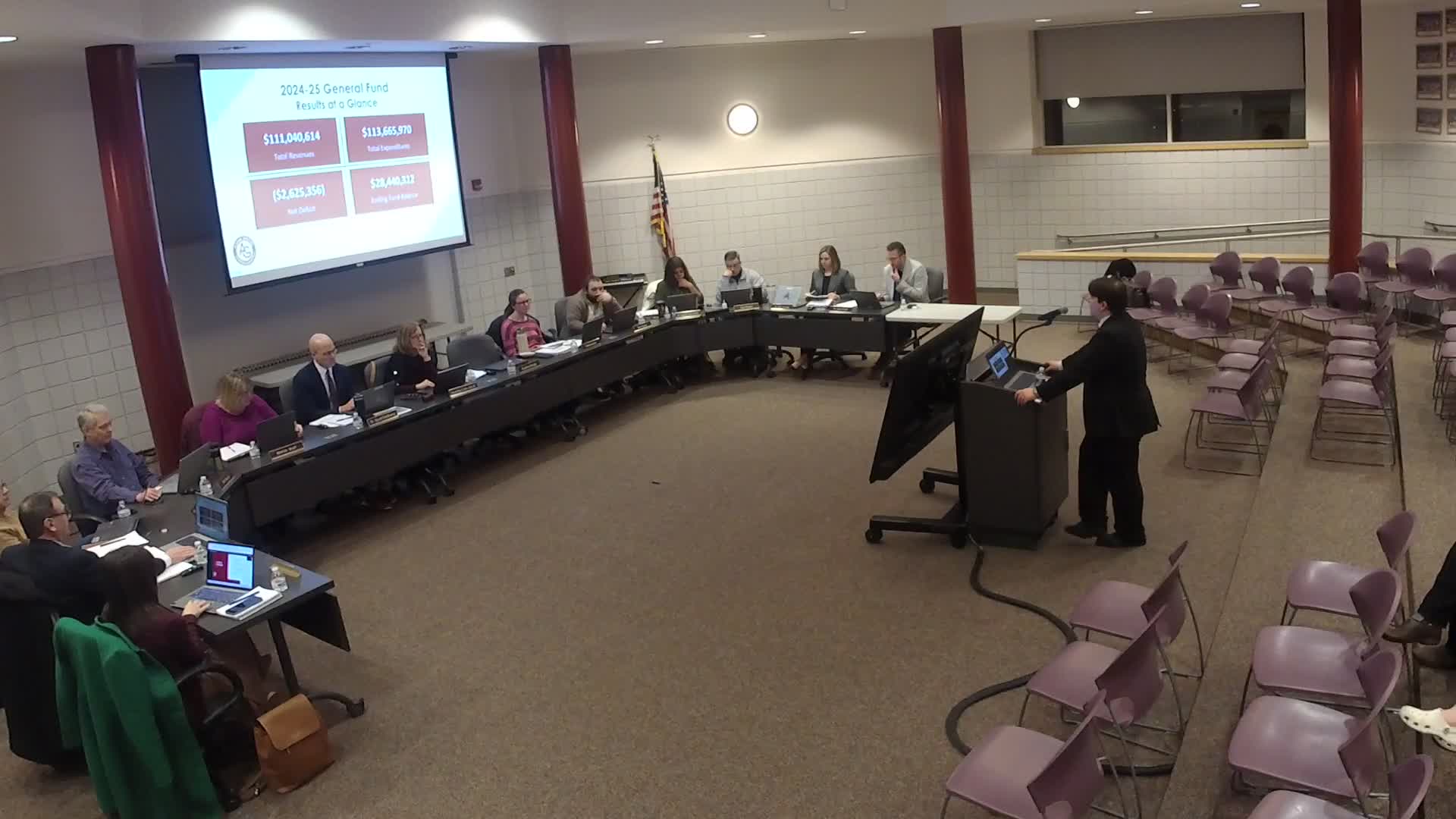
He reported 2024–25 total revenues near $111 million and total expenditures about $113.6 million, leaving a $2.6 million deficit and an ending general‑fund balance of $28.4 million. Key positive variances last year included interest on investments and state subsidy increases tied to the post‑fair‑funding adjustments.
A recurring and significant pressure identified was personal‑care assistant (PCA) costs: administration said that demand and a constrained regional supply pushed the district to contract with third‑party firms, driving PCA expenses roughly $1.3 million over the original budget in 2024–25. The district expects similar pressure in 2025–26 and into 2026–27.
Looking ahead, the district presented a preliminary $127,561,000 budget for 2026–27 (an illustrative 5.68% increase). That draft shows an illustrative 4% tax increase, which administration called “high” and said it plans to reduce through continued budget analysis. Under the 4% scenario, fund balance would fall to about $15.6 million; staff emphasized the number is an initial scenario and that department deep dives will run through March–May.
Other drivers noted were increased charter‑school tuition, transportation contract renewals, projected salary and benefits increases for collective-bargaining agreements, and increases in professional‑services costs including athletic trainers and substitutes. Administration also listed several unknowns that could materially alter the budget projection: contract negotiations, transportation bids, federal and state grant levels, and future changes in interest rates.
Next steps: revenue deep dive Feb. 10, departmental expenditure reviews in March, capital budget in April, and final budget adoption in June. Administrators asked the board to continue engagement while staff work to reduce the draft tax increase.