Get Full Government Meeting Transcripts, Videos, & Alerts Forever!
Get email alerts on the Energy Affordability topic
No spam. Unsubscribe anytime.
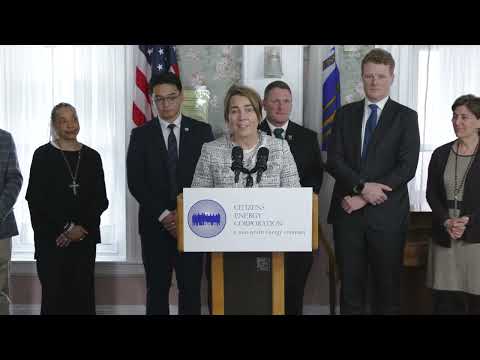
Gov. Maura Healey and Citizens Energy expand winter heating aid for Lowell shelters
Summary
At an event in Lowell, Gov. Maura Healey and Citizens Energy announced an expanded Citizens Energy Shelter Winter Assistance Program and a grant to House of Hope, and the governor urged action on energy legislation aimed at lowering bills while reiterating opposition to utility rate hikes.
At a gathering at House of Hope in Lowell, Gov. Maura Healey and Citizens Energy announced an expansion of the Citizens Energy Shelter Winter Assistance Program, a charitable effort that supplies heating support to shelters and food pantries.
Joe Kennedy of Citizens Energy said the nonprofit has focused for 45 years on reducing energy costs and supporting communities. "Energy innovation and affordability must go hand in hand," Kennedy said, describing programs that support more than 120 facilities across Massachusetts and Rhode Island and noting Citizens Energy has, in his remarks, "donated over $600,000,000 back to the families and the communities we serve." Kennedy also said Citizens Energy will provide a grant to House of Hope to help with heating costs.
House of Hope Executive Director Julie Lemire thanked Citizens Energy for the support and said the facility known as Fletcher serves "up to 31 families at a time," adding that past awards from the program "since 1997" have totaled "over $100,000" to House of Hope (as stated in her remarks).
Gov. Healey framed the announcement as part of a broader effort on affordability. She told the audience she opposes utility rate increases and highlighted recent consumer relief she said the administration has secured: "People are gonna see 25% off their electric bill, 10% off their gas bill" (as stated). She also said her administration has filed legislation designed to bring more energy into the region and remove "unnecessary charges" from customer bills; in her remarks she said the measure "could save rate payers about $13,000,000,000" (as stated).
Rebecca Tepper, the state secretary of energy and environmental affairs, described the draft legislation as a financing model to encourage private investment in transmission and distribution that would allow money to be returned to customers. "We're really looking forward to having the legislature pass that legislation," Tepper said.
Speakers emphasized the long-term contractual nature of many energy projects as a reason the model can finance community reinvestments: Kennedy said many solar programs run 20 years and transmission programs 30 years. Officials urged residents to check whether they qualify for utility low-income discounts and said the partnership model aims to reduce costs while funding nonprofit services.
The event included remarks about housing and healthcare initiatives the governor cited as linked priorities — Healey noted, as part of her remarks, steps on housing supply and said her administration has capped certain co-pays and deductibles (as stated). Organizers said the Citizens Energy grant will allow House of Hope staff to redirect resources to client services. The administration and Citizens Energy said the proposed financing approach will require legislative approval; the bill's details and the claimed savings cited at the event were presented as statements by speakers and have not been independently verified.
The announcement did not include any formal vote or regulatory decision. Officials said they will seek legislative action on the proposed energy financing changes and encouraged residents to follow up with utilities about discount programs.