
Committee hears support and concerns for adding two tribal seats to Board of Natural Resources
Get AI-powered insights, summaries, and transcripts
Subscribe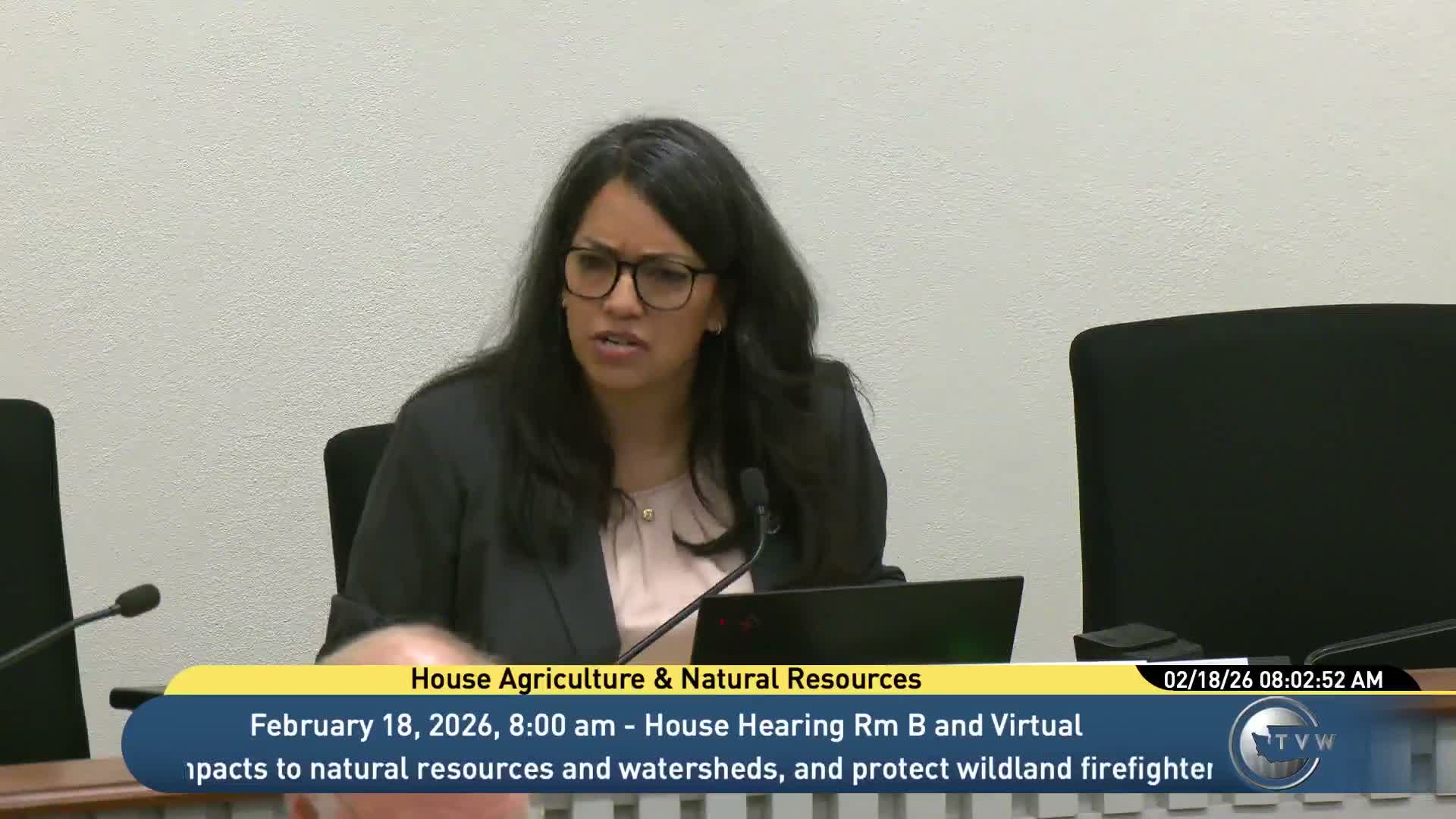
Summary
The House Agriculture and Natural Resources Committee heard testimony Feb. 18 on Engrossed Substitute Senate Bill 5838, which would add two tribal representatives to the Board of Natural Resources. Tribal leaders and DNR staff urged the change as a recognition of stewardship; county officials warned it could affect fiduciary duties for trust lands.
The House Agriculture and Natural Resources Committee heard testimony Feb. 18 on Engrossed Substitute Senate Bill 5838, which would add two tribal representatives — one east and one west of the Cascades — to Washington’s Board of Natural Resources.
Sen. Claudia Kaufman (D-47), a member of the Nez Perce tribe and the bill’s prime sponsor, said the change is intended to strengthen stewardship and bring tribal expertise into state decisions about public lands. “This is a respectful and collaborative appointment process,” Kaufman said, adding that tribal representatives would bring “deep knowledge, proven stewardship, and long-term commitment” to habitat, water and cultural-resource protection.
Lily Smith, staff to the committee, told members the bill requires the governor to solicit nominees from federally recognized tribes and from tribes with treaty-ceded lands and sets four-year terms for the new seats. Glenda Breiler, Director of Tribal Relations at the Department of Natural Resources, testified the change “recognizes those contributions in a real and substantive way, with a seat at the table,” and said the amendment does not replace government-to-government consultation.
Several tribal officials described long-term tribal forest-management programs and said tribal representation would improve forest resilience and cultural-resource protections. Jared Michael Erickson, chairman of the Confederated Tribes of the Colville Reservation, said tribes have managed extensive forested acreage and provide models of resilient land management.
County and timber-industry witnesses supported tribal rights but raised procedural and fiduciary concerns. Paul Jewell, representing the Washington State Association of Counties, said counties were not consulted on the version that expanded representation from one tribal member to two and asked the committee to consider how adding two members to a six-person board could change decision-making dynamics. Josh Reese (Skagit County/Clallam Economic Alliance) and other county witnesses emphasized that counties and school districts are beneficiaries of more than 600,000 acres of state-managed trust lands, and they urged discussion about how the bill could affect the board’s obligation to generate revenue for beneficiaries.
Committee members asked whether adding tribal members would undermine government-to-government consultation; Kaufman and DNR witnesses said it would not. Kaufman told members the addition is “additive” and would not change the state’s government-to-government obligations.
The committee did not vote on the bill during the hearing. Chair Reeves said the committee will continue related work in a scheduled Friday work session with the Department of Natural Resources and directed members who want amendments to coordinate with staff before the executive calendar next week.