
Bill would close CETA loopholes by bringing ports and some new generators under clean‑electricity rules
Get AI-powered insights, summaries, and transcripts
Subscribe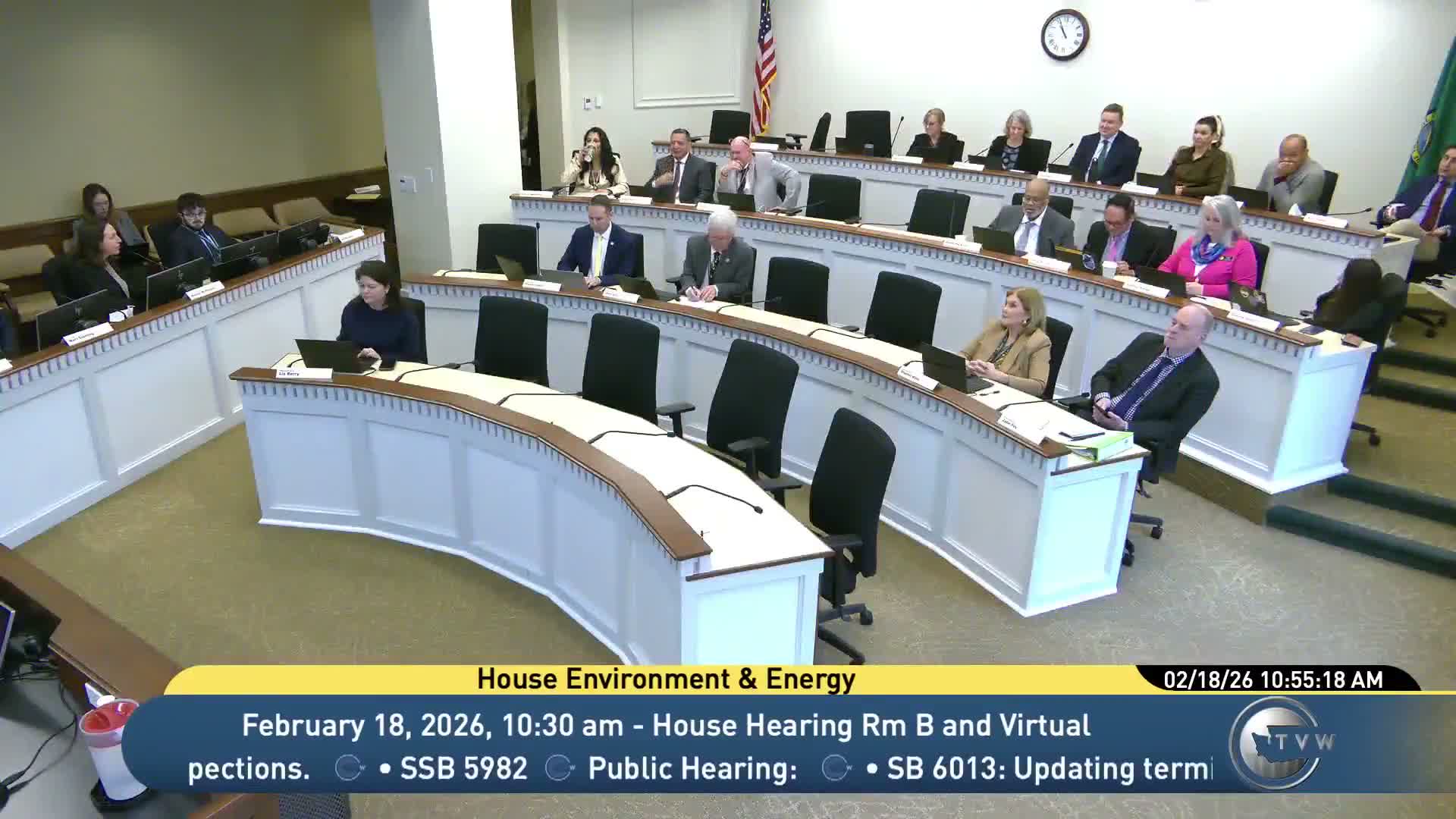
Summary
Lawmakers heard Substitute Senate Bill 5,982 to expand the Clean Energy Transformation Act's coverage to port districts that distribute electricity and to clarify when nonresidential customers become "affected market customers"; supporters said it preserves the integrity of Washington's 100% clean electricity goal while industry warned about unintended impacts on cogeneration and resource adequacy.
Substitute Senate Bill 5,982 would amend the Clean Energy Transformation Act (CETA) to clarify which entities are subject to the state's clean‑electricity standards, including making port districts that distribute electricity consumer‑owned utilities for CETA purposes and adjusting the definition of affected market customers.
Megan McFadden, staff to the committee, told lawmakers that the bill aims to close ambiguities in the 2019 law that did not anticipate some port districts or nontraditional suppliers acting as electricity generators or distributors. Under the bill, ports that distribute electricity would be treated as consumer‑owned utilities and subject to CETA's greenhouse‑gas‑neutrality and reporting requirements; the bill also directs the UTC to adopt reporting rules for affected market customers and allows certain waivers for de minimis backup generation and for ports' interim reporting timelines.
Senator Victoria Hunt, the bill's sponsor, said the bill responds to port interest in meeting large loads—especially new data centers—and ensures any new electricity generation follows the state's existing clean‑electricity policy. Hunt emphasized exclusions for cogeneration and public utility districts (PUDs) that serve a single customer if they consistently receive all their power from the Bonneville Power Administration.
Environmental groups, including Climate Solutions, Washington Conservation Action and the Sierra Club, strongly supported the bill, calling it a straightforward measure to maintain Washington’s 100% clean electricity commitment by 2045 and to prevent behind‑the‑meter or other arrangements from allowing fossil generation to escape CETA.
Industry witnesses testified with a mix of caution and opposition. Associations representing large industrial customers and utilities warned the bill could inadvertently subject existing cogeneration and self‑generation contracts to CETA in ways that would complicate long‑standing arrangements and potentially affect market behavior. They urged retaining language that protects certain preexisting facilities and leaving room to address resource adequacy and confidentiality concerns.
Department of Ecology staff said expanding the definition of consumer‑owned utilities could increase the pool of no‑cost allowances under the Climate Commitment Act and recommended pairing the bill with complementary language to avoid long‑term allocation impacts that would reduce auction revenue. Department of Commerce and other technical witnesses said the bill reflects evolving market structures and would help preserve the law's intent.
Witnesses and members discussed a recent 12‑megawatt gas plant in Grant County as a practical example of how project arrangements can complicate coverage questions; testimony focused on whether wheeling and PUD involvement already make such projects subject to CETA and how temporary generation used to address transmission constraints should be treated.
Supporters urged passage to close coverage gaps; opponents asked for targeted fixes that preserve negotiated protections for cogeneration. The committee did not take a vote during the session.