Get Full Government Meeting Transcripts, Videos, & Alerts Forever!
Get email alerts on the Firearms Community Custody topic
No spam. Unsubscribe anytime.
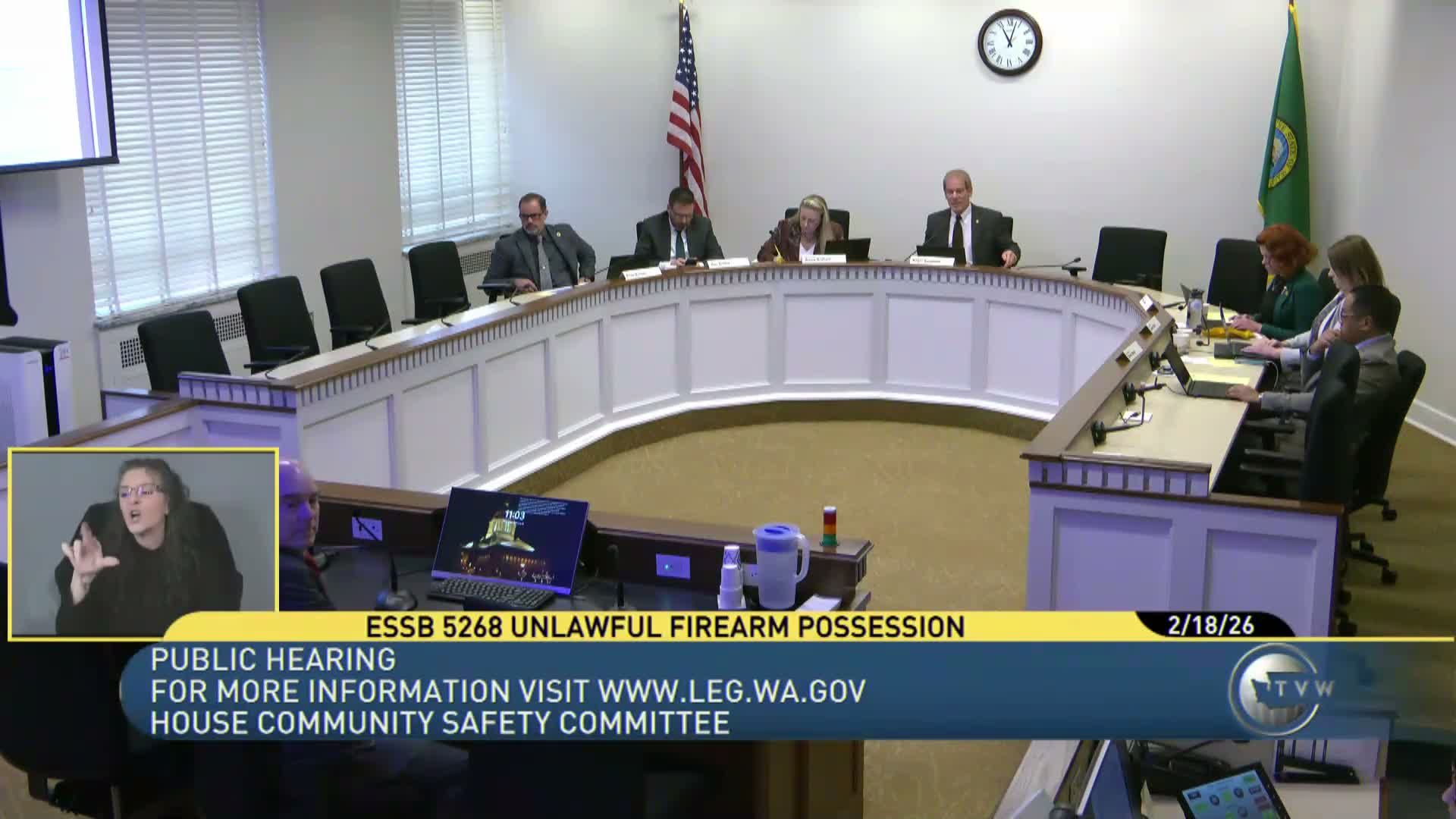
Committee considers mandatory community custody for unlawful firearm possession
Summary
2ESSB 52 68 would require courts to impose one year of community custody for unlawful firearm possession regardless of gang membership; sponsors argued it improves reentry and prevents escalation, while the Sentencing Guidelines Commission urged specificity to avoid over‑supervising nonviolent offenders.
Corey Patton briefed that second engrossed substitute Senate Bill 52 68 requires courts to impose one year of community custody when sentencing a person for unlawful possession of a firearm regardless of whether the person is a criminal street gang member or associate. Patton explained community custody is supervised release in the community under the Department of Corrections following confinement; the bill removes the gang‑member condition that currently triggers the one‑year requirement.
Senator Keith Wagner (39th District) said the bill passed the Senate unanimously last year and that mandatory community custody for unlawful possession is a modest, evidence‑based step to increase supervision and accountability. He told the committee: "People who possess a gun unlawfully are up to no good... so what's happening now is the courts and prosecutors have to triage because they are backlogged and these folks are just going on their merry way until the next time."
Support witnesses included James McMahon, who urged an amendment to ensure the Department of Corrections cannot 'screen out' court‑ordered supervision (citing a statute identified in testimony), Russ Brown of the Washington Association of Prosecuting Attorneys who expressed strong support, and Carrie Ann Yesler of the Sentencing Guidelines Commission, who supported the changes but cautioned that unlawful possession can be tied to low‑level nonviolent offenses and recommended more individualized application based on criminal history to avoid harm from unnecessary supervision.
Members questioned resource implications; witnesses noted DOC supervision resources have long been underfunded, referenced a workload study showing understaffing and heavy caseloads, and recommended policymakers consider resource implications if supervision is to be implemented as required by courts. The committee concluded public testimony and left the bill for executive action the next day.