Get Full Government Meeting Transcripts, Videos, & Alerts Forever!
Get email alerts on the Policing Hospitals topic
No spam. Unsubscribe anytime.
Bill would codify community policing at state psychiatric hospitals and cap biennial funding
Summary
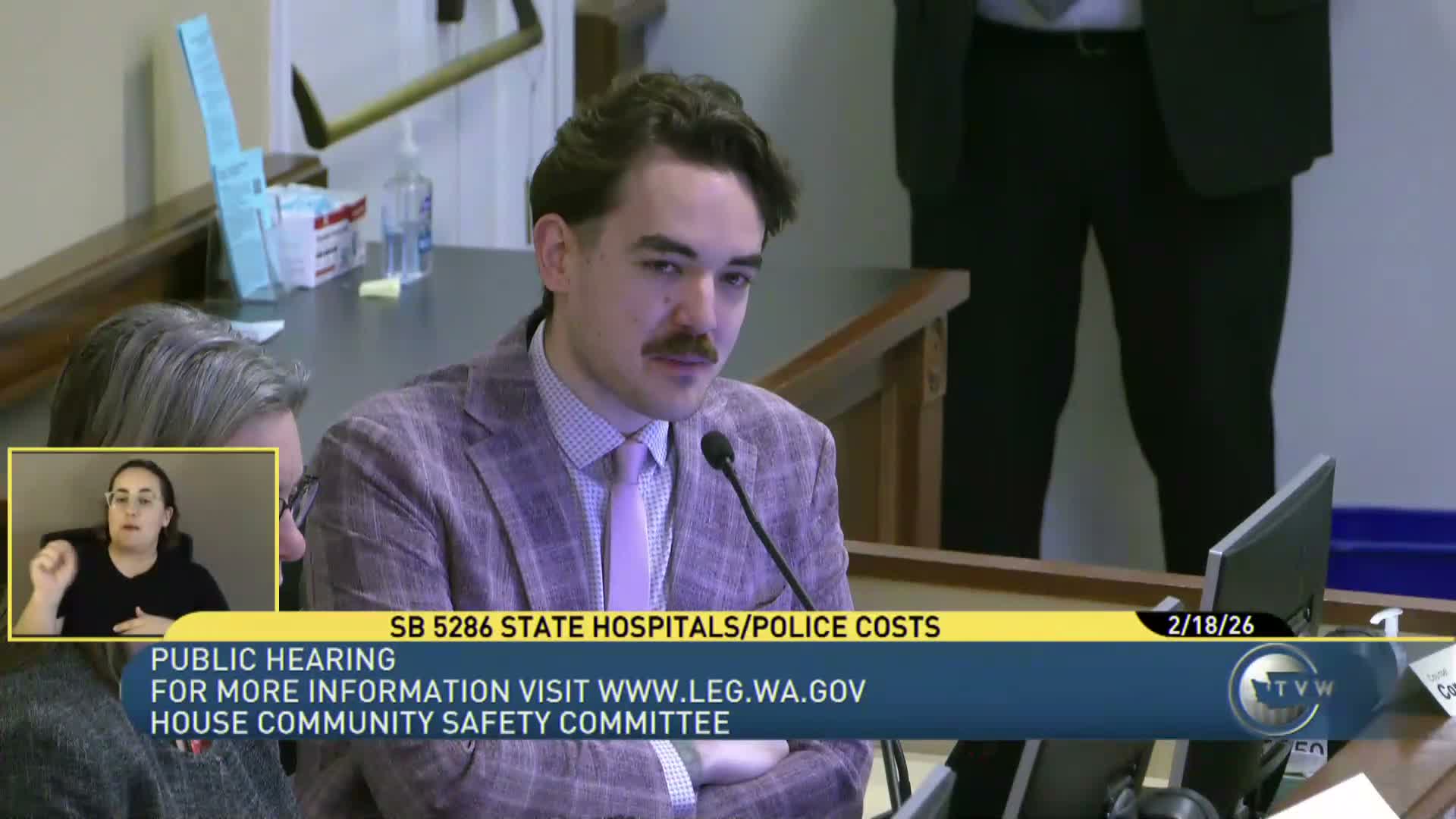
SB 52 86 would formalize community policing partnerships between DSHS and the cities of Lakewood and Medical Lake to support policing at Western and Eastern State Hospitals, require DSHS to report annually, and cap funding at $750,000 per facility per biennium; local officials said the programs reduced calls and improved safety.
Corey Patton, staff to the committee, briefed that Engrossed Senate Bill 52 86 recognizes existing community partnership programs between the Department of Social and Health Services (DSHS) and the cities of Lakewood (Western State Hospital) and Medical Lake (Eastern State Hospital), requires annual funding amounts to be set in the biennial budget but limits funding to no more than $750,000 per facility per biennium, and directs DSHS to collect data and submit an annual report to the Office of Financial Management and the Legislature by Dec. 1 each year.
Senator Jeff Holy (6th District) said the bill previously passed the Senate unanimously, explained the cap was added to give appropriators certainty and urged support so the partnership can continue without getting stuck in appropriations. Paul Bokey, mayor of Lakewood, testified the city’s community policing program at Western State Hospital has "reduced calls for police service at the hospital by 40%," credited the program with improving safety for residents and staff, and asked the committee to codify the program. Mayor Terry Cooper of Medical Lake said the city modeled its program after Lakewood, has received funding in prior biennia and urged statutory recognition to avoid repeated budget requests.
The committee heard the staff and local testimony and indicated intent to move the bill forward for executive action.