
Washington Senate adopts resolution acknowledging Executive Order 9066 and remembering Japanese American incarcerees
Get AI-powered insights, summaries, and transcripts
Subscribe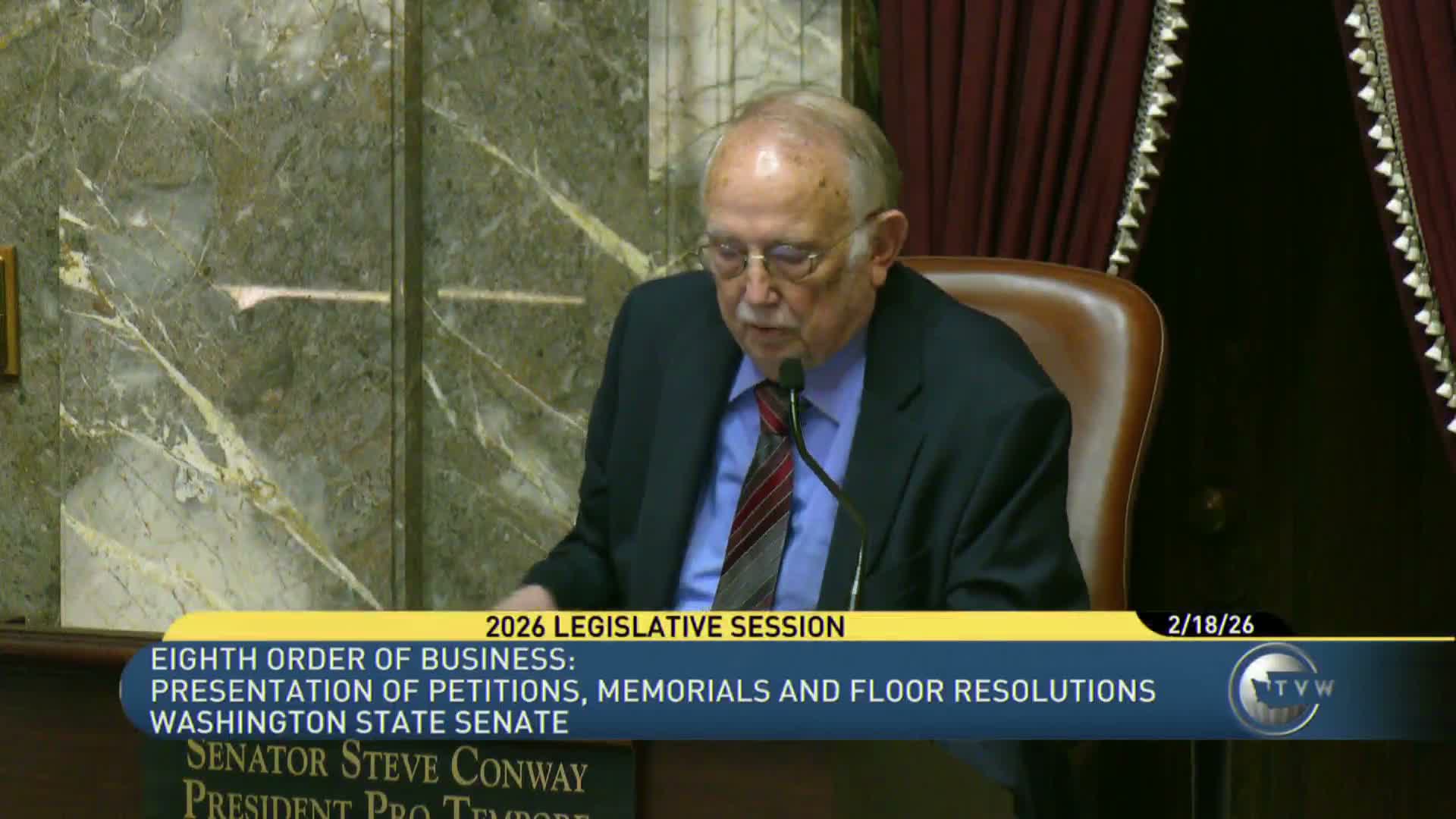
Summary
The Washington State Senate adopted Senate Resolution 8687 acknowledging President Franklin D. Roosevelt’s Executive Order 9066, memorializing Japanese American veterans and incarcerees and transmitting copies of the resolution to community organizations.
The Washington State Senate on the floor adopted Senate Resolution 8687 acknowledging the signing of Executive Order 9066 and recognizing Japanese American veterans and people who were forcibly removed and incarcerated during World War II.
Senator Hasegawa, who moved adoption, recounted his family’s experience and the living conditions at temporary holding sites: “They were citizens of The United States, yet they were denied due process and imprisoned for 3 and a half to 4 years,” he said. The resolution’s text, read on the floor by the secretary, noted that more than 120,000 persons of Japanese ancestry were removed from the West Coast and cited specific history including Camp Harmony and Minidoka.
The resolution recounts historical findings, including the 1982 Congressional Commission on Wartime Relocation and the Civil Liberties Act of 1988, and notes military service and honors earned by Japanese American units and veterans. It directs the Secretary of the Senate to transmit copies to named organizations, including the Nisei Veterans Committee, Densho, the Japanese American Citizens League, the Japanese Cultural and Community Center of Washington State, and the Wing Luke Museum of the Asian Pacific American Experience.
Several senators spoke in support. Senator Short said the annual recognition is important so future generations learn from the past, and the President of the Senate noted historians characterize the incarcerations as among the worst violations of civil rights in U.S. history. After floor remarks, the President put the question; senators responded “aye,” the President declared “The ayes have it,” and the resolution was adopted.
The resolution is ceremonial: it expresses the Senate’s acknowledgment and remembrance and transmits copies to community groups. The action did not create new law or change statutory authority; it serves as an official recognition and a call to remember the harms of wartime removal and incarceration. The Senate proceeded to other business following the unanimous floor adoption.