
Legislature considers reestablishing joint select committee on civic health
Get AI-powered insights, summaries, and transcripts
Subscribe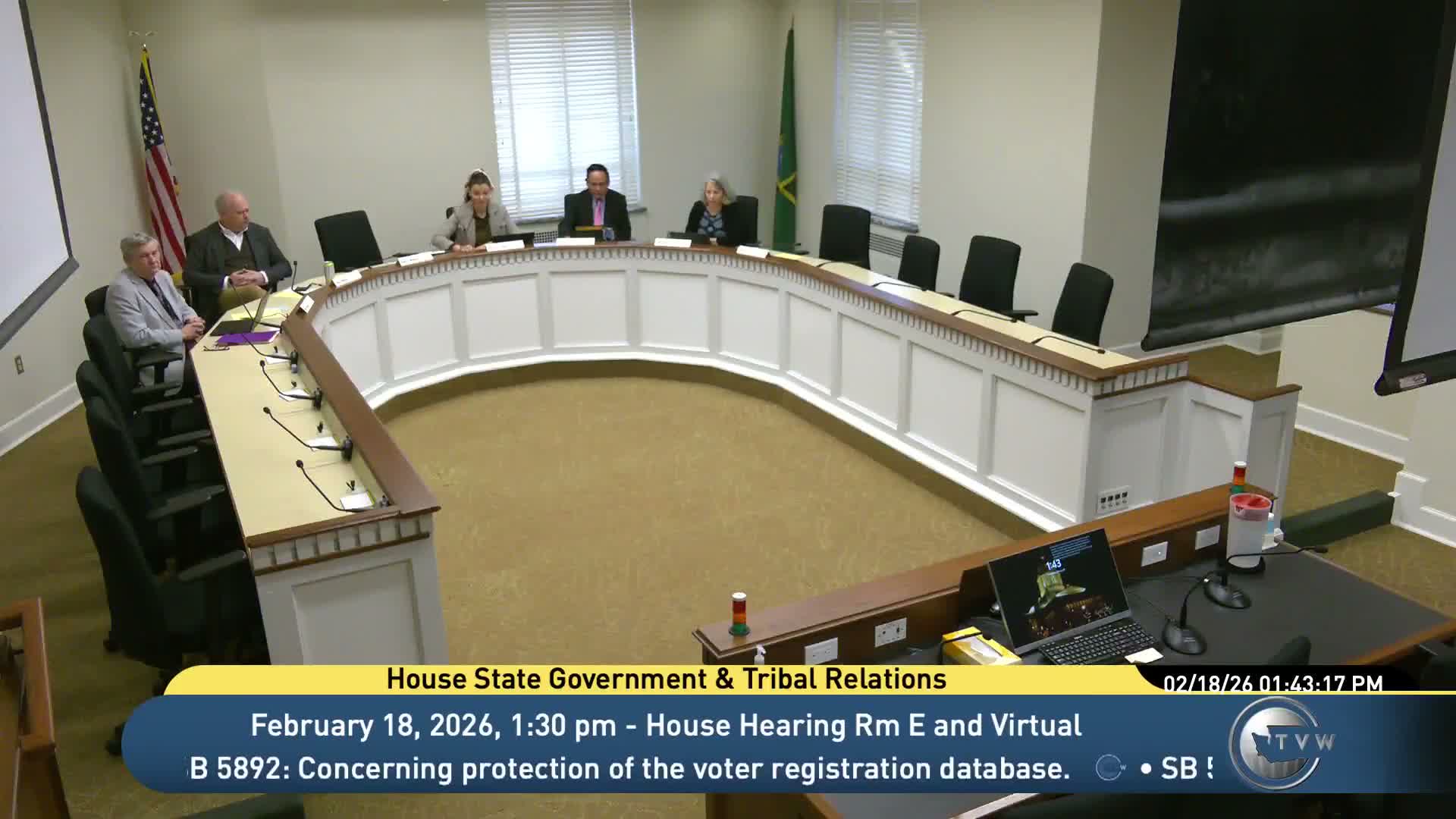
Summary
Senate Concurrent Resolution 8406 would reestablish the Joint Select Committee on Civic Health, expand legislative membership, and require reports through January 2029; sponsors and the lieutenant governor said the work promotes civil engagement and cross-partisan collaboration.
The State Government and Tribal Relations Committee heard Senate Concurrent Resolution 8406, a proposal to reestablish the Joint Select Committee on Civic Health and expand its legislative membership.
Committee staff summarized the resolution's provisions: it would reestablish the joint select committee created after a 2023 Project for Civic Health, add one legislative member from each of four legislative 'corners' (expanding membership), require periodic reports to the Legislature, and terminate the committee in January 2029. The Lieutenant Governor's office would provide most staff and expenses, while travel reimbursement for legislators would be handled by the chambers.
John Lovic, who identified himself as representing the 44th District, described the extension as an opportunity to continue previous work and to set "a positive and productive example of civic health." A speaker representing Mary Dye of the 9th Legislative District recounted how the committee modeled civil engagement and cited international examples discussed during meetings.
Lieutenant Governor Denny Heck, testifying in support, said the committee's work complements the Project for Civic Health and cited partner institutions — including the Evans School, the Ruckelshaus Center and the Henry M. Jackson Foundation — that informed the committee's recommendations. "The principles that govern both the Project for Civic Health and the Joint Select Committee are pretty straightforward," Heck said, urging respectful engagement, seeking common ground and constructive disagreement.
Representative Walsh raised a question about institutionalizing civic health, asking whether formally creating a committee might stifle informal civic activity. Heck and other supporters said the committee's trainings, surveys and convening power strengthen democratic practice and help lawmakers learn how to disagree respectfully.
A later witness, Anthony Mixer, spoke in favor of the resolution and urged lawmakers to "disagree better" and sustain dialogue across political differences.
The committee closed testimony without taking a final vote; the resolution will remain under legislative consideration.