
Lawmakers hear bill to extend moratorium on Lakeland Village records, change archival access
Get AI-powered insights, summaries, and transcripts
Subscribe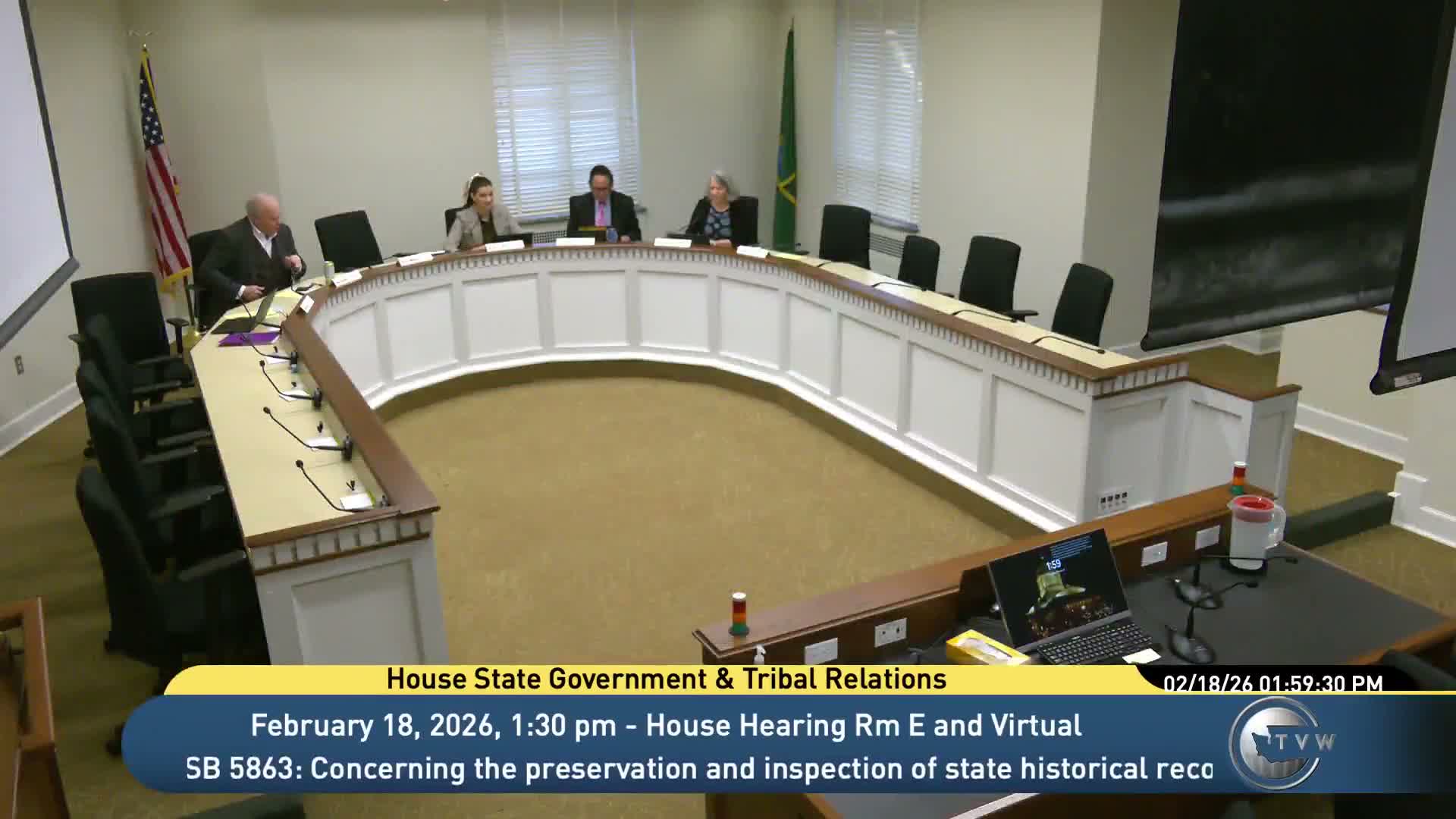
Summary
Senators and witnesses endorsed SB 5863 to extend a moratorium on destroying records and artifacts from Lakeland Village to fiscal 2030 and to make transferred restricted records open after 75 years without a separate archivist determination; testimony emphasized preservation for historical accountability.
The State Government and Tribal Relations Committee heard testimony on Senate Bill 5863, which would extend a moratorium on the destruction of documents and artifacts identified in a preservation plan for Lakeland Village through fiscal year 2030 and change archival access rules for restricted records.
Senator Claudia Kaufman, the bill's prime sponsor, told the committee the measures are about stewardship and accountability. "Preserving these records is not just administrative task, it is an act of respect," she said, adding the records document the lives of people who lived at Lakeland Village and merit careful preservation and study.
A staff summary from committee counsel said SB 5863 makes two principal changes: it extends the current prohibition on destroying records identified in the Lakeland Village preservation plan until fiscal 2030, and it amends state archives rules so that restricted records transferred to the archives become open to inspection and copying after 75 years without requiring a separate determination by the archivist.
Witnesses emphasized the historical and human importance of the materials. Tasha Lee, a UW Bothell graduate student and constituent, said the records include letters, journals, photographs and personal belongings that document daily life and harms such as forced sterilizations and family separations; she warned that destruction would erase more than 7,000 people’s lives from the historical record. "When records are destroyed, we lose evidence, accountability, and the ability to do better," Lee said.
Stacy Dim, executive director of The Arc of Washington State, testified the bill is a practical step that will allow historians, family members and people with disabilities to examine past treatment and policies. Self-advocate witnesses, including Sean Latham, urged lawmakers to preserve materials so future researchers and policy makers can learn from institutional history.
Senator Kaufman told members there are roughly 75 years’ worth of records identified for preservation and said agencies including the Department of Social and Health Services, the Secretary of State, and the Department of Archaeology and Historic Preservation have worked to create a preservation plan and inventory.
The committee closed testimony without taking a final vote; the measure remains under consideration. The bill would leave decisions about digitization, inventory and long-term access to the preservation process and to the agencies identified in the plan.