Committee Hears Childcare Providers Urge Better Data on Cost of Quality; SB 5,500 Would Add Cost Studies to DCYF Report
Loading...
Summary
Engrossed substitute SB 5,500 would require DCYF’s biannual market-rate report to include a current cost-of-quality childcare study developed with an early educator design team; providers said accurate cost data is necessary to set subsidy rates that support quality care.
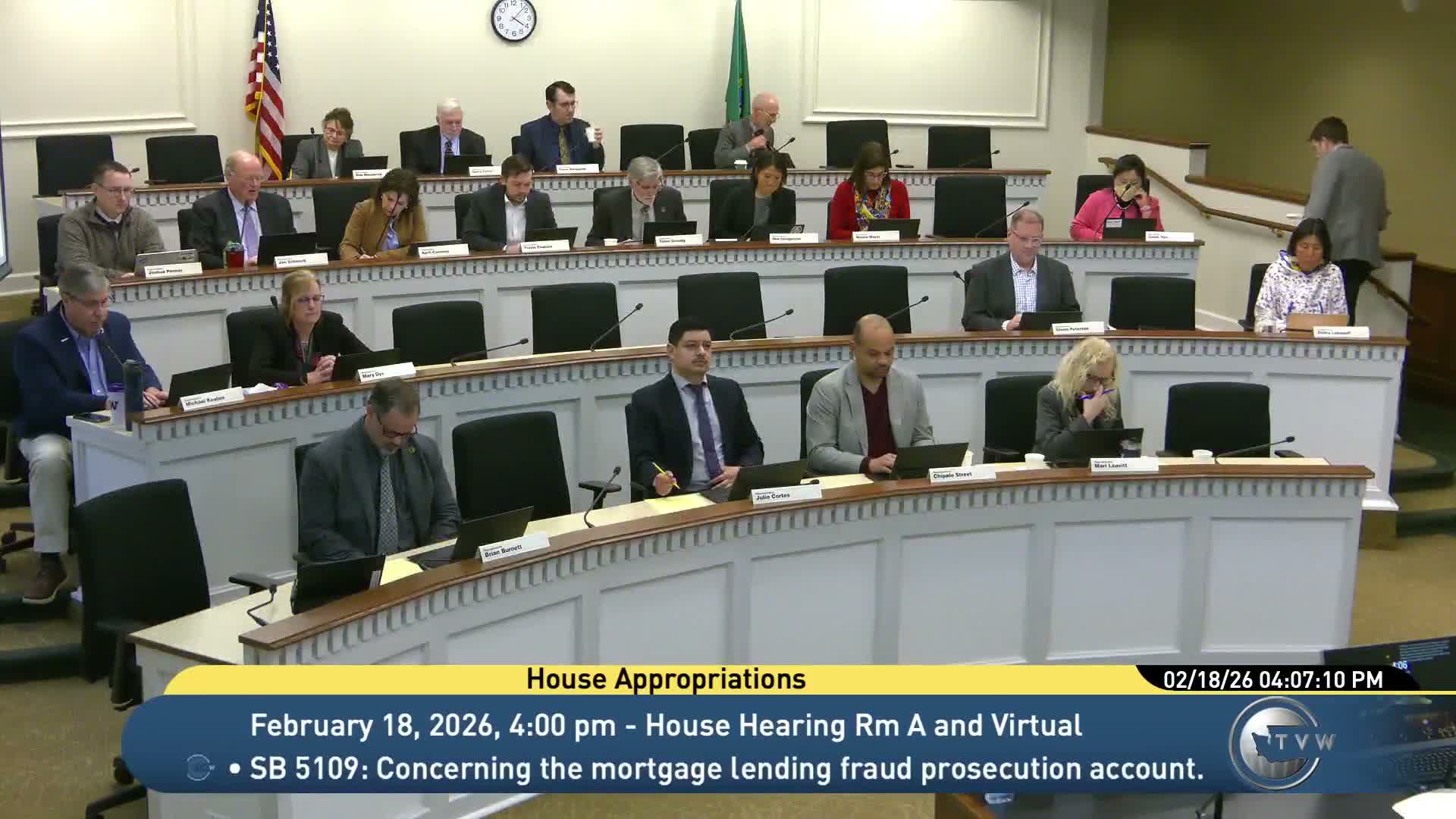
The Appropriations Committee received a staff briefing and public testimony on engrossed substitute Senate Bill 5,500, which would require the Department of Children, Youth, and Families (DCYF) to include a cost-of-quality childcare study alongside its market rate survey.
Jordan Clark, committee staff, said the bill directs DCYF to use a cost estimation model that includes current staff salaries and benefits and other fixed costs identified by an early educator design team. The fiscal note notes minimal survey costs—DCYF estimates about $15,000 in the current biennium to add questions and analysis.
Jennifer Ziegler of Child Care Aware of Washington State, testifying in favor, said the existing market rate survey does not capture the full cost of delivering high-quality care. “This legislation simply incorporates some of the specific elements from that conversation,” she said, referring to the practitioner design team.
Early-education design-team members also testified. Desiree Hall, a childcare center owner, told the committee the bill is cost-neutral in that it updates reporting and does not by itself guarantee new spending: “I am asking you to please honor the work that my team and I and all child care providers in Washington do by passing Senate Bill 5,500 into law.” Kira Bauer, a Spokane provider, described operational benchmarks for healthy centers—payroll of roughly 55–60% of revenue and a modest reinvestment margin—and said many providers do not meet those targets.
The committee closed the public hearing and moved to other items; no committee action occurred at this session.