
Panel splits on expansion of offenses for fabricated sexual images of minors
Get AI-powered insights, summaries, and transcripts
Subscribe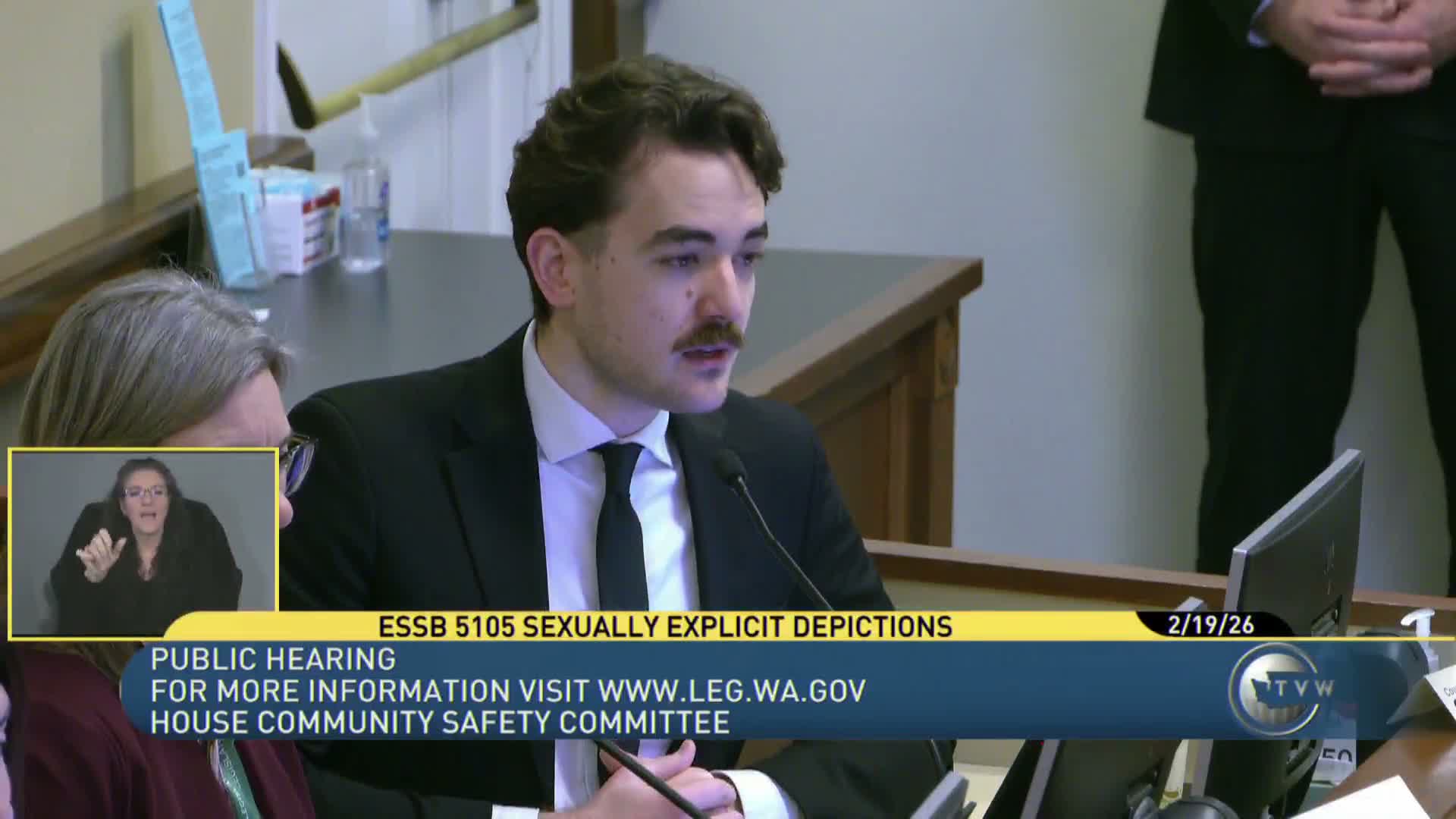
Summary
Prosecutors, the attorney general and law‑enforcement groups urged expanding criminal liability and extending the statute of limitations, while defense advocates and sentencing authorities warned of First Amendment overbreadth unless obscenity and 'actual minor' language are carefully limited.
Second engrossed substitute Senate Bill 5,105 would expand criminal liability for fabricated depictions of minors that are obscene regardless of whether a minor is identifiable, adjust defenses and immunities, and raise the felony statute of limitations from 3 to 10 years.
Staff and prosecutors said advances in digital technology and AI have increased fabricated or altered explicit images that frustrate identification of victims and hamper prosecution. Cory Patton (committee staff) summarized the bill’s three core changes: (1) include obscene fabricated depictions even when a minor is not identifiable; (2) align defenses and immunities for fabricated depictions with limited exceptions; and (3) extend the statute of limitations to 10 years.
Supporters including the Attorney General’s Office and the Association of Sheriffs and Police Chiefs argued the changes close a gap where digitally altered images evade accountability. John Hillman, chief of the Criminal Justice Division for the Attorney General’s Office, said the bill “promotes public safety by removing barriers to the prosecution of those who take pleasure or profit from the exploitation of children.”
Multiple defense and civil‑liberties witnesses, the Sentencing Guidelines Commission and public defenders raised First Amendment concerns and cited Ashcroft v. Free Speech Coalition, urging the committee to ensure the bill preserves constitutional limits. Ramona Brandes and others said a clause that removes the requirement to establish that an actual minor exists could repeat errors struck down in prior federal cases unless limited to obscene material that meets the Miller test.
King County Deputy Prosecuting Attorney Laura Harmon responded that obscenity language and the Miller standard had been added to address constitutional issues and that subsequent federal statutory approaches that include obscenity have been upheld; she urged the committee to proceed with the current drafting and offered to meet with members on technical fixes.
Committee members said they will reconvene to delve further into First Amendment questions and clause drafting before taking final action.