New Haven committee advances plan to acquire contaminated English Station site for public park
Loading...
Summary
After hours of testimony, the Community Development Committee voted to advance a proposal authorizing city staff to pursue acquisition of English Station/Ball Island (510 and 510A Grand Ave) — including eminent domain as an option — to enable remediation and long‑term reuse as a waterfront park and recreation site.
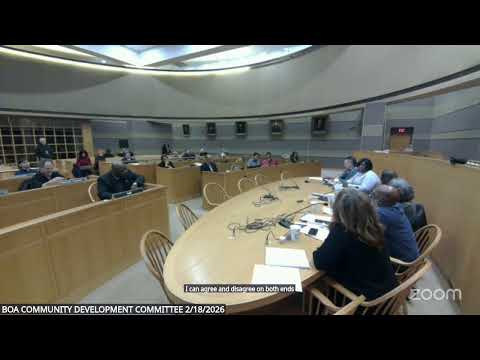
The City of New Haven’s Community Development Committee voted Wednesday to advance a proposal that would give city staff authority to pursue acquisition — and, if necessary, eminent domain — of the former English Station power plant at 510 and 510A Grand Avenue, a polluted 8.6–8.9 acre island in the Mill River watershed. The move clears the way for further negotiations and for the city to seek the environmental protections needed before taking title.
City economic development officials and their consultants framed the acquisition as a necessary step to resolve a long-running cleanup dispute between United Illuminating (UI) and state regulators and to put the property to a public purpose. “This is an early phase,” Economic Development Administrator Michael Scatelli told the committee, urging members to consider the acquisition in the context of full remediation and neighborhood revitalization. Scatelli described the site as a peninsula suitable for active and passive recreation and said the city needs site control to demonstrate a clear reuse plan to state and federal regulators.
Deputy Chief of Staff Hailey Simpson and outside environmental counsel Beth Fortino outlined how the city would seek liability protections before taking title. Fortino described two state programs the city could use: the Abandoned Brownfield Cleanup (ABC) program (a voluntary remediation path) and the Brownfield Remediation and Revitalization Program (BRRP), and noted BRRP “cannot be entered if there is a consent order.” She said the ABC program is a likely candidate if the existing partial consent order (PCO) remains unresolved.
Technical consultants said the building contains widespread PCB contamination in paints and caulking that would require extensive abatement. Malcolm of Weston & Sampson explained the difficulty of preserving the interior while meeting federal and state guidance for PCB removal: “By the time you abate them and also clean up the building materials… you don’t leave much behind,” he said, summarizing why adaptive reuse is technically challenging.
Officials presented four major cost categories: acquisition (appraisals gave a range staff cited as roughly $2 million to $13 million), remediation (staff noted past estimates and ongoing dispute with UI and said cleanup could be well in excess of $30 million and possibly $30M–$60M), handoff/upgrades to meet park standards ($1M–$5M), and park construction (estimated $20M–$30M). Scatelli said the city will seek additional grants and Board authority if acquisition costs exceed state Urban Act funding.
Committee members pressed staff on financial exposure and liability. When asked whether the city would assume legacy liability for PCBs under a negotiated sale or condemnation, Fortino said the city would enter a liability protection program and would have “full knowledge” of conditions prior to taking title; she added that UI is required under the PCO to perform cleanup to commercial/industrial standards and that any additional work to reach park standards would be addressed as part of the handoff.
Public comment stretched for more than two hours and reflected a split in the community. Health Department Director Marissa Bond testified in support, arguing acquisition creates coordinated oversight to remediate contamination and restore waterfront access; she told the committee that remediation plus new parkland could be an “evidence‑based prevention strategy” for population health. Residents and community organizations provided lengthy remarks both for and against the proposal: proponents emphasized equity, access to swim lessons and the scarcity of parkland, while opponents warned of fiscal uncertainty, demolition dust and long‑term maintenance costs and urged the city to repair existing parks instead.
Opponents warned against a hasty commitment to the current plan. Community activist Lee Cruz urged the committee to reject or table the request, arguing the city faced an open-ended fiscal risk and that demolition “could create a massive pool of toxic dust.” Cruz urged elected officials not to “sign a blank check.” Supporters, including long‑time residents and aquatics managers, said the site’s persistent vacancy and contamination justify strong city action to regain control and pursue remediation and public reuse.
After public testimony and further committee discussion, members voted to move the item forward, authorizing staff to continue negotiations and to include eminent domain as an available tool. The motion passed on an affirmative voice vote.
Next steps: the committee’s approval to move the item advances the proposal to the full Board for further consideration and possible action on acquisition authority and funding. Officials said additional committee hearings and approvals would be necessary before any purchase contract or transfer of title.