
Committee hears clarifying changes to $80 foreclosure prevention fee and a study on a homeowner assistance fund
Get AI-powered insights, summaries, and transcripts
Subscribe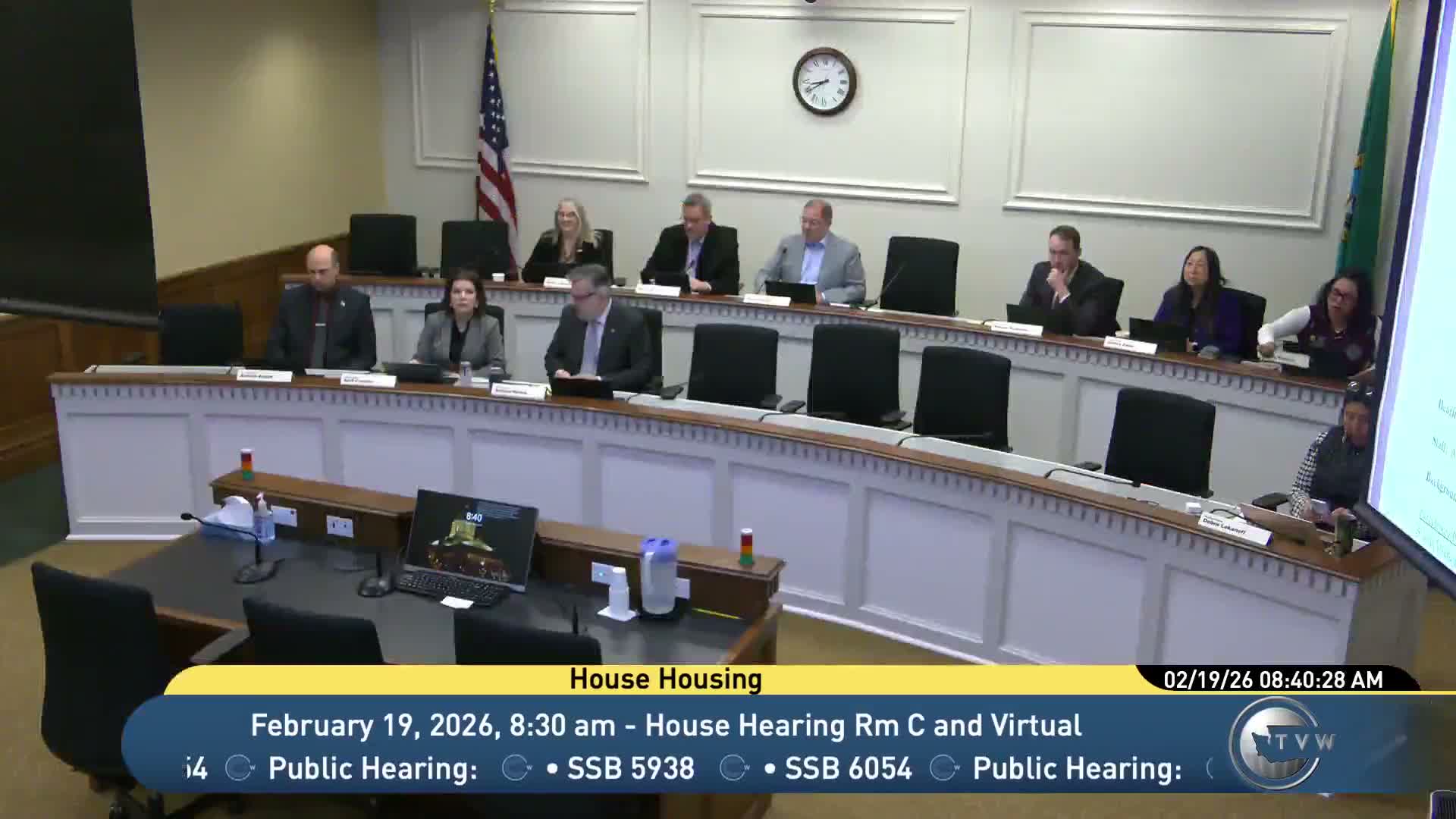
Summary
Substitute Senate Bill 5,938 clarifies how the $80 foreclosure prevention fee is collected and administered, expands exemptions (including reverse mortgages to age 60 and chattel loans for manufactured homes), allows financing of the fee, and directs a Department of Commerce study on a Washington homeowner assistance fund due July 1, 2027.
House staff told the committee that substitute Senate Bill 5,938 would refine the $80 foreclosure prevention fee created last session and create a study on whether part of the fee could support a state homeowner assistance fund.
Audrey Vaisik, committee staff, summarized the substitute: exemptions to the fee would expand to include reverse mortgage loans made to a person 60 years of age or older (down from 61), the bill would cover chattel loans or retail installment contracts for manufactured homes, and if a borrower finances a purchase through certain state programs the fee may only be collected on the first lien residential mortgage loan. The bill would remove the option for the fee to be paid from a borrower's cash contribution at closing and instead allow the fee to be financed in the loan and paid from loan proceeds at closing. Department of Commerce would get expanded authority to adopt rules to implement and enforce the fee. The bill also directs Commerce, in consultation with the Housing Finance Commission, to evaluate creating a homeowner assistance fund and report back by July 1, 2027.
Supporters told the committee the fee has helped stabilize funding for foreclosure counseling and mediation. Elizabeth Perez, executive director of the Washington Homeownership Resource Center, said her organization has operated the state's foreclosure‑prevention hotline since 2011 and that "already this year alone, we've heard from nearly 800 homeowners at risk of foreclosure through our hotline"; she said WHRC served more than 10,000 homeowners across all 39 counties in 2025. Perez urged the committee to support the substitute, saying it prevents layered financing from producing duplicate fees for homebuyers and would preserve mediation access for homeowners in HOAs and condos.
Other proponents included Arvind Elmi, a Bellevue High School senior and researcher on gentrification, who argued the prevention fee directs resources to foreclosure assistance infrastructure and is a preventative approach to displacement; Paula Filmore Sardinas of the Washington Build Back Black Alliance, who highlighted the bill's equity implications for Black homeowners and seniors; Raylene Schiaffano of HOA United, who emphasized that HOA liens can move ahead of mortgages and that early counseling is less costly than displacement; and Seth Sabinski of the Northwest Justice Project, who described the substitute as technical clarifications that would prevent multiple $80 charges and better track collections through Commerce.
Committee members asked clarifying questions about whether the bill increases the number of mortgage categories subject to the fee; staff replied the bill expands exemptions, so fewer loans would be subject to the fee. The committee closed the public hearing on SB 5,938. Members indicated the bill may be scheduled for executive action next week and asked sponsors and staff to work on any final technical language.
The bill contains no appropriation in the hearing record; supporters said clarifications would preserve the foreclosure prevention program's capacity to provide counseling, mediation and legal assistance for homeowners at risk of foreclosure.