
Advocates: court order pauses information‑sharing agreement; immigrant filers urged to seek counsel
Get AI-powered insights, summaries, and transcripts
Subscribe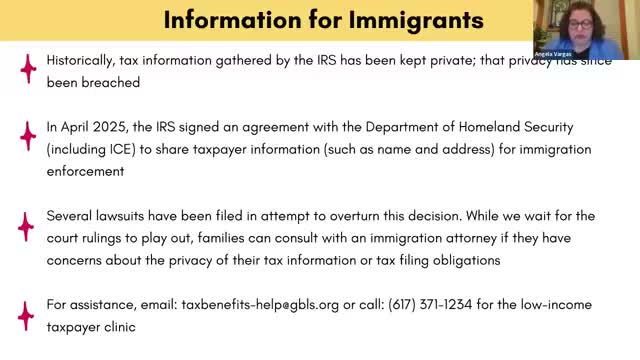
Summary
During a coalition webinar, presenters said three legal challenges have temporarily halted a planned data‑sharing agreement; they advised immigrant taxpayers to consult immigration counsel and described practical steps (ITINs, filing options) for those who may qualify for refundable credits.
Speakers at a Massachusetts outreach webinar said litigation has paused a proposed information‑sharing arrangement that advocates and some agencies had planned to use for outreach to potential claimants.
"There are three legal challenges to the agreement," CARLYRAMI0 said. "A judge has temporarily paused any information sharing," she added, warning that the pause affects how agencies can exchange certain taxpayer information for outreach purposes.
Because the legal landscape is unsettled, presenters urged immigrant taxpayers and providers to exercise caution. Webinar speakers recommended that immigrants with complicated status consult an immigration attorney before relying on any data sharing for outreach or for documentation. They also described alternatives: individuals without a Social Security number may be able to obtain an Individual Taxpayer Identification Number (ITIN) and still file returns and claim refundable credits in many circumstances, but presenters emphasized the need for individualized legal and tax advice.
Angela Devarasewarase, introduced as an attorney with Greater Boston Legal Services, was referenced as a resource for questions about immigration‑related implications; presenters offered to connect individuals to legal help for complex cases.
The presenters did not announce a final legal outcome. They advised that community organizations continue to share multilingual outreach materials and to direct clients to certified filing sites and legal aid when cases involve immigration or contested documentation.