
Supporters tell Senate committee raising prison indigent threshold to $100 would reduce debts and aid reentry
Get AI-powered insights, summaries, and transcripts
Subscribe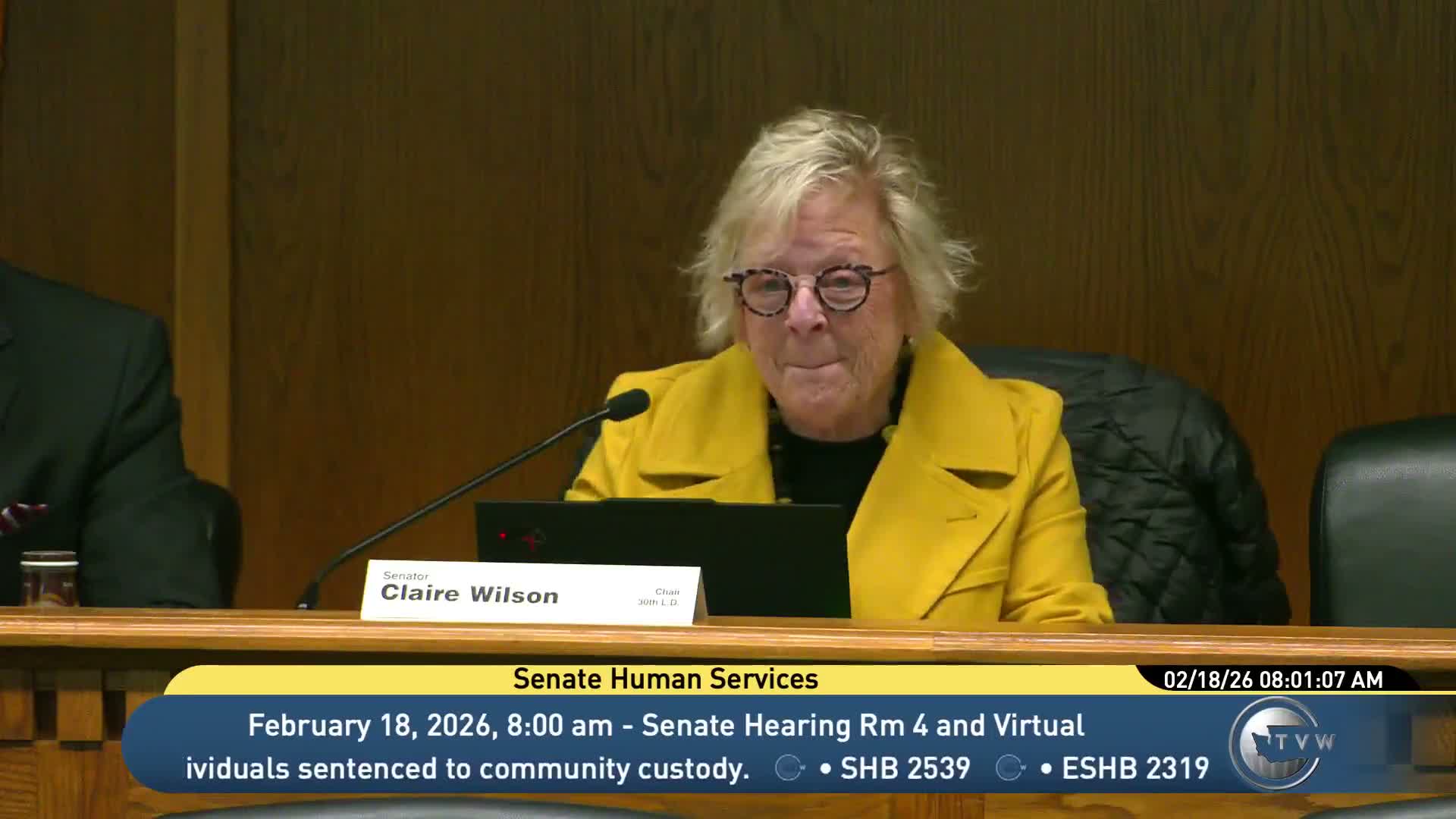
Summary
Testimony before the Senate Human Services Committee on Feb. 18 backed Substitute House Bill 2539, which would raise the incarcerated indigent account threshold from $25 to $100; witnesses cited rising commissary prices and family burdens while staff noted a DOC fiscal note and IT costs.
Substitute House Bill 2539, which would change the statutory definition of an indigent incarcerated person from $25 to under $100 in their institutional account, drew multiple supporters at the Senate Human Services Committee hearing Feb. 18.
Committee staff Will Tronson explained the mechanics: under current law an incarcerated person is considered indigent with $25 or less in disposable income and certain deductions (legal financial obligations, child support, medical co-pays and others) are not withdrawn below that threshold. The bill would set the indigent threshold at $100; the Department of Corrections provided a fiscal note estimating indeterminate costs, including IT changes and potential costs assumed to be greater than $50,000.
Representative Chapala Street (37th Legislative District), the sponsor for the House version, said the change is ‘‘not trying to reduce LFOs’’ or child-support collection but instead ‘‘simply setting aside more money for their essentials’’ so incarcerated people can purchase hygiene items and maintain contact with families.
Several witnesses described direct impacts on families and incarcerated people. Kelly Olsen, policy manager (and formerly incarcerated), said commissary prices are often higher inside and low wages combined with deductions create debt that follows people after release. Soneli Anderson listed sample commissary prices during testimony (toothpaste $5.74; soap $1.10; deodorant $7.84; razors $2.15; lotion $4.86) to demonstrate how $25 provides little margin for essential items. Candace Baumann, a reentry worker and formerly incarcerated person, said the change would allow families to send more meaningful items before deductions apply.
Witnesses argued the modest increase to $100 would reduce tensions inside facilities, lower accumulated debt taken from future deposits, and assist rehabilitation and reentry. Committee members asked staff to check when the indigency statute was last updated; staff agreed to follow up with the committee.
The committee heard testimony but did not record a committee vote during this session. The hearing was paused and resumed multiple times to accommodate witnesses and discussion of other bills; there was no final committee action recorded in the transcript.