Interconnection delays and 'self‑build' proposals emerge as central constraints to California clean‑energy rollout
Loading...
Summary
Agency, utility and developer witnesses told the Assembly committee that long interconnection queue times, network upgrade timelines and lack of standardized equipment/contracting processes are the main operational causes threatening projects’ ability to meet tax‑credit deadlines; utilities signaled conditional openness to developer 'self‑build' work.
Lawmakers pressed utilities, developers and regulators on what operational fixes could accelerate projects through the interconnection and transmission processes that determine whether a project can be placed in service and claim federal tax credits.
Key constraints: multiple witnesses identified three operational causes that most frequently stall projects: (1) long CAISO interconnection queue wait times, (2) extended timelines for transmission and network upgrades (substations, transformers and breakers), and (3) local and state permitting delays that sometimes trigger additional environmental reviews or species protections.
CAISO data and queue reforms: Neil Miller, CAISO vice president for transmission planning, said the interconnection queue contains roughly 190 GW of nameplate capacity but only about 5–7 GW are typically needed per year; about 98 GW have executed interconnection agreements, roughly 60 GW have necessary transmission in service or under construction, and about 20 GW have power purchase agreements. Miller credited CAISO’s intra‑cluster prioritization and other queue reforms for allowing well‑positioned projects to advance while clearing less‑viable applications.
Utility operations and self‑build: Gary Chen, SCE Director of Interconnection and Business Operations, outlined process improvements (digital tools, team restructuring, tariff updates) that increased interconnection throughput and said SCE will consider self‑build proposals when they meet safety, reliability and specification requirements. Developers and industry representatives, including Sarah Fitzsimon and Rachel McMahon (EDF), urged clearer, standardized rules so developers can know which network upgrades they may construct or procure and when self‑build is an option.
Developer risk and cost: Rachel McMahon described how overlapping timelines for interconnection agreements, permitting, final design and project contracting create financial risk: when a required network upgrade is delayed, developers may pause spending, request a later in‑service date or incur liquidated damages that affect their revenue and ultimately rates.
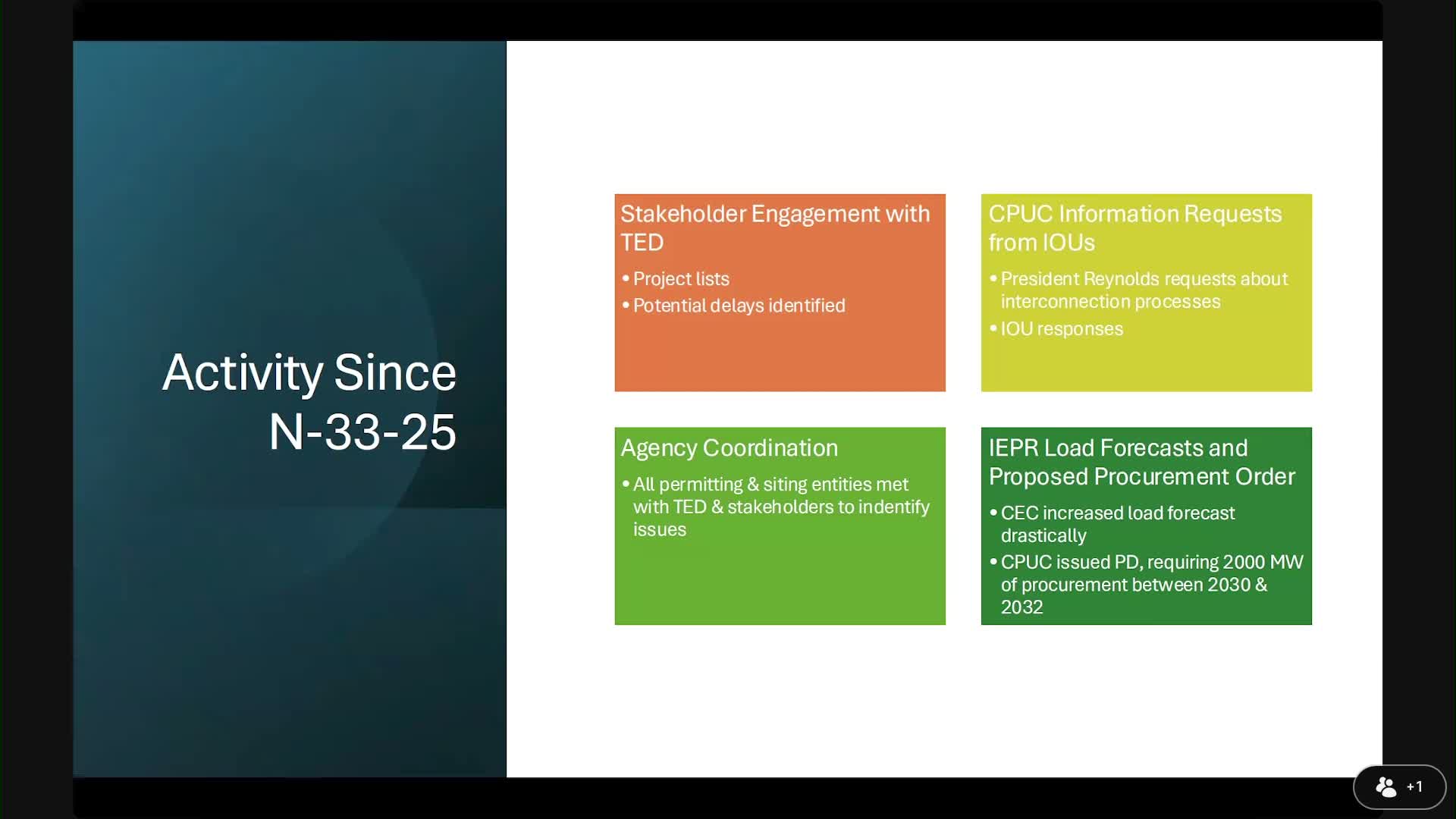
Transparency and data needs: Witnesses broadly called for richer, standardized reporting from utilities and more qualitative context about why projects slip (e.g., staffing, procurement, permitting, affected systems) to enable root‑cause fixes. CPUC’s transmission project review, the Transmission Development Forum and TED convenings were cited as existing transparency forums that could be expanded or made more granular.
Chair and members asked agencies to provide a more actionable project dashboard and to assess whether standardized equipment specifications, clearer rules for self‑build and developer‑assisted procurement could safely shorten upgrade timelines.