Assembly hearing warns billions at risk as federal clean‑energy tax credits face new deadlines
Loading...
Summary
California lawmakers heard agency and industry witnesses say interconnection, permitting and transmission delays threaten projects’ ability to claim expiring federal clean‑energy tax credits, and agencies described a mix of new transparency tools and coordination efforts intended to speed deliveries.
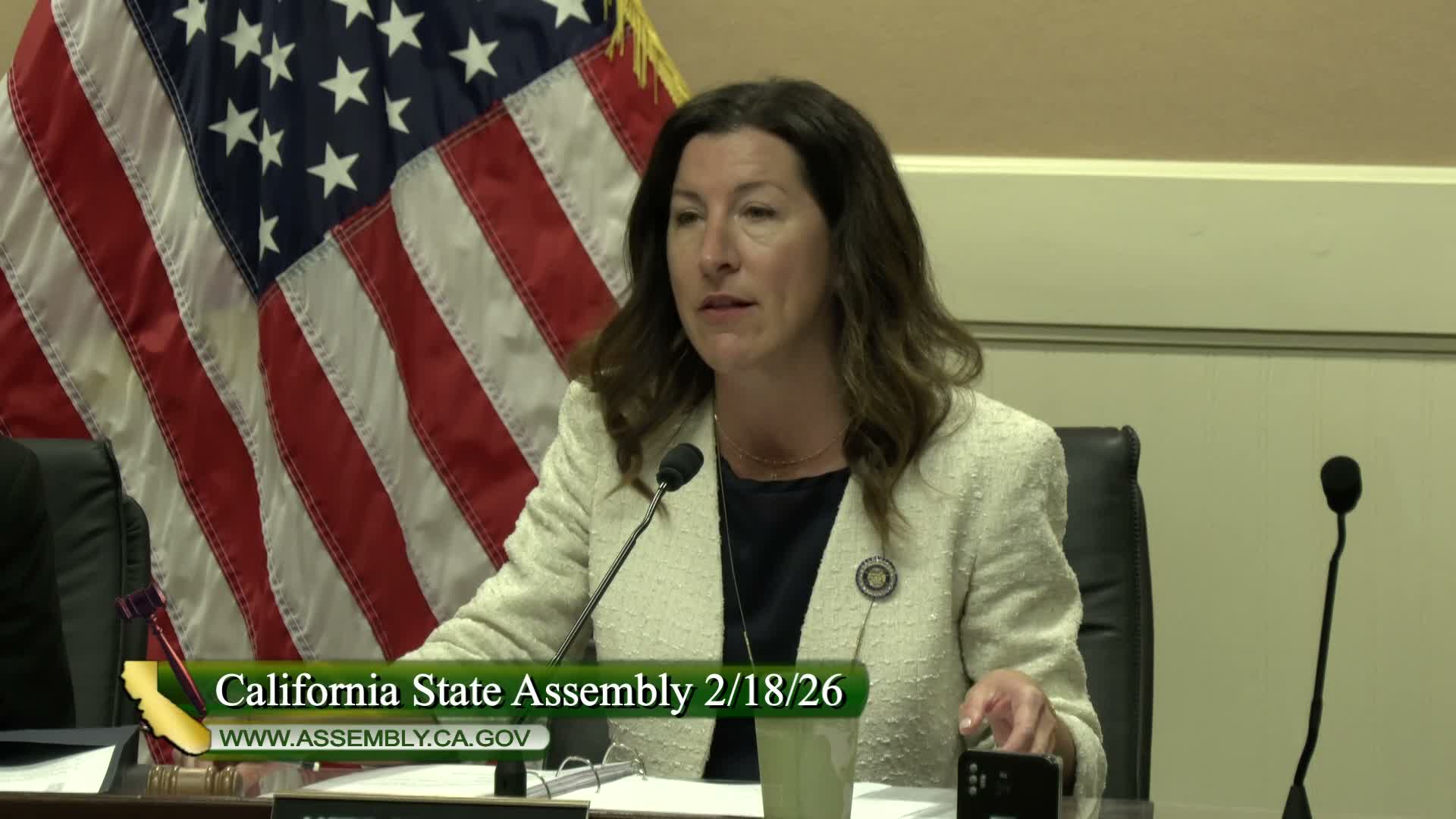
The California State Assembly Committee on Utilities and Energy held an oversight hearing on accelerating clean‑energy projects so they remain eligible for federal tax incentives that recent congressional actions shortened.
Lawmakers were told the window for many projects to qualify is narrowing under HR 1. Sarah Fitzsimon, policy director at the Independent Energy Producers Association, summarized the federal change: for projects that began construction before Dec. 31, 2025 the placed‑in‑service deadline is Dec. 31, 2029; projects with construction starts in early 2026 have until Dec. 31, 2030; projects beginning after July 4, 2026 face an earlier deadline that is infeasible for most utility‑scale projects. Fitzsimon said the rule changes remove a previous 5% safe‑harbor test and rely instead on a physical‑work test for the start of construction.
Why it matters: witnesses said billions of dollars and electricity affordability for Californians are at stake. Molly (CPUC) told the committee that California added roughly 6–6.8 gigawatts of nameplate capacity in 2024–25, and that load‑serving entities have procurement commitments for tens of gigawatts to come online before 2030. But several witnesses warned that pipeline projects run into schedule risk from long interconnection queue wait times and transmission upgrade delays.
State response and tracking: agencies described coordinated efforts under Governor Newsom’s Executive Order N‑33‑25 (the EO directs an energy working group to accelerate siting, permitting and construction and to submit a report). Rahima Mali of the Governor’s Office of Business and Economic Development said the TED (Tracking Energy Development) Task Force compiled a dynamic list of more than 200 eligible projects (projects ≥1.5 MW that are expected to be in construction or commercially operable by 2030) and is holding convenings with developers and agencies to identify short‑ and medium‑term fixes.
What agencies are doing: CPUC staff highlighted new transparency tools — General Order 131e updates and a biannual transmission project review required by Resolution E5252 — and described monthly micro‑level convenings with investor‑owned utilities to probe projects at risk. CAISO’s Neil Miller outlined queue reforms that prioritize the most viable projects and an intra‑cluster prioritization process that allowed almost 4,000 megawatts to advance while the system processes remaining applications.
Industry and developer views: utilities and developers described the same bottlenecks from different angles. Gary Chen of Southern California Edison said SCE has deployed digital tools, reorganized teams and revised tariffs to speed interconnection and is open to developer self‑build proposals where safety and standards are satisfied. Rachel McMahon of EDF Power Solutions said developers face overlapping timelines for permitting, interconnection agreements and network upgrade design; when a required upgrade is delayed developers may pause spending, seek a later in‑service date, or face liquidated damages that ultimately affect ratepayers.
Outstanding questions: committee members pressed agencies on the financial exposure to ratepayers if tax credits are lost; agencies said they have not yet produced a single summary dollar estimate and that contract provisions frequently allocate tax‑change risk between developers and offtakers. Members also asked why the EO‑required 90‑day energy working group report had not been shared; agency staff said the report is in development and under review.
Next steps: agencies said they will continue TED convenings, refine project tracking, explore self‑build and equipment‑procurement options, expand local permitting assistance (GoBiz’s permitting playbook and a planned California Permitting Academy) and use micro‑level oversight to surface systemic barriers. The committee requested clearer accountability and a more actionable, regularly updated list of stalled projects and root causes.