Advocate proposes cost‑neutral California digital asset reserve funded by unclaimed crypto
Loading...
Summary
Dennis Porter of Satoshi Action Fund urged the Assembly committee to explore amendments to SB 822 that would convert unclaimed digital assets into a state digital asset reserve fund, arguing a small allocation to Bitcoin could preserve purchasing power and that a cost‑neutral model can protect taxpayers while generating revenue with guardrails and legislative oversight.
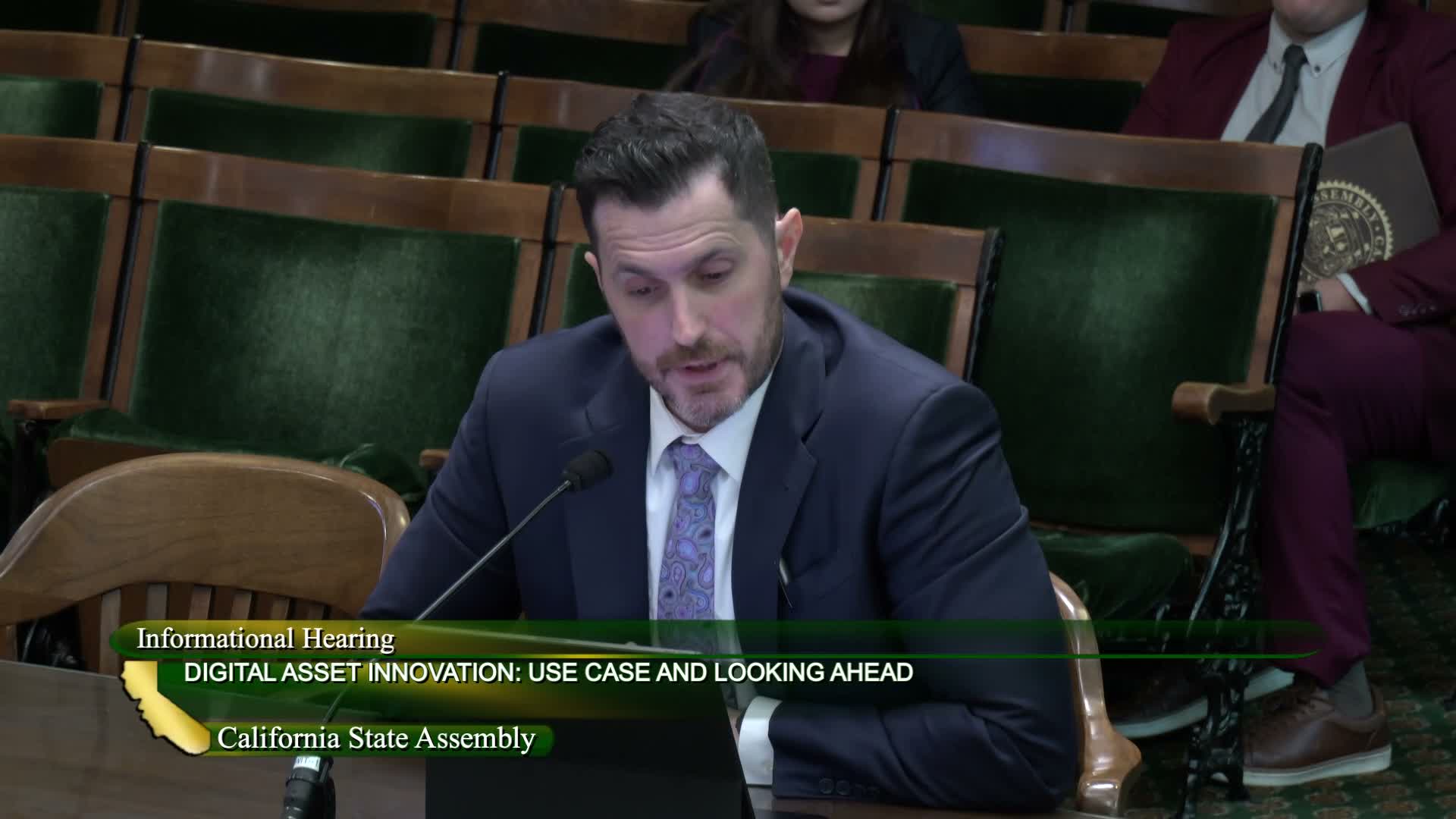
Dennis Porter, CEO and cofounder of Satoshi Action Fund, urged California lawmakers to consider amendments to SB 822 that would allow the state to manage unclaimed digital assets strategically through a cost‑neutral digital asset reserve.
"Instead of simply holding them passively, the state [could] manage them strategically at 0 cost to taxpayers," Porter said, describing a model that would retain unclaimed digital assets in native form, convert miscellaneous tokens to high‑quality digital assets, and deposit them into a reserve governed with public reporting and legislative oversight.
Porter cited a counterfactual study his organization conducted with academic partners that analyzed 2018–2024 reserve performance across all 50 states using actual cash flows, CPI and historical Bitcoin prices. He told the committee a modest allocation could materially improve a reserve's purchasing power: "For California specifically, just a 1.7% allocation to Bitcoin would have fully combated and offset 100% of the loss of purchasing power from inflation," he said. Porter stressed the fund would be limited to high‑market‑cap, liquid assets and that the state would retain the ability to liquidate in a fiscal emergency.
Porter described four core elements for an amendment: (1) conversion and deposit of sheeted unclaimed digital assets into a defined reserve; (2) an advisory board with representation from the controller, treasurer, legislature and governor appointees; (3) a revenue model that uses unclaimed property (not general fund dollars) and allows appropriations into the general fund under defined circumstances; and (4) custody requirements with licensed custodians, periodic audits, multisignature controls and incident reporting.
He pointed to other jurisdictions and federal actions as precedent: New Hampshire, Texas and Arizona have each adopted different reserve approaches; the federal government established a strategic Bitcoin reserve and a digital asset stockpile; and the "Genius Act" was cited as a federal stablecoin framework. Porter argued that a California model should be cost‑neutral and built on existing infrastructure such as DFPI licensing and state institutional investors.
Porter acknowledged the risks of market volatility and said risk management would depend on strict eligibility thresholds, governance and an advisory board. "This isn't gambling," he told the committee, saying the proposal would include guardrails, quarterly reporting and legislative approval for any transfers.
Committee members responded with questions about guardrails during market downturns, governance, and whether reserve operations would expose the general fund. Porter reiterated the cost‑neutral design and emphasized a long‑term investment mindset to smooth cycles. He asked the committee to explore legislative amendments to convert passive custody into strategic, transparent management for California's benefit.
Public commenters from industry groups supported innovation and urged clear rules. The hearing closed with the committee thanking panelists and requesting further information and slides to inform any follow‑on policy work.