
Senate committee advances several bills restricting use of public funds and establishing liability for gender‑transition care amid sharp testimony
Get AI-powered insights, summaries, and transcripts
Subscribe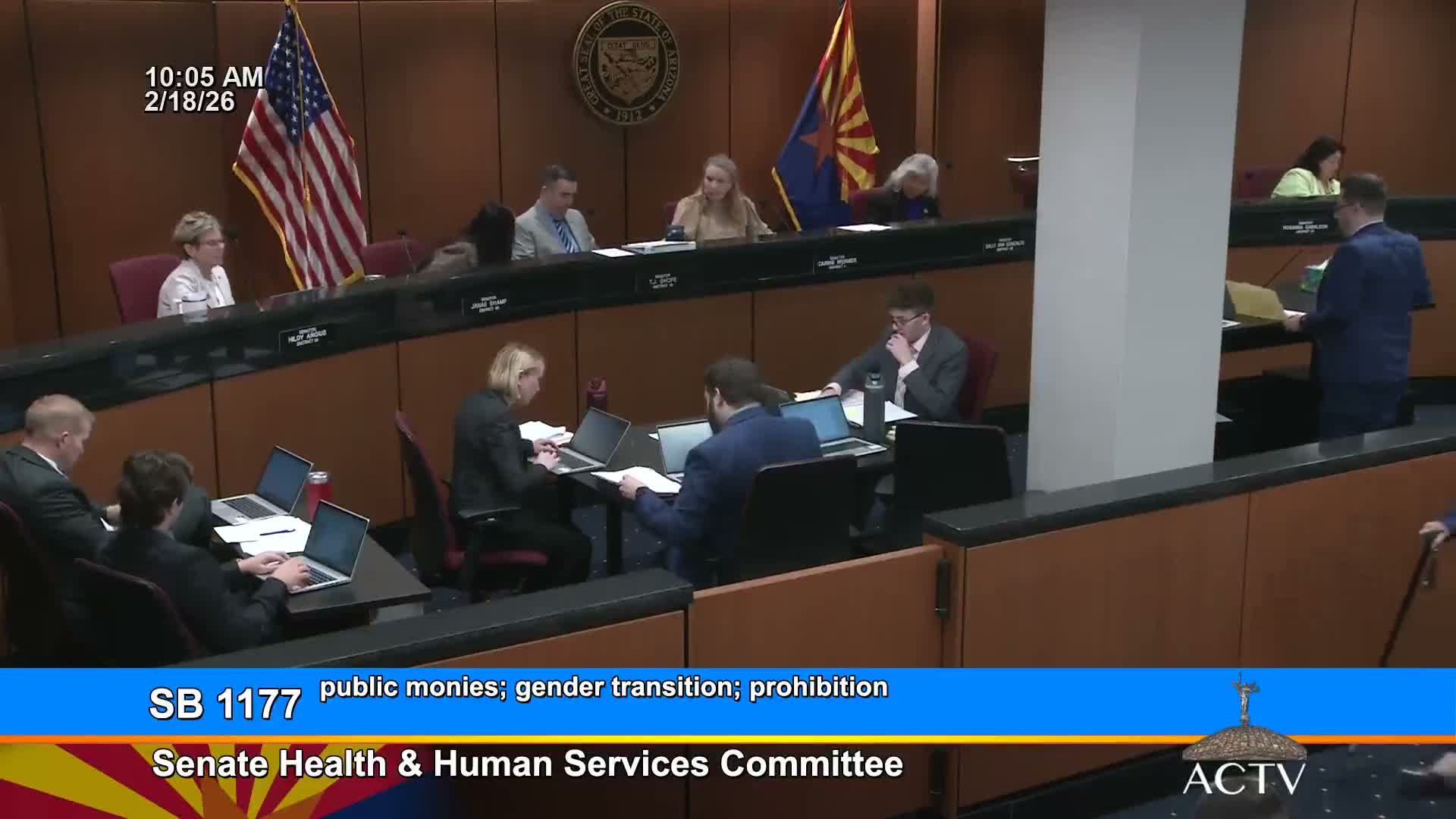
Summary
The Health & Human Services Committee advanced multiple bills addressing public funding, reporting and liability for gender-transition care after extensive public comment from ACLU representatives, policy groups and clinicians. Several measures drew heated exchanges and roll-call votes.
The Senate Health and Human Services Committee advanced a package of bills related to gender-transition care and public funding after a day of sharply divided testimony.
SB 11 77 would prohibit use of public dollars to fund gender-transition procedures and, according to proponents, simply draws a boundary around public subsidies. Ashton Allen of the Center for Arizona Policy testified in favor, calling the bill "straightforward" and arguing it does not criminalize private decisions. Opponents including Jean Woodbury of the ACLU warned the measure would be discriminatory and could cut off needed medical care for people who rely on public insurance.
Committee members heard similar divisions on SB 10 14, which would require insurers to cover detransition procedures and create reporting requirements, and SB 10 94, which establishes civil liability for physicians who provide irreversible gender-reassignment surgery to minors and extends certain filing windows for claims by detransitioners. Proponents including Senator Kavanaugh and clinician witnesses argued the measures protect detransitioners and create accountability; civil-rights and health‑advocacy witnesses said the bills single out transgender patients and risk discrimination.
Jean Woodbury told the committee that singling out transition care for special reporting and liability would treat trans patients differently from cisgender patients who receive similar medical procedures. "When care is delivered ethically and responsibly within these guidelines, the integrity of the field is strengthened," she said, urging the committee to vote no on measures she opposed.
Supporters presented malpractice and outcomes concerns and cited a recent malpractice verdict and professional-society guidance recommending caution for certain procedures in minors. Dr. Travis Merle, testifying in favor of SB 10 94, argued that harms from irreversible procedures can surface years later and that extending civil remedies allows victims to seek recourse.
Despite the contested record, the committee gave due-pass recommendations to multiple bills in this cluster. Roll calls and votes varied by bill; committee members offered several explanations on the record for their votes, with some expressing openness to further discussion before floor action.