Get Full Government Meeting Transcripts, Videos, & Alerts Forever!
Get email alerts on the Employer Reporting Penalties topic
No spam. Unsubscribe anytime.
Bill would let ESD waive minor penalties for employer reporting errors, sponsors say
Summary
Substitute SB 5,874 would let the Employment Security Department waive penalties for minor or inadvertent errors in quarterly unemployment-insurance payroll reports, proponents said, aiming to ease fines imposed on small employers for job-coding or software-generated errors.
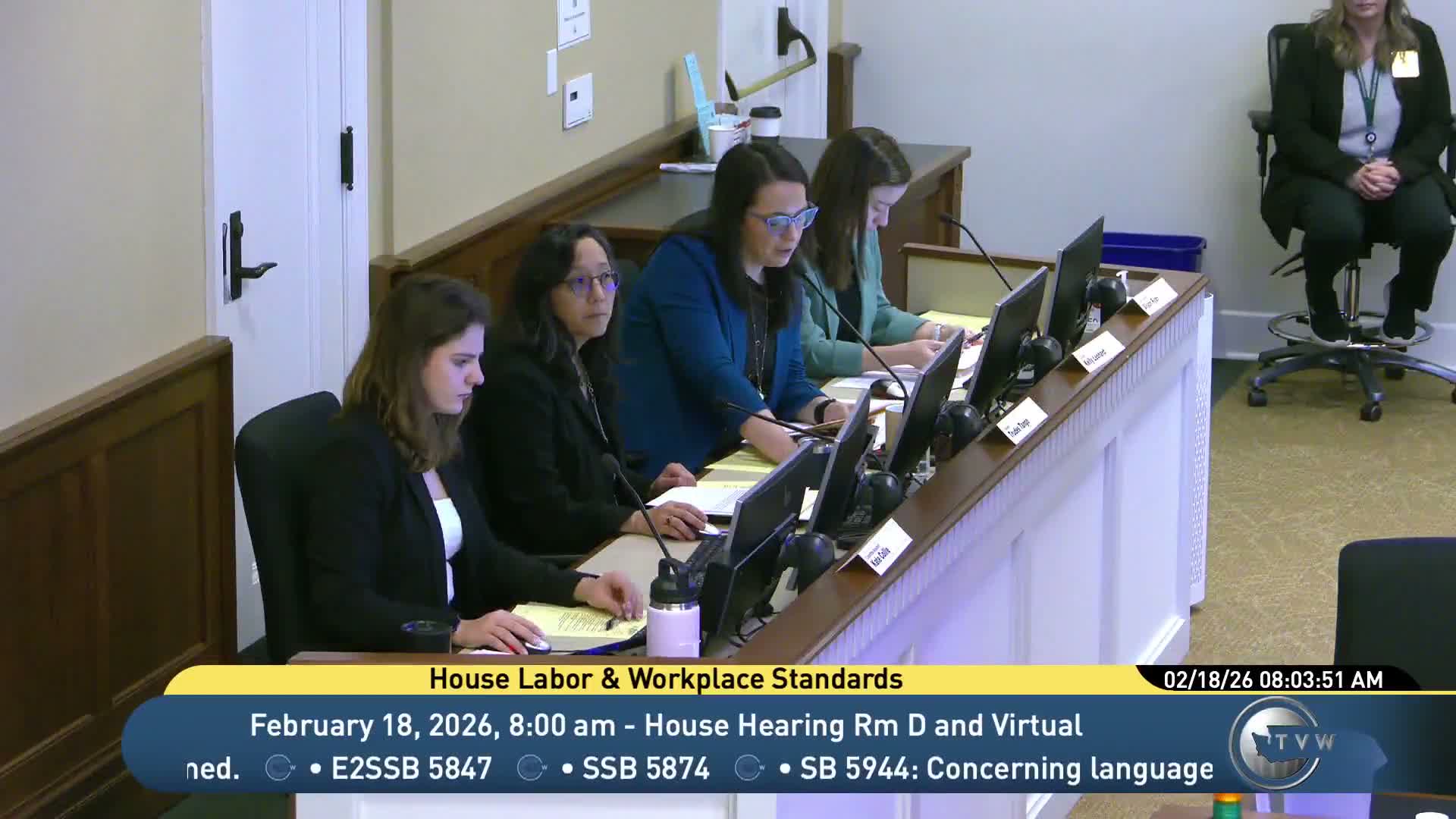
The Labor and Workplace Standards Committee heard staff briefing and sponsor remarks on substitute Senate Bill 5,874, which would let the Employment Security Department (ESD) waive penalties for minor or insignificant errors on employers' quarterly unemployment-insurance payroll reports.
Staff described existing reporting requirements and penalties, saying employers must file quarterly reports with names, wages, hours worked, and standard occupational classifications and that penalties range from warnings for first-time violations to $75–$250 for subsequent violations. The staff summary said the bill would allow the department to waive penalties “for minor or insignificant reporting errors,” including inadvertent omissions caused by electronic software failures.
Sen. Drew McKeown (R‑35th District), prime sponsor, said the measure grew from constituent complaints and aimed to help small businesses that file reports early and cannot correct small administrative errors after submission. “A lot of small businesses will do it early,” McKeown said, adding that fines collected through the third quarter last year totaled roughly $2,500,000 taken from small businesses.
Chair Berry closed the public hearing on SB 5874 after the sponsor's remarks; no public testimony was taken.
The committee did not vote on the bill during the hearing. Staff materials and the bill text were referenced for further details and for fiscal or implementation questions.