
Bill to consolidate homestead refund forms and set income threshold gets support from Johnson County
Get AI-powered insights, summaries, and transcripts
Subscribe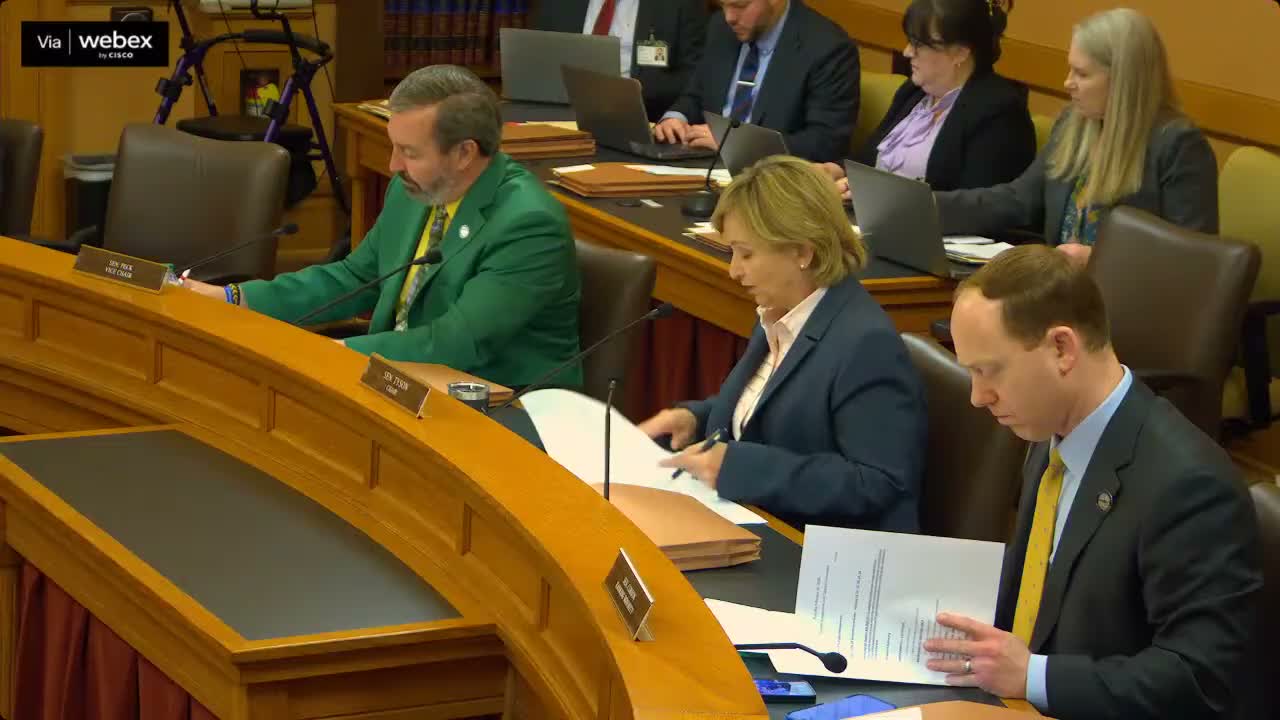
Summary
Senate Bill 402 would combine homestead refund application forms, add eligibility exceptions for claimants living away from homesteads for health or hardship, set a constant Safe Senior income threshold of $25,380, and preserve eligibility when appraised value later exceeds $350,000; Johnson County officials praised reduced administrative burden.
The Senate Assessment and Taxation Committee heard Senate Bill 402, which would change several provisions of the Homestead Property Tax Refund Act and the Safe Senior program, staff member Amelia said. Key elements include a unified application form for homestead claims, a defined eligibility exception for claimants who must live away from their homestead 'by reason of health or other hardship,' a modification to household income definitions for the original homestead refund, and a constant Safe Senior income threshold of $25,380 beginning tax year 2026.
Amelia told the committee the change to household income definitions would align the original homestead refund with language used in the property tax freeze provision but would leave Safe Senior’s definition alone except where SB 402 explicitly sets the constant threshold. The bill would also permit claimants who previously qualified with a base-year appraised value at or below $350,000 to retain eligibility if a later appraisal exceeds that threshold, so long as other statutory requirements are met.
Erin Winn, speaking for Johnson County government and the Board of County Commissioners’ Commission on Aging, said the bill would ease administrative burdens for older Kansans and praised a proposal to combine existing forms into one. Winn said county offices often act as frontline resources to help residents navigate three separate forms and that consolidation would make applying simpler for seniors.
Committee members questioned ambiguous phrases such as 'other hardship' in the definition of living away from a homestead; the chair (who requested the language) said the intent is to avoid disqualifying people who must be away for medical care or family emergencies and the committee will refine language when working the bill. The chair also said a fiscal note was requested to analyze options for raising the valuation threshold in related work.
The committee closed the hearing on SB 402 without taking final action. Committee staff said the bill’s provisions would take effect upon publication with several changes slated to begin tax year 2026.