
Kansas committee hears from crash victims and insurers on bill to stop UIM offsets
Get AI-powered insights, summaries, and transcripts
Subscribe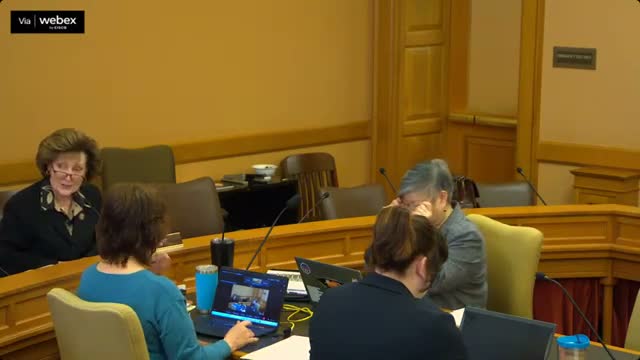
Summary
Witnesses and insurance agents urged the Kansas Senate committee to pass SB147 to prevent insurers from reducing underinsured/uninsured motorist (UIM) payouts by other parties' liability limits; the insurance industry warned the change could raise premiums and litigation, and the committee closed the hearing without voting on SB147.
The Kansas Senate Committee on Financial Institutions and Insurance on Feb. 10 heard emotional testimony and technical arguments on Senate Bill 147, which would change how uninsured and underinsured motorist (UIM) coverage limits are calculated so that insureds are not denied benefits by offsets tied to at-fault parties.
Proponents including insurance agent Chris Conrad and attorney Rick James told the committee that under the current "limits-to-limits" comparison Kansans who purchase, for example, $100,000 in UIM can effectively be left with far less when the at-fault driver's liability is divided among multiple victims. "Responsible Kansans don't expect something for free, but they do expect to get what they pay for," James said. Victims who testified described injuries and lingering medical bills. "I have the metal plate in my chest to prove it," said Merlin Arnold, who said he paid premiums to USAA for UIM coverage but was denied access to it after his 2024 crash.
The bill, as described by the committee reviser, would amend the statute cited in testimony as "KSA forty-two 84" and add language stipulating that UIM amounts "shall not be reduced by any liability limit or payment by or on behalf of the owner or operator of the other motor vehicle or any third party," and would take effect upon publication in the statute book.
Opponents from the insurance industry urged caution. Brad Smoot of the American Property and Casualty Insurance Association said Kansas' current difference-in-limits approach works for many cases and warned that permitting stacking or layering of coverages would increase premiums, administrative costs and litigation. Smoot noted prior legislative review of the issue and said, "When you add more money to the system...that money has to come from somewhere." He and others cited an industry estimate of roughly $8 per policy per month as a possible cost of a switch to stacking, and the fiscal note includes an Office of Judicial Administration observation that the bill could increase district-court filings.
Senators pressed proponents and the opponent on how coverage is presented to consumers, whether large-print or online disclosures would be sufficient, and how multi-victim collisions affect payout arithmetic. Proponents said disclosures do not fully address the problem because many transactions occur online without agent counseling and because the current limits-to-limits rule can produce outcomes that conflict with consumer expectations.
The hearing closed without a committee vote on SB147. Committee members signaled divergent concerns: several senators expressed sympathy for injured witnesses while also asking detailed questions about cost, litigation and consumer disclosure. The committee will not take further action on SB147 during this meeting day; no further procedural direction on SB147 was recorded in the transcript.