Get Full Government Meeting Transcripts, Videos, & Alerts Forever!
Get email alerts on the Data Broker Registry topic
No spam. Unsubscribe anytime.
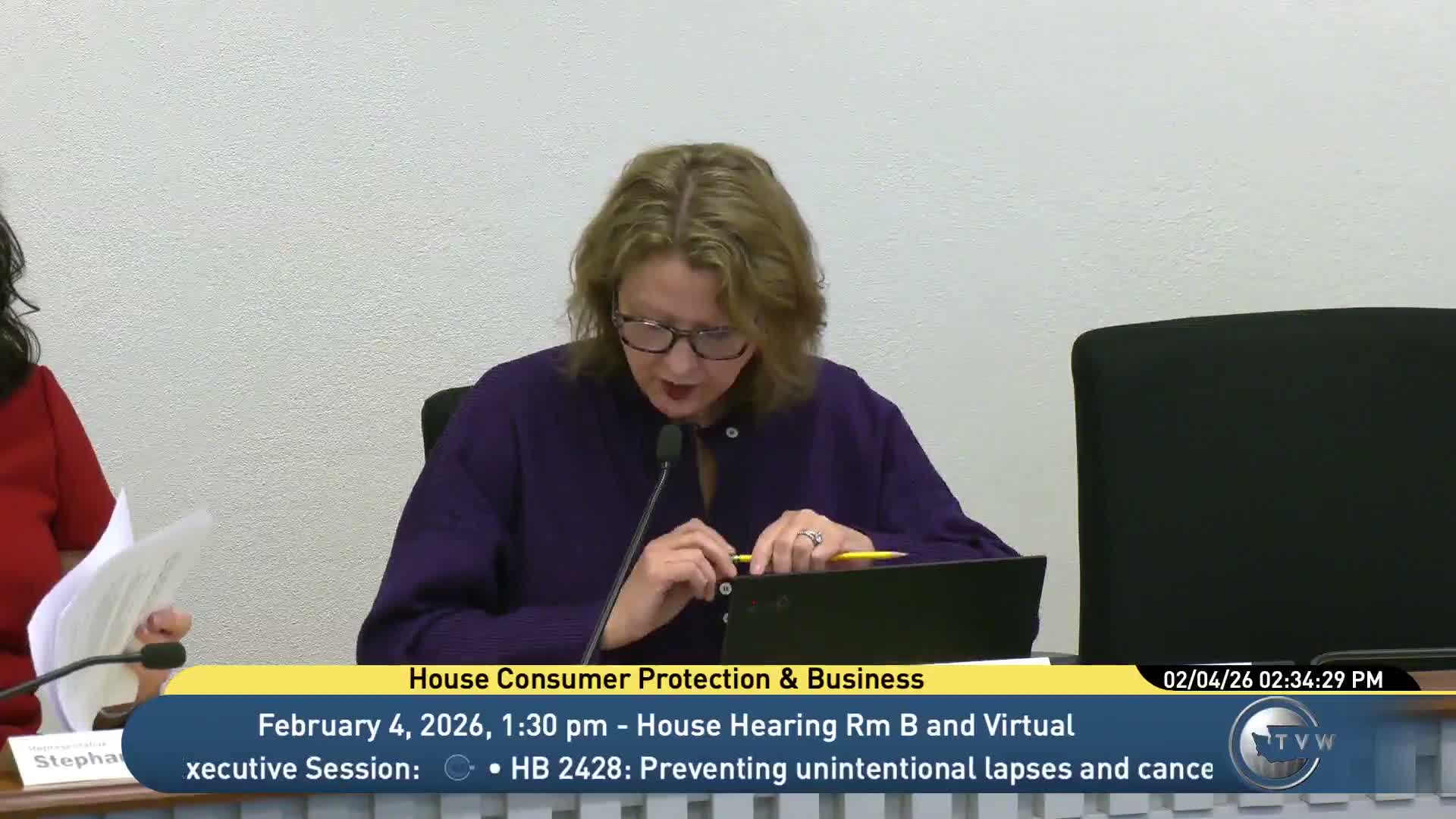
Committee approves data-broker registry bill after multiple amendments, 8–7
Summary
Substitute House Bill 2,483 — creating a public data-broker registry and exemptions aligned in part with Oregon law — was reported out after several amendments were adopted; the committee recorded an 8–7 vote in favor.
The Consumer Protection and Business Committee moved substitute House Bill 2,483 out of committee Wednesday after adopting several amendments designed to narrow and clarify the bill’s reach.
Vice Chair Hackney described one amendment as aligning the exemption for certain sellers with Oregon law. Representative Clobba and Representative Klobuch urged caution, saying some amendments remove coverage for first‑party sellers and substantially narrow the bill; Klobuch noted safety and civil-rights concerns tied to opaque data-broker practices and ultimately supported the substitute as a compromise to create transparency.
Among adopted changes, an amendment clarified that penalties for failing to register start only after the Department of Licensing notifies a data broker of noncompliance, and the committee agreed to post the registry publicly on the Department of Licensing website. Another amendment exempted data brokers providing publicly available information or records lawfully available in state or local government records.
After debate and sequential voice votes on amendments, the committee completed a roll-call vote on the substitute; staff announced 8 ayes and 7 nays and substitute HB 2,483 was reported out of committee with a due-pass recommendation.
Supporters described the registry as making ‘‘what’s invisible visible’’ and providing public transparency; opponents cautioned that adopted carve-outs could significantly limit the registry’s effectiveness.