Get Full Government Meeting Transcripts, Videos, & Alerts Forever!
Get email alerts on the Military Veterans Education topic
No spam. Unsubscribe anytime.
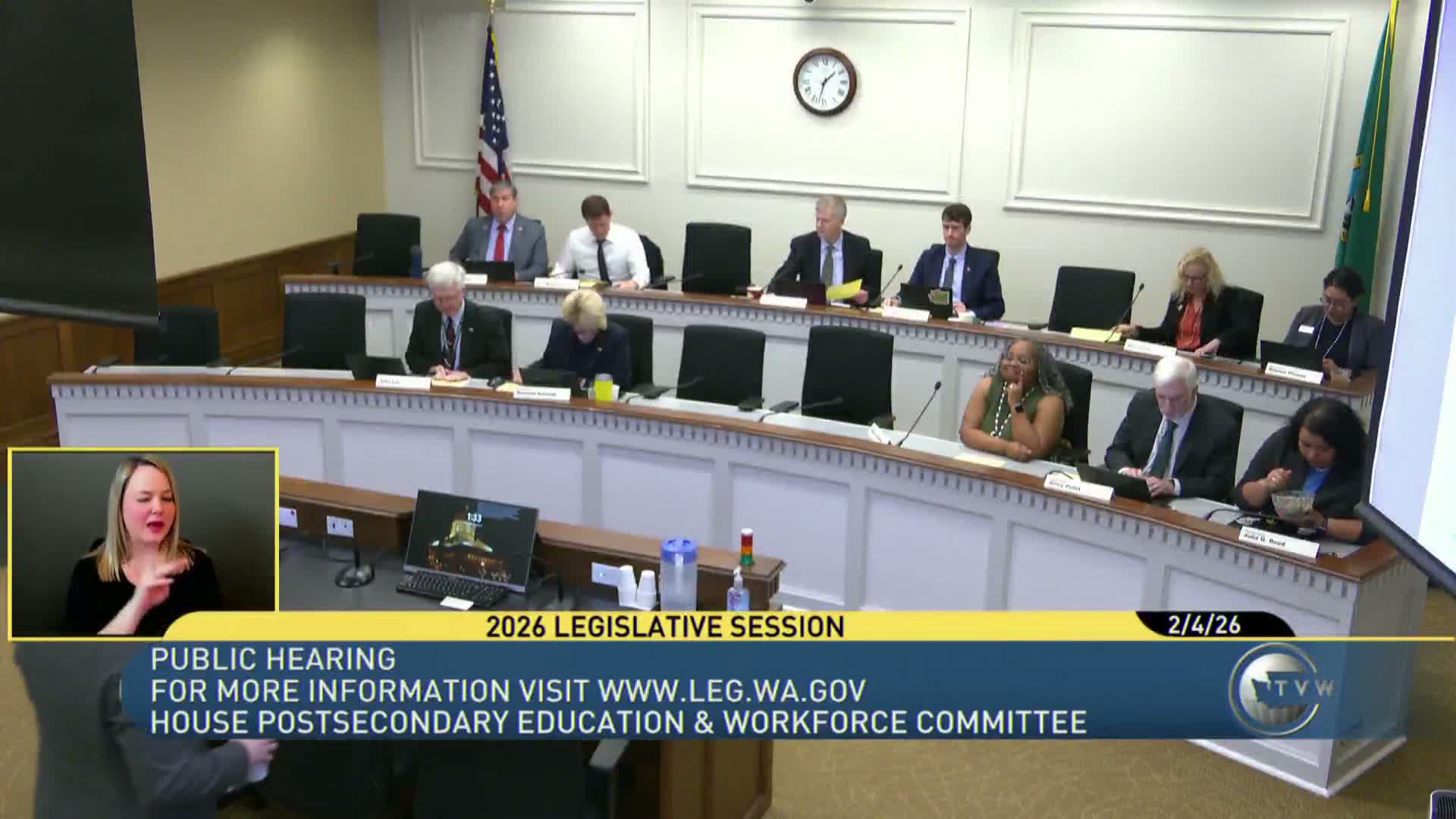
Bill to create Armed Forces Reserve education grant receives sponsor and reserve testimony
Summary
House Bill 24‑43 would create an Armed Forces Reserve postsecondary education grant administered by the Office of Student Financial Assistance; sponsors and a U.S. Army Reserve representative urged parity with National Guard benefits and highlighted reservists’ role in disaster response.
Saranda Ross, counsel to the Postsecondary Education & Workforce Committee, described House Bill 24‑43 as creating an Armed Forces Reserve Postsecondary Education Grant to help reservists, their spouses and dependents pay for postsecondary education.
Ross said eligible reservists must be domiciled or stationed in the state, be active drilling reservists in good standing, enroll in an accredited state institution or an institution approved under the Montgomery GI Bill and complete a state financial aid application. The briefing noted a maximum combined benefit for a reservist and designated spouse or dependents may not exceed six full‑time years and the Office of Student Financial Assistance would administer the grant and be responsible for repayment collections.
Rep. Jeremy Dufo, sponsor from the 15th District, said the proposal would bring reservists the same educational support now provided to Washington National Guard members and cited the presence of Joint Base Lewis‑McChord as a rationale to extend benefits to reservists who frequently move between Guard and Reserve service.
Curt Harden, identified as a United States Army Reserve Ambassador for Washington, testified in support and urged parity with National Guard tuition assistance. Harden described reserve components’ capabilities to assist state and local response using the Defense Support of Civil Authorities framework and offered to provide a state‑by‑state comparison to the committee.
The committee paused and later reopened the HB 24‑43 hearing to accommodate other panels; no committee vote was taken on the bill during this meeting.