Get Full Government Meeting Transcripts, Videos, & Alerts Forever!
Get email alerts on the Broadband Infrastructure topic
No spam. Unsubscribe anytime.
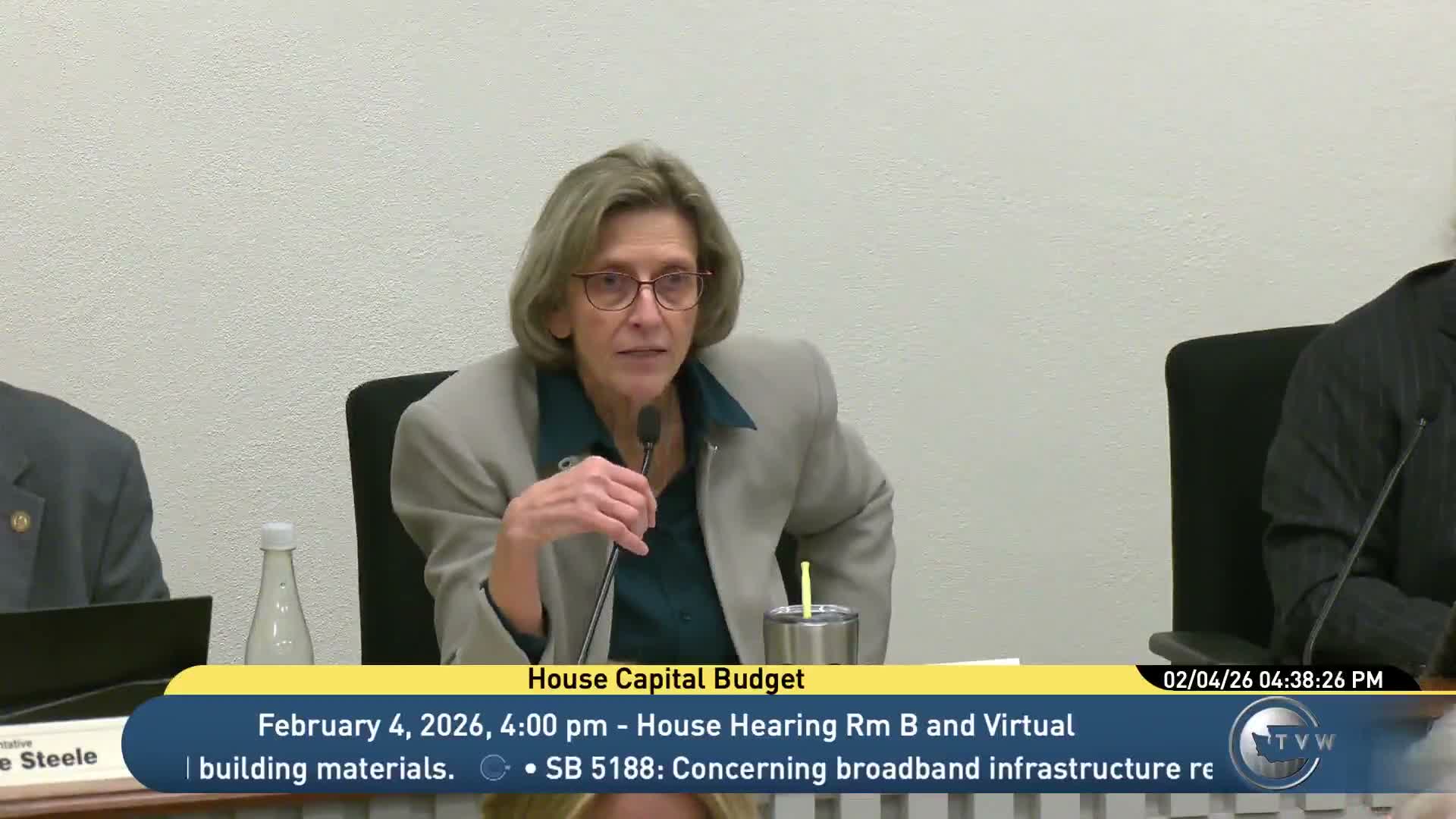
Committee hears bill to let Public Works Board fund broadband repairs; cities warn of funding risk
Summary
Senate Bill 5188 would let the Public Works Board issue loans to repair and replace middle‑ and last‑mile broadband infrastructure and prioritize areas that would become unserved; the Association of Washington Cities warned that statutory changes now could risk the Public Works Assistance Account amid prior budget sweeps.
The Capital Budget Committee heard staff and public testimony on Senate Bill 5,188, which would authorize the Public Works Board to issue loans for repair and replacement of middle‑mile and last‑mile broadband infrastructure.
Rob Hatfield, staff to the committee, said the bill would expand the broadband service expansion grant and loan program to include repair and replacement and require priority for applications in areas that would become unserved without the work. Hatfield said Commerce provided operating and capital cost estimates and that an updated fiscal note was requested.
Steven Ellis with the Association of Washington Cities spoke in a neutral/concerned capacity, cautioning that adding repair and replacement authority to statute now could send a signal that increases pressure on the Public Works Assistance Account. Ellis cited past budget diversions — a $288 million sweep from the account in the prior biennium and a proposed additional $75 million diversion in the governor’s budget — and said further statutory obligations could undermine local confidence that the account can still fund water, sewer and solid‑waste projects.
Hatfield summarized Commerce’s estimates for administrative costs, including roughly $280,000 in operating expenses for the current biennium and additional ongoing operating and capital costs in future years; he also noted the Public Works Board may take up to a 3% administrative fee when managing program awards.
Representative Dye and other members asked whether the CURB program (a sister program focused on rural access) should instead be the primary statutory vehicle for certain broadband projects; witnesses suggested staff examine that option and report back.
The committee closed the public hearing on SB 5,188 without taking a vote at this meeting.