Get Full Government Meeting Transcripts, Videos, & Alerts Forever!
Get email alerts on the Housing Finance topic
No spam. Unsubscribe anytime.
Committee hears updates to Housing Finance Commission law aiming to speed multifamily financing
Summary
Lawmakers heard testimony on SHB 2236, which would modernize the Washington State Housing Finance Commission to allow direct lending for multifamily projects, clarify it is not a retail mortgage lender, extend bond-counsel terms, and repeal two statutory program requirements; staff said the commission’s fees, not the state general fund, pay its operating costs.
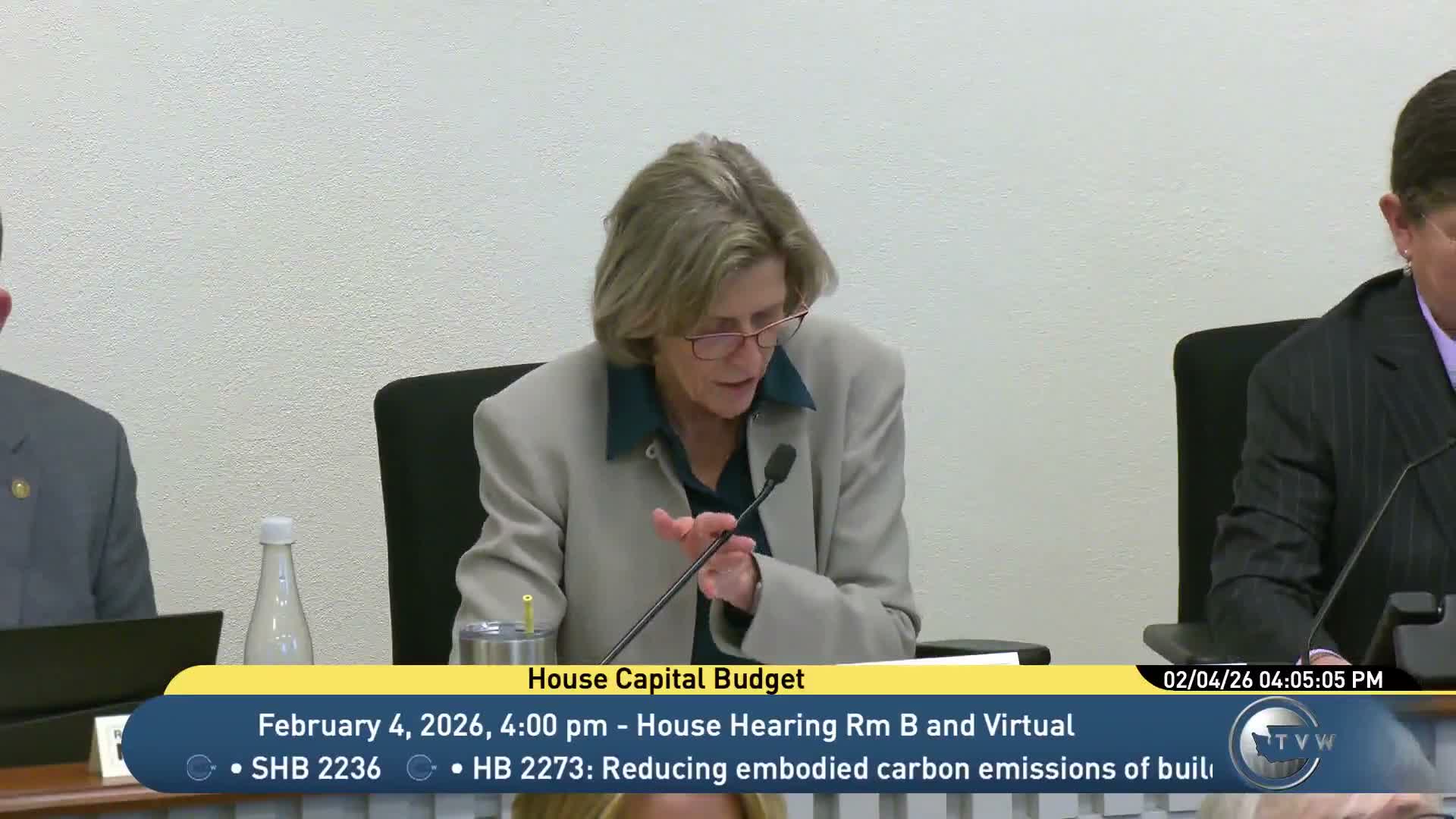
The Capital Budget Committee heard staff and sponsor briefings and public testimony Tuesday on Substitute House Bill 2236, which would update the statute governing the Washington State Housing Finance Commission to expand tools for financing affordable multifamily housing.
Staff told the committee the bill authorizes the commission to make mortgage loans directly to borrowers for multifamily housing without using a mortgage lender, while including a statement of intent that "the commission is not intended to function as a retail mortgage lender and is not authorized to compete with private financial institutions in originating mortgage loans to individual home buyers." Staff also said the bill would extend bond‑counsel terms from two years to four and repeal two statutory requirements tied to a dormant housing finance program and a periodically updated finance plan. A fiscal note presented to the panel estimated no impact to the state operating or capital budget because the commission operates on fees for its programs rather than general‑fund appropriations.
Representative Janice Son (41st Legislative District), the bill sponsor, said the measure is meant to "update and modernize" a statute enacted more than 40 years ago and to expedite financing options amid an ongoing housing shortage. She told the committee that banking partners appreciated the bill’s clarification that the commission would not act as a retail mortgage originator.
Steve Walker, Executive Director of the Washington State Housing Finance Commission, said the commission’s core work — issuing bonds and allocating federal low‑income housing tax credits — would remain unchanged but the bill would provide additional flexibility to fill financing gaps on shovel‑ready projects and to support small developments that are not suitable for large bond or tax‑credit structures. "We could also finance small projects, say a 30‑unit project that aren't suited for the big bond and tax credit programs," Walker said.
Committee members asked how the commission is addressing higher interest rates and whether the proposed changes would help shield deals from rising costs. Walker said the commission partners with banks and investors and that issuing tax‑exempt bonds can help lower financing costs, but that rising construction costs and higher market interest rates remain significant challenges.
On equity concerns, Representative Morgan asked how down‑payment assistance and other programs would reach borrowers of color. Walker described the commission’s role in administering state programs such as the Covenant Homeownership Program and said the commission partners with banks for first mortgages while seeking to remove barriers to homeownership for historically underserved communities. He added that the bill would allow some direct lending aimed at production, not retail single‑family mortgages, and support emerging developers of color.
The committee heard no on‑the‑record vote on SHB 2236 during the meeting; members closed the public hearing after testimony and moved on to the next item on the agenda.
The committee is scheduled to reconvene for further hearings and an executive session later this week, and staff asked members to submit any proposed amendments to SHB 2236 by 10 a.m. the following day for publishing.