Get Full Government Meeting Transcripts, Videos, & Alerts Forever!
Get email alerts on the Fire Protection Districts topic
No spam. Unsubscribe anytime.
Committee reviews bill to ease levy rules for cities forming fire protection districts
Summary
Substitute HB 22‑24 would change how levy rates are adjusted when a city forms a single‑city fire protection district, exempt up to 25¢ from the $5.90 aggregation limit, and allow contracting between cities and district service authorities; supporters said it creates a workable, voter‑approved option while hospital and tax‑payer groups warned about proration risks.
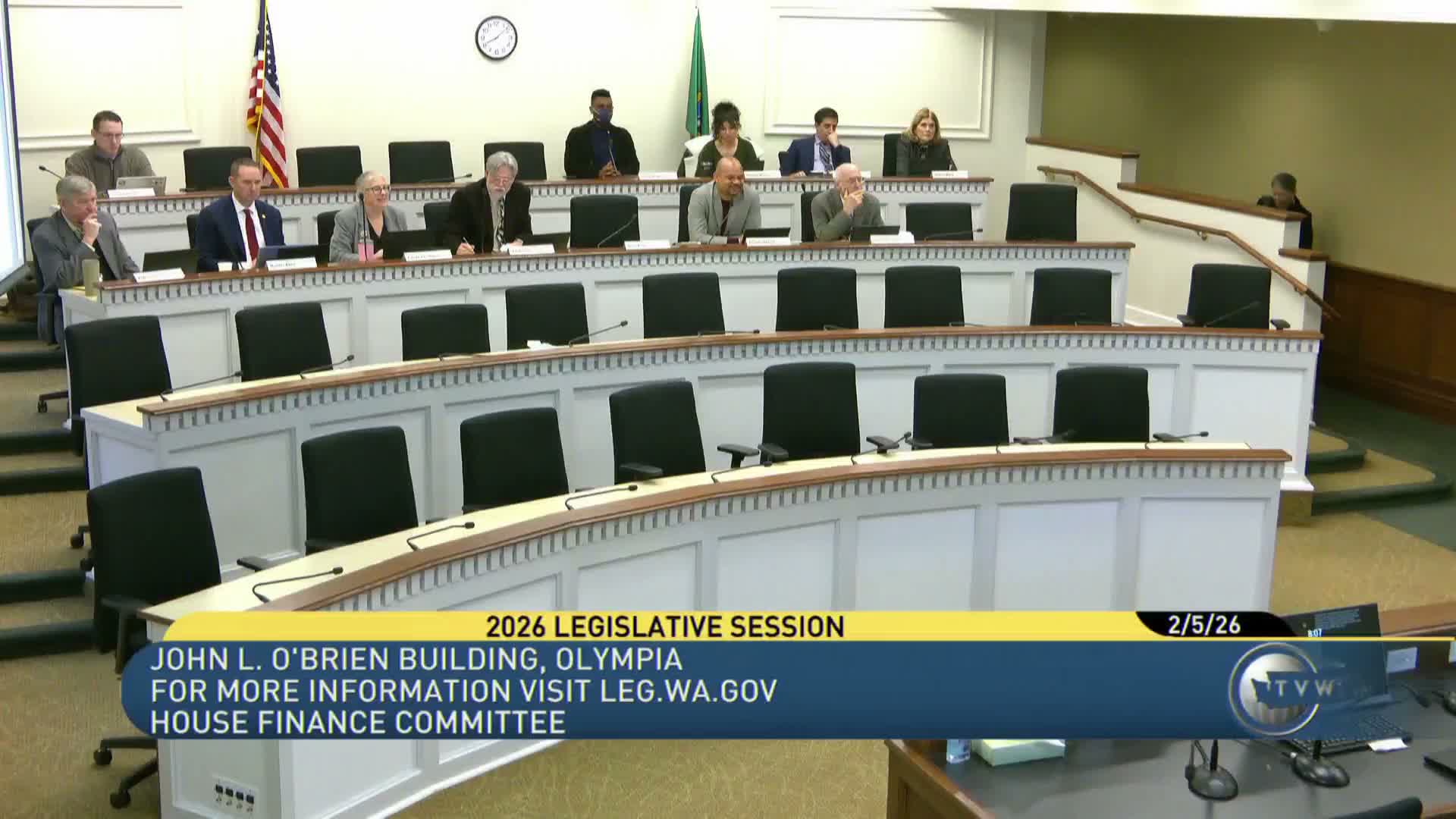
House Finance considered substitute HB 22‑24, which addresses how cities may form single‑city fire protection districts and how levy capacity is adjusted. Kellen Wright, committee staff, explained the bill would require a city that forms a fire protection district using the alternative method to reduce its levy rate (rather than the dollar amount) by the rate imposed by the fire protection district, exempt up to 25¢ of certain levies from the $5.90 aggregate taxing limit, and allow a district service authority to contract with the city for services.
Representative Seedy, the prime sponsor, said the proposal is a practical, locally driven tool to preserve fire and emergency medical services for small and mid‑sized cities facing rising costs, workforce pressures and aging infrastructure. He said the bill requires cities to prepare a clear financial plan for voters and described it as a means to preserve local control and fiscal transparency.
Supporters at the public hearing — including AJ Johnson (Washington State Council of Firefighters), Candice Bach (Association of Washington Cities) and Don Schwab (Every City Council President) — testified the change corrects an unintended penalty in current law that made the single‑city district option impractical for many cities and preserves revenue stability while leaving voters the choice to approve levies. AJ Johnson requested an amendment to require newly formed single‑city fire districts to hold elections for independently elected fire commissioners within two years, to ensure accountability.
Opponents expressed fiscal and process concerns. Jeff Pack (Washington Citizens Against Unfair Taxes) argued the bill would further burden taxpayers and questioned notice requirements. Matthew Ellsworth (Association of Washington Public Hospital Districts) said the bill could trigger prorationing that would prioritize hospital district levies and reduce their ability to fund local health services.
The committee closed the public hearing on SHB 22‑24 without taking final action during this meeting.