Get Full Government Meeting Transcripts, Videos, & Alerts Forever!
Get email alerts on the Labor Domestic Workers topic
No spam. Unsubscribe anytime.
Committee hears substitute to extend wage and workplace protections to domestic workers
Summary
Staff briefed the committee on substitute HB 23‑55, which would create standalone protections for domestic workers (including minimum‑wage/overtime coverage, written agreements, notice or severance on termination, anti‑retaliation protections), add discrimination protections, and authorize L&I enforcement with administrative penalties and a private right of action; L&I estimated several new FTEs and IT costs for enforcement.
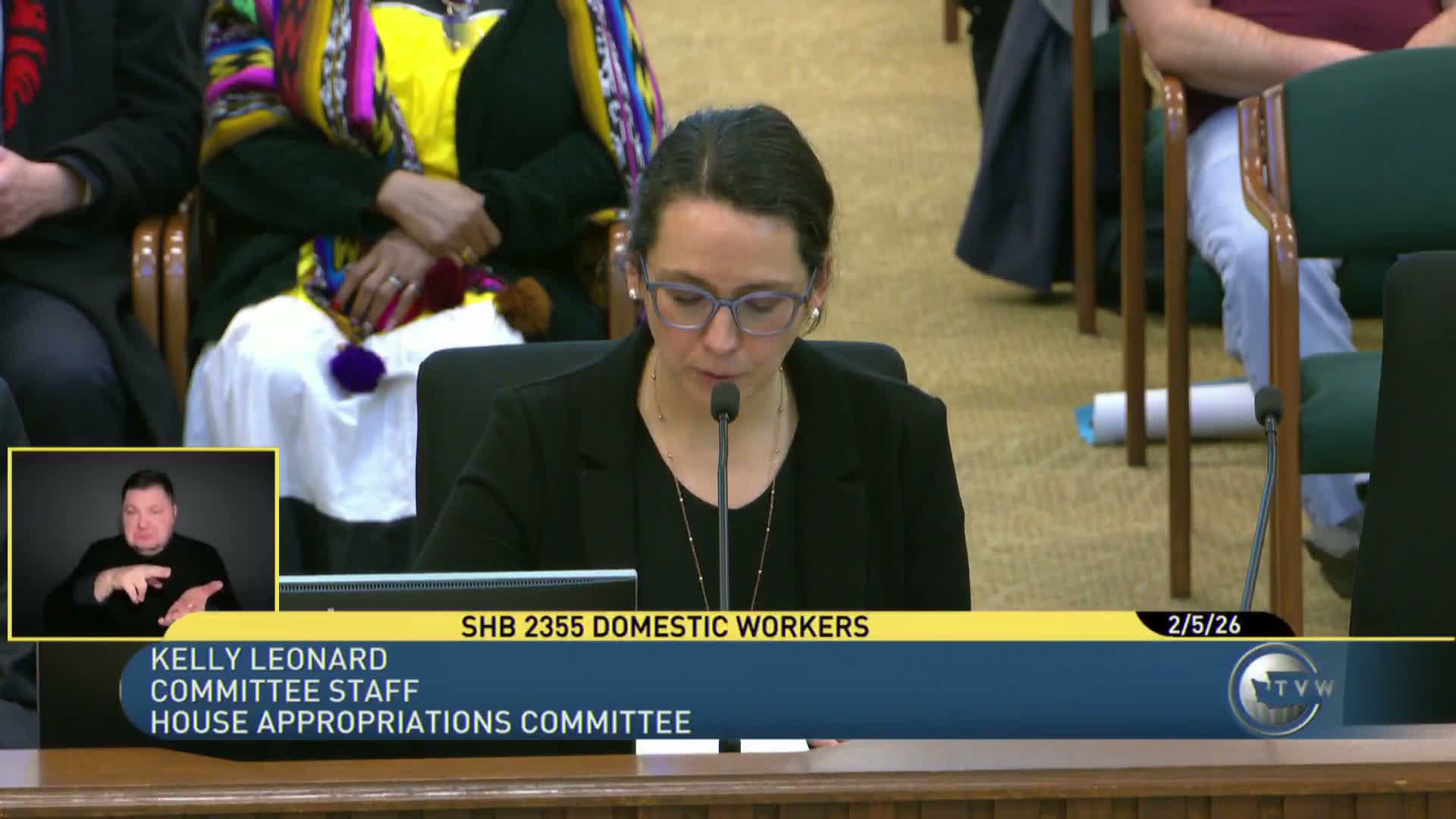
Kelly Leonard (Labor & Workplace Standards Committee staff) briefed the House Appropriations Committee on substitute House Bill 23‑55, which would extend a set of statutory protections to domestic workers and modify the Minimum Wage Act and Washington Law Against Discrimination to include certain categories of domestic work.
Under the substitute, a broad definition of "domestic worker" would cover individuals who perform home‑based services (nannies, housekeepers, home caregivers, gardeners, household managers, etc.) for four or more hours in any month; certain narrow exceptions apply (short‑term babysitting, some agency employees receiving state subsidies). Hiring entities would be required to pay at least the state minimum hourly wage and overtime where applicable, provide a written agreement specifying terms and pay rate, and give a two‑ or four‑week written notice before termination (or severance pay). The bill would prohibit creating an intimidating or hostile work environment and bar adverse actions for exercising rights; it also extends anti‑discrimination protections.
The fiscal note from L&I (as summarized by staff) projected additional administrative costs including about 7.9 FTEs to support investigations and an IT update; biennial costs were estimated in the low millions. Witnesses representing domestic‑worker advocacy groups urged passage to remedy longstanding exclusions; employer groups expressed concerns about private‑right‑of‑action exposure and compliance costs for small employers.
The committee took public testimony but did not vote on the substitute; staff said further technical adjustments and negotiated changes are ongoing.