Lifetime Citizen Portal Access — AI Briefings, Alerts & Unlimited Follows
Appropriations hears broad tobacco and vapor product substitute that raises retail and manufacturer fees
Loading...
Summary
Staff said substitute HB 24‑39 increases many licensing fees (for example, retailer/vapor license fees from $175 to $1,000), adds responsible‑vendor training, new manufacturer certification and testing, and redirects portions of tobacco tax revenue into cancer research, public health, and youth prevention accounts; public testimony split between public‑health proponents and retail/industry opponents.
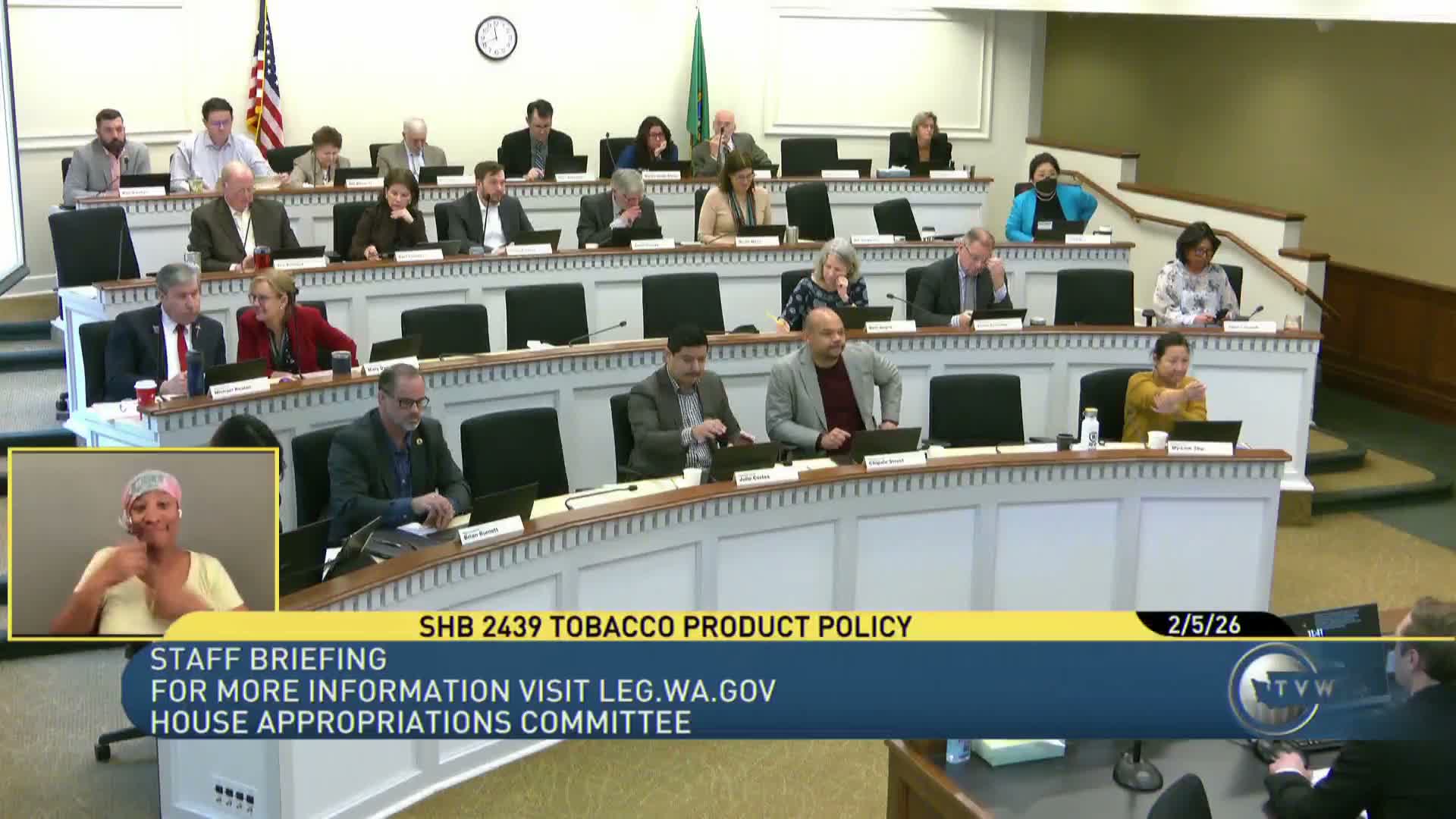
Peter Clodfelter, staff to the Consumer Protection and Business Committee, briefed the committee on the Senate substitute to House Bill 24‑39, a comprehensive package of changes to cigarette, tobacco product, and vapor product laws. He outlined ten policy areas including a voluntary Liquor and Cannabis Board responsible‑vendor program, large increases to retail and distributor license fees, certification and attestation requirements for vapor product manufacturers, enhanced age verification (requiring ID presentation and digital verification), lab testing authority for agriculture, and prohibitions on "entertainment" or imitation vapor products.
Clodfelter highlighted fee increases in the substitute example: the tobacco or vapor product retailer license fee would increase from $175 per year to $1,000 per year, while a cigarette wholesaler/distributor license would increase from $650 to $1,000 per year. The substitute also redirects portions of tobacco tax revenues to dedicated accounts (up to $10 million to the Andy Hill Cancer Research account, up to $10 million to the foundational public health services account, and up to $20 million to the youth tobacco and vapor products prevention account, subject to available receipts).
Industry witnesses — retail associations, food industry, convenience stores and small wholesalers — voiced concern over steep fee increases, administrative burdens and enforcement capacity. Public‑health witnesses (Washington State Public Health Association, Campaign for Tobacco‑Free Kids, and local public‑health associations) testified in favor, urging stronger retail restrictions on coupons and discounts and support for dedicating significant tobacco‑tax revenue to prevention and cessation.
Fiscal staff estimated state costs for implementation at several million over the 4‑year window with fee and penalty revenue increases partially offsetting account transfers; local impacts were not central to the briefing. The committee took public testimony but did not take a vote at the hearing.