Get Full Government Meeting Transcripts, Videos, & Alerts Forever!
Get email alerts on the Media Policy topic
No spam. Unsubscribe anytime.
Hearings on state program to fund local journalism draw wide support and legal concern
Summary
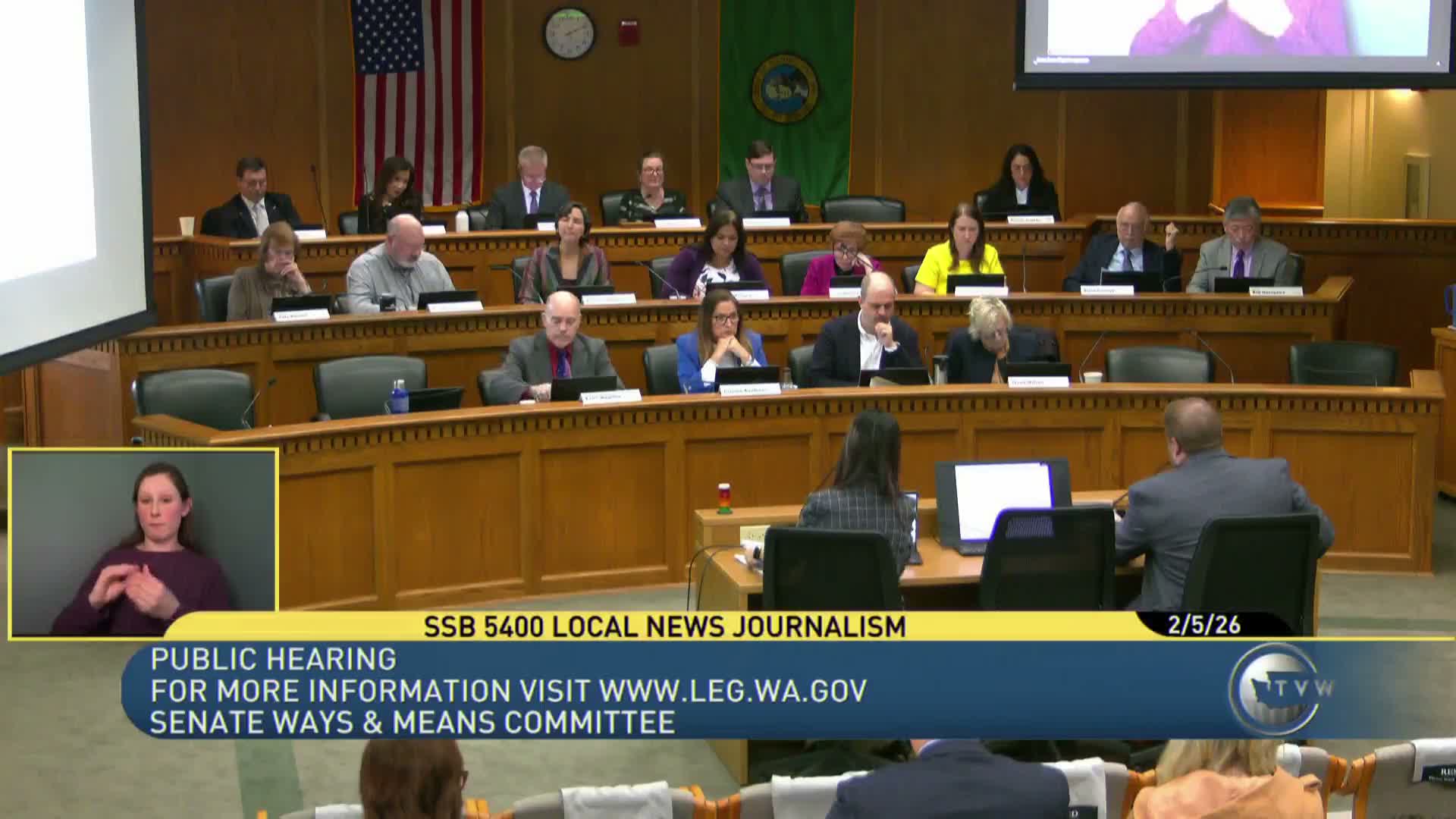
SSB 5,400 would create a Washington Local News Sustainability Program funded by a surcharge on large platforms to support journalist jobs and a fellowship program; newsroom leaders backed the bill as a lifeline, while technology and trade groups warned of legal challenges and federal preemption risks.
Staff described substitute Senate Bill 5,400 to create a Washington Local News Sustainability Program and a local journalism investment surcharge on covered platforms with revenue used to provide grants to eligible local news organizations and support a WSU journalism fellowship. The staff fiscal briefing noted an implementation date for the surcharge of 01/01/2028 and an estimate of roughly $27 million in the first year of revenue once implemented.
Editors and publishers such as the Seattle Times and smaller nonprofit newsrooms described steep newsroom declines and urged the legislature to act. Alan Fisco, president and CEO of the Seattle Times Company, called the measure a way to “protect journalism jobs” and described the proposed platform surcharge as a modest levy on very large companies. The League of Women Voters, smaller publishers and public‑interest groups also testified in support, emphasizing civic benefits and the fellowship program.
Industry trade groups — including the Washington Technology Industry Association — warned of legal risks and pointed to Maryland litigation over a similar approach, claiming potential conflict with federal law (Internet Tax Freedom Act) and litigation risk that could stall funding. Supporters said the design had been adjusted to broaden eligibility and protect editorial independence, while proponents stressed the program would not draw from general funds.
The committee received extensive testimony from local publishers, nonprofit newsrooms and advocates and indicated continued discussion about legal design and implementation.