Get Full Government Meeting Transcripts, Videos, & Alerts Forever!
Get email alerts on the Tax Policy topic
No spam. Unsubscribe anytime.
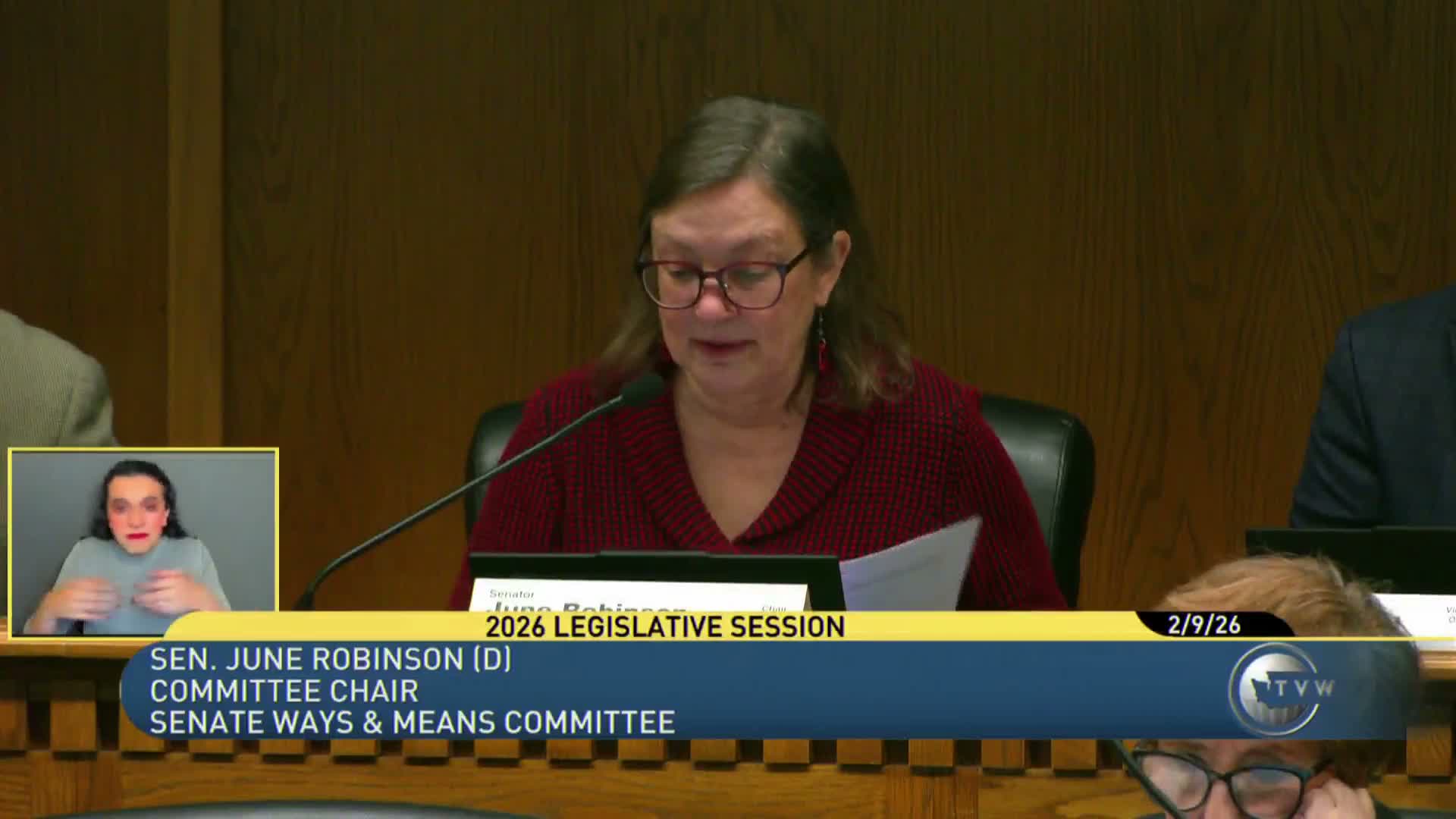
Senate ways-and-means committee advances substitute for 'millionaire's tax' after contentious debate
Summary
On Feb. 9, 2026, the Senate Ways and Means Committee voted to advance substitute Senate Bill 6,346 — a proposed income tax on individuals earning more than $1 million — to the Rules Committee after lengthy debate over constitutionality, fiscal impacts and targeted exemptions. The substitute and a series of amendments were considered; the substitute received a due-pass recommendation subject to signatures.
The Senate Ways and Means Committee advanced substitute Senate Bill 6,346, a proposal to impose a state income tax on individuals with more than $1,000,000 in income, during an executive session on Feb. 9, 2026.
Jeff Mitchell, staff to the committee, opened the day with a detailed briefing on the substitute and its fiscal picture, telling senators the bill would begin collections in fiscal year 2029 and produce an estimated $2.5 billion in revenue over four years while increasing four‑year expenditures by about $147 million. He described the sponsor’s proposed substitute and listed 11 amendments to the substitute addressing issues ranging from distribution formulas to charitable deductions and implementation details.
Sponsor Senator Petersen framed the substitute as designed to protect small businesses while targeting higher incomes. “We’re absolutely interested in a continuing conversation about the best ways to… use some of the proceeds from the millionaires tax to help out” those not subject to the tax, Petersen said during debate, while pointing to increased small-business credits in the substitute.
Opponents questioned the bill’s constitutionality and economic effect. Senator Braun argued the measure would harm in‑state companies that compete across state lines and said the proposal “is the wrong decision for the state of Washington,” citing constitutional precedents and long‑range economic concerns. Senator Gildan and others raised questions about administrative burdens for the Department of Revenue and the timeline for implementation.
Among amendments considered were: replacing an out‑of‑state tax credit with a full exemption for income taxed elsewhere; a one‑year delay to the effective date; carryback/carryforward rules for unused credits; a higher standard deduction for joint filers; an exemption for certain restricted stock units; a sales‑tax exemption proposal for diapers; and an amendment that would require a constitutional amendment to validate the act unless voters approve a change by Dec. 2026. One amendment (a proposed diaper exemption) was put to a roll call and failed on an 8–15–1 tally.
Committee members also debated whether to include referendum‑precluding language in the bill and whether some provisions should be set by constitutional amendment. Proponents repeatedly said the substitute includes protections and offsets for small businesses (for example a phased small‑business credit and a business income tax exemption up to $300,000), while critics said the measure sets a precedent that could expand the tax in future years.
After extensive debate and multiple amendment votes, the committee adopted parts of the sponsor’s substitute package and, by voice vote, gave substitute SB 6,346 a due‑pass recommendation to the Rules Committee subject to signatures.
The committee did not produce a roll‑call tally for the final recommendation on the substitute in the transcript; several amendments, however, were decided by roll call or voice vote as recorded in committee minutes. The matter is now scheduled for further action in the Rules Committee.
What’s next: SB 6,346 will proceed to the Rules Committee for scheduling and potential floor action. Any additional amendment language, fiscal notes or legal analyses expected to be submitted to the committee will be part of the public bill file and rulemaking and litigation contingencies referenced in staff briefing materials.