Get Full Government Meeting Transcripts, Videos, & Alerts Forever!
Get email alerts on the Crash Prevention Zones topic
No spam. Unsubscribe anytime.
Committee advances revised crash-prevention zones bill that allows cameras and raises penalties
Summary
On Feb. 9, 2026, the Transportation Committee advanced a revised substitute of Senate Bill 6,066 to the rules committee with a 'do pass' recommendation. Staff described competing substitutes that differ on penalty amounts, use of traffic cameras and how zone revenue is distributed.
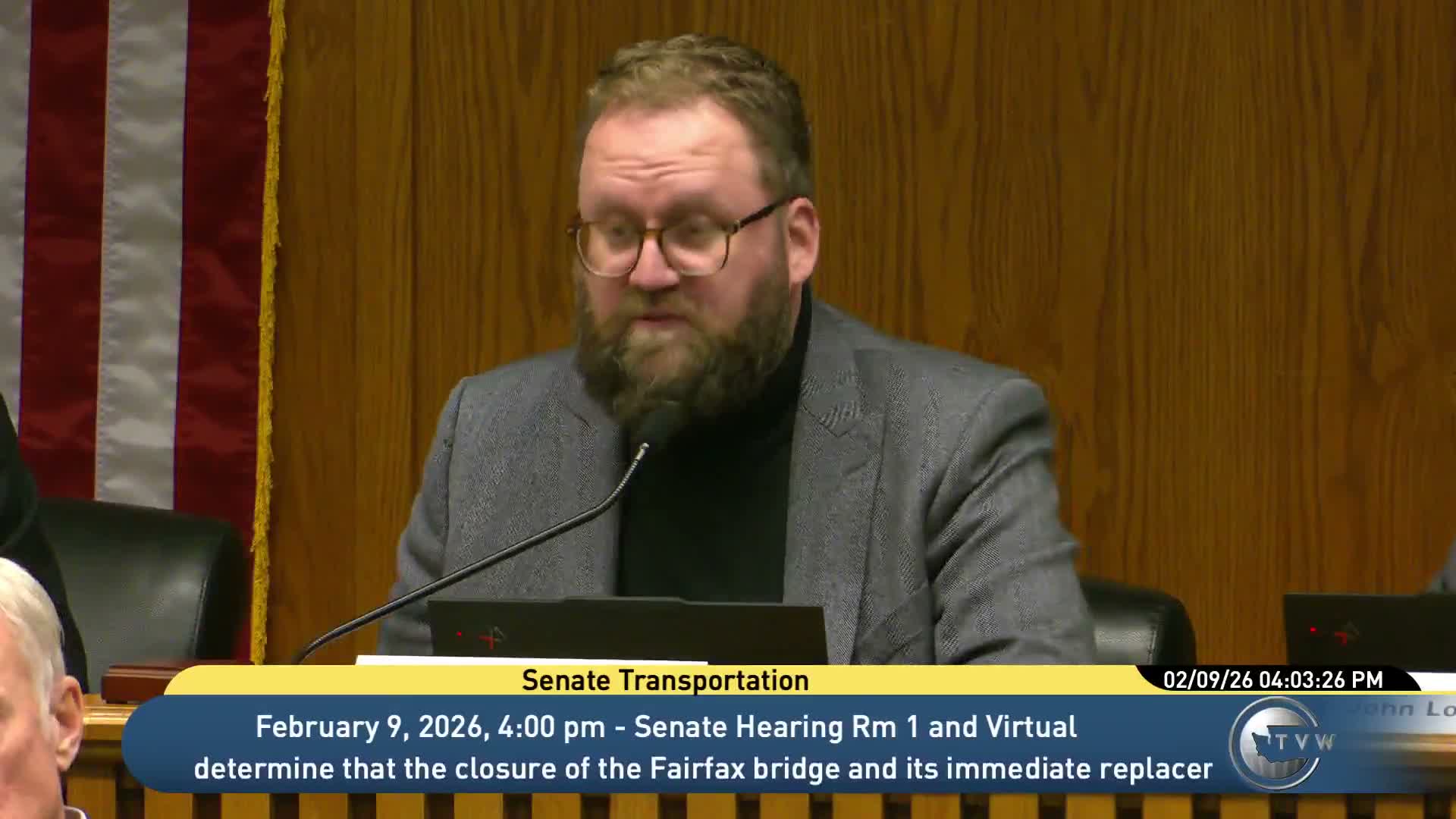
The Transportation Committee advanced a revised substitute of Senate Bill 6,066 on Feb. 9, 2026, sending the measure to the rules committee with a do-pass recommendation after a staff briefing and brief questioning.
Committee staff Brandon Popovac summarized the bill as one that “allows local jurisdictions or the Washington Department of Transportation to create a crash prevention zone by identifying public roads where there have been a multitude of collisions that have caused serious injuries or fatalities,” and that it “requires the jurisdiction creating the zone to conduct an engineering and traffic investigation of the public roads in the zone to identify safety improvements.” Popovac described two competing proposed second substitutes: one offered by Sen. King (S-4756.1) and a second offered by Sen. Lias (S-4840.2). The Lias version, which the committee advanced, would authorize local jurisdictions to use traffic-safety cameras with penalties of up to $290 and authorize WSDOT to use speed-reduction methods and technologies.
Popovac said the Lias substitute “authorizes local jurisdictions that create a zone to use traffic safety cameras for speed infractions committed within the zone with a penalty amount of up to $290 to be distributed to the local jurisdiction for zone component purposes after though camera administrative costs are covered,” and that the substitute creates a double penalty for unlawful use of a personal electronic device in a zone. He also noted changes to how zones may be dissolved and that Senator King had withdrawn his substitute.
Sen. Christian pressed staff about the distribution of distracted-driving penalty revenue, asking, “Where's the it said 50% to go to the the locals, what's the other 50% go to, please?” Popovac replied, “On the distracted driving penalty? So currently, it's, a mix of, funds that go to the court system. The locals get even a fraction of that 50%. 50% or portion of that is to the state general fund.” Popovac offered to provide a more detailed breakdown to the senator.
Vice Chair Levick moved that the proposed second substitute (s 4,840.2) be advanced with a do-pass recommendation to the rules committee. The motion was seconded and carried by voice vote. The committee’s action advances the Lias version of SB 6,066 to the rules committee subject to signature.
The committee record shows the primary policy changes in the advanced substitute are (1) authorization for jurisdictions and WSDOT to create crash prevention zones with engineering reviews; (2) increased penalties for certain infractions within posted zones and a mechanism directing some penalty revenue to zone accounts; (3) authorization for traffic-safety cameras with a cap on penalties; and (4) tightened limits on some previous zone-dissolution options. The committee took no further action on implementation details; staff indicated it would provide more detailed distributions of penalty revenue on request.
The committee advanced the bill to the rules committee; no floor timetable was specified during the meeting.