
House adopts amendments to Climate Commitment Act compliance bill after heated floor debate
Get AI-powered insights, summaries, and transcripts
Subscribe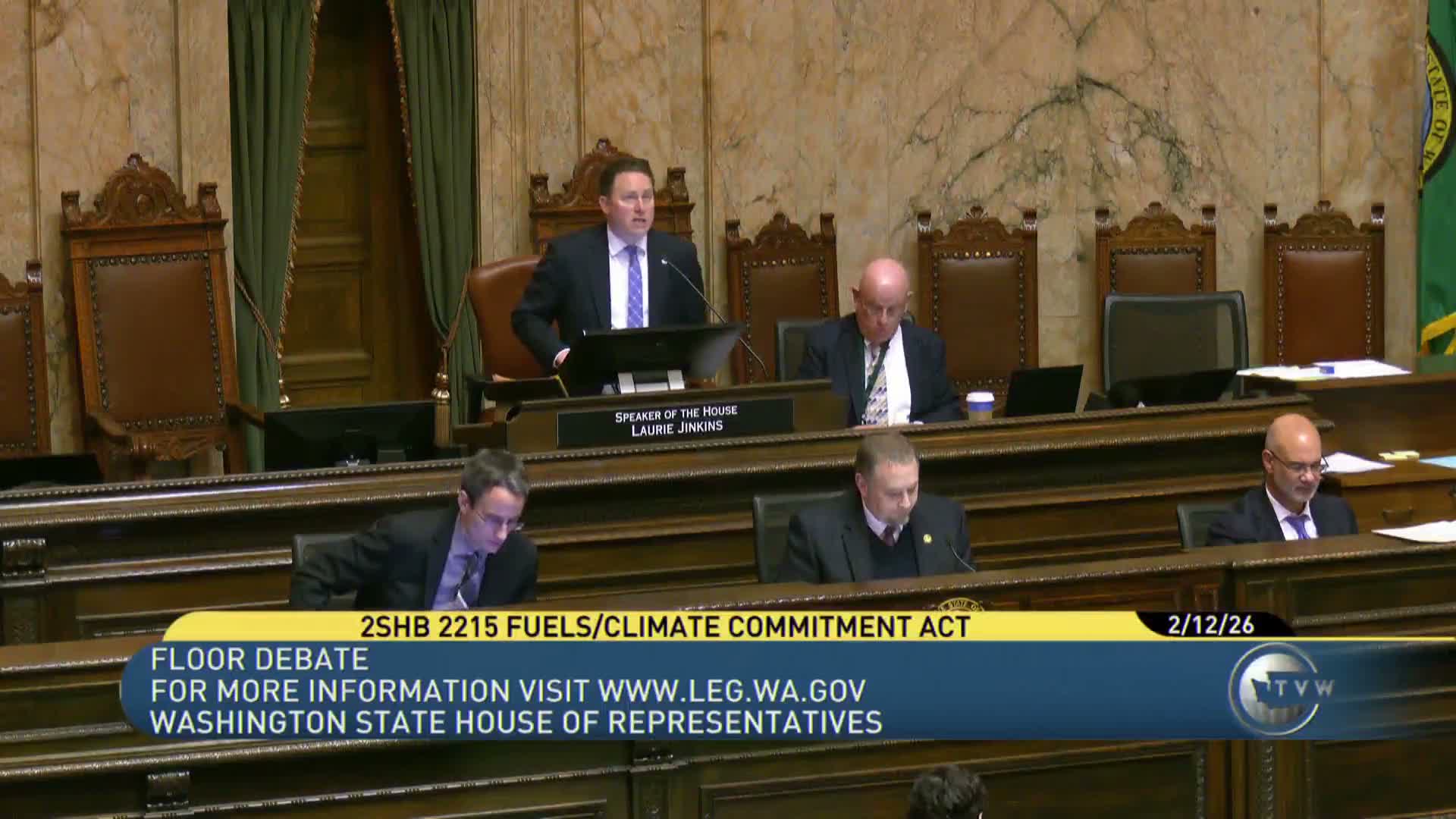
Summary
The House approved changes to HB 22 15 addressing compliance thresholds under the Climate Commitment Act. Debate focused on rulemaking authority for the Department of Ecology, market effects, and rural impacts; one amendment curbing agency discretion was adopted and the bill passed.
The House took up HB 22 15, a second substitute bill aimed at adjusting Climate Commitment Act (CCA) compliance obligations for fuels, and adopted a sequence of amendments after extended debate.
Representative Dye argued for an amendment to restrict the Department of Ecology’s ability to alter compliance obligations via rulemaking, saying market participants rely on predictable obligations and that sudden rule changes would harm participants who have taken positions in the allowances market. "The amendment... removes the Department of Ecology's authority to move the goalposts," Dye said. Representative Fitzgibbon, opposing that restriction, urged continued agency flexibility to set thresholds for new entrants so the statute meets its intent of preventing market avoidance.
Other members warned of economic consequences. Representative Dye and others argued that expanding compliance to additional fuel sellers could raise allowance scarcity and energy prices. Representative Abel and Representative McIntyre raised concerns about rural impacts and added costs for residents who drive long distances.
After contentious floor debate and multiple amendment votes, the House adopted amendment 16 31 (after a recorded division) and later recorded final passage of the engrossed second substitute HB 22 15 with a roll call of 57 yays, 38 nays, 3 excused. Supporters called the bill a needed fix to close loopholes in coverage; opponents warned of higher fuel prices and burdens on rural communities.