Get AI Briefings, Transcripts & Alerts on Local & National Government Meetings — Forever.
House approves literacy-focused bill to expand evidence-based reading instruction
Loading...
Summary
The House passed Engrossed Substitute House Bill 12 95 on a broad bipartisan margin (96–1), advancing a policy to standardize evidence-based literacy instruction and teacher training for early grades. Sponsors framed it as a step to improve third-grade reading proficiency.
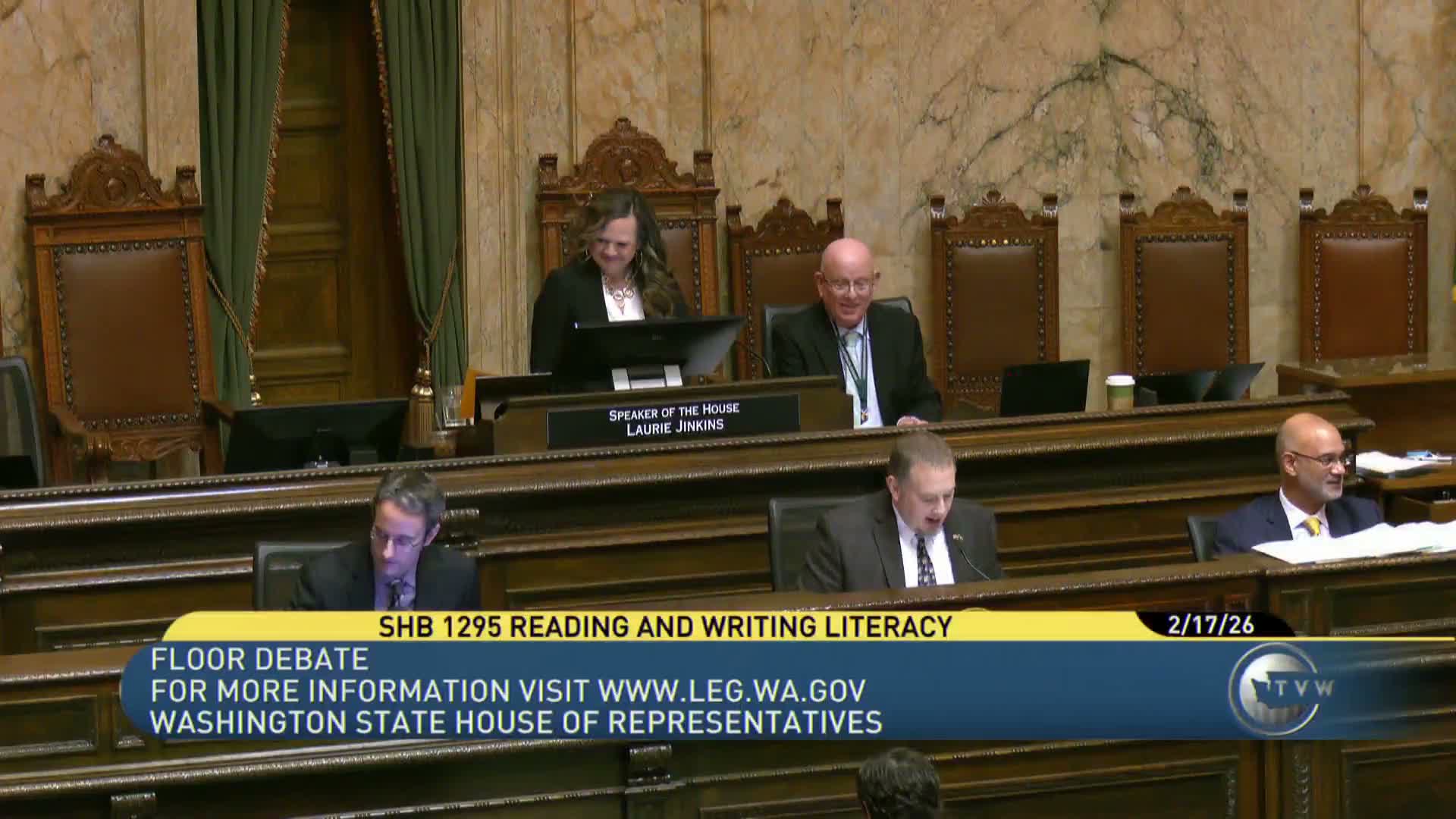
Engrossed Substitute House Bill 12 95, a measure to promote evidence-based literacy instruction in K–3 classrooms, passed the Washington State House by a wide margin on third reading. The Clerk recorded 96 yeas, 1 nay and 1 excused, and the bill was declared passed.
Representative Pollet, who moved adoption of a technical amendment to the bill, framed the measure as a corrective step to bring instruction in line with decades of literacy science: "Decades of science show that all children in every language learn to read using what we are referring to here as a comprehensive literacy program with very specific scientifically demonstrated elements," Pollet said during remarks. Supporters said the bill seeks to boost third- and fourth-grade reading outcomes; the sponsor cited a floor statistic that "40 percent of our third and fourth graders aren't reading at grade level." Representative Keaton jokingly endorsed a grammar-focused amendment, calling it "an appropriate amendment for a reading and writing literacy bill."
Floor discussion emphasized teacher training, early intervention and long-term student outcomes. Supporters described the legislation as a meaningful, nonbudgetary step to modernize reading instruction and teacher preparation in Washington schools. The bill was advanced to final passage with unanimous or near-unanimous support, and the clerk confirmed final passage by roll call.