Get Full Government Meeting Transcripts, Videos, & Alerts Forever!
Get email alerts on the Local Tax Authority topic
No spam. Unsubscribe anytime.
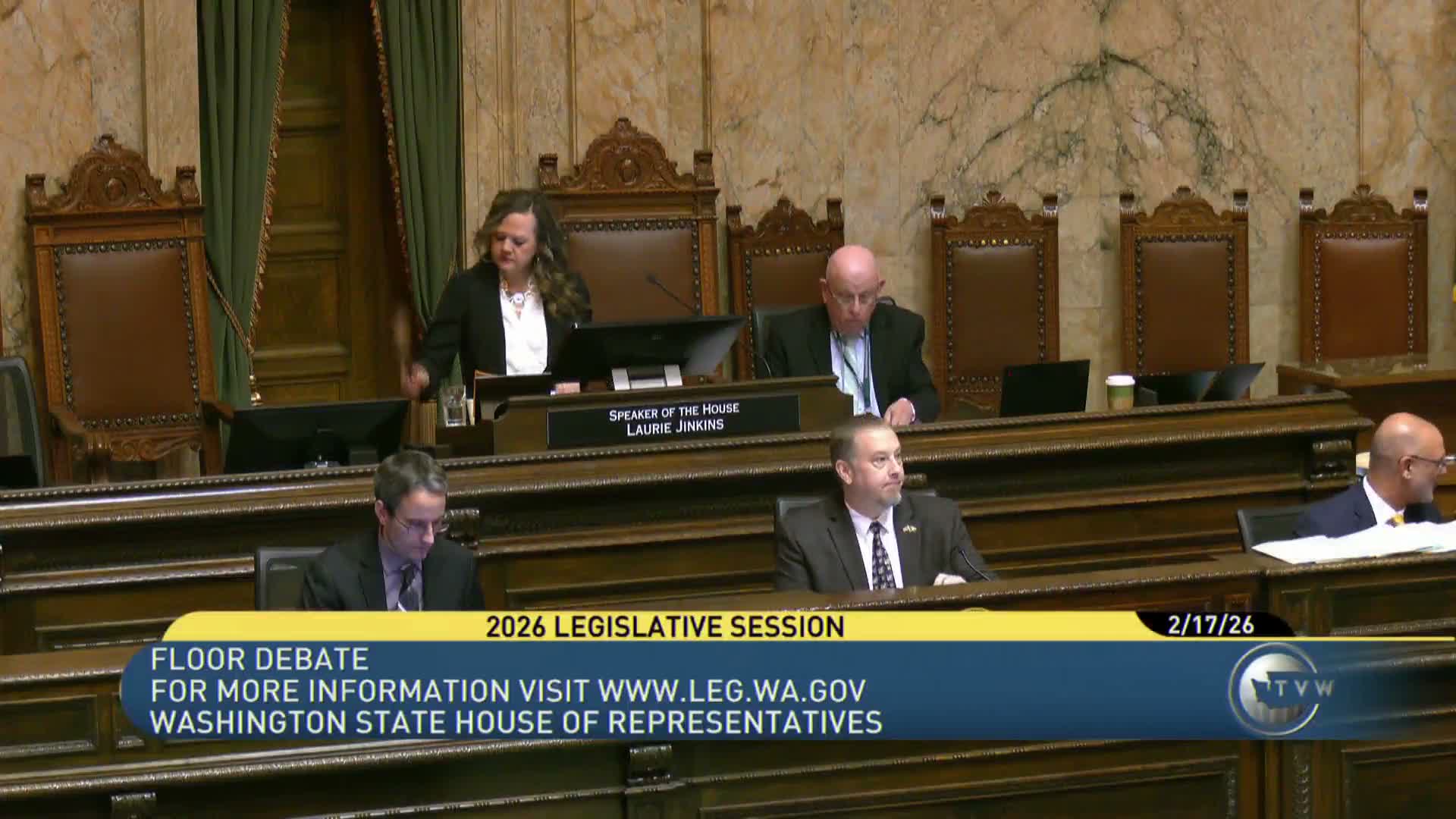
House passes substitute bill changing local tax authorities after partisan floor debate
Summary
The Washington State House passed Engrossed Substitute House Bill 24 42 after floor debate and a roll-call vote (53–44). Debate centered on whether certain local tax increases should require voter approval or remain councilmanic decisions; multiple amendments were considered and several were adopted.
Engrossed Substitute House Bill 24 42 cleared the Washington State House after a contentious floor debate that focused on local tax authority and the scope of councilmanic (nonvoter) tax increases. The bill, which the Clerk said "takes effect 07/01/2026," advanced on a 53–44 roll-call vote with one member excused.
Proponents of a voter-approval requirement said the change would give residents a direct say on new local tax increases. "The effect of this amendment is to remove the councilmanic authority for, the proposed tax increases and require a vote of the people," Representative Abell said when moving amendment 1998. Opponents argued that counties and cities need flexibility to fund services. "I would respectfully ask you to join me in voting no on this amendment," Representative Zahn said, urging local discretion for public health clinics and other services.
On the floor the House considered a sequence of amendments. Amendment 1998 (requiring voter approval for certain tax increases) failed on voice vote. Amendment 2039, described by Representative Burke as adding "additional flexibility" and making technical corrections around public-health funding, was adopted. Representative Jacobson's amendment to limit potential real estate excise tax (REIT) rate increases — which included an example of how a $500,000 sale could be affected — was also adopted after debate about housing affordability. Representative Orcutt spoke several times in support of voter-approval language, stressing constituent concern about rising property taxes.
Final remarks before the roll call emphasized local capacity and the state’s relationship with counties. "Our counties, by constitution, are an arm of the state," Representative Wiley said, arguing that local officials need tools to meet residents' needs. The Clerk recorded 53 yeas, 44 nays and 1 excused and Speaker declared the bill passed.
What happens next: the bill was advanced and declared passed on the House floor; the clerk recorded the final tally and the act’s effective date was read on the floor.