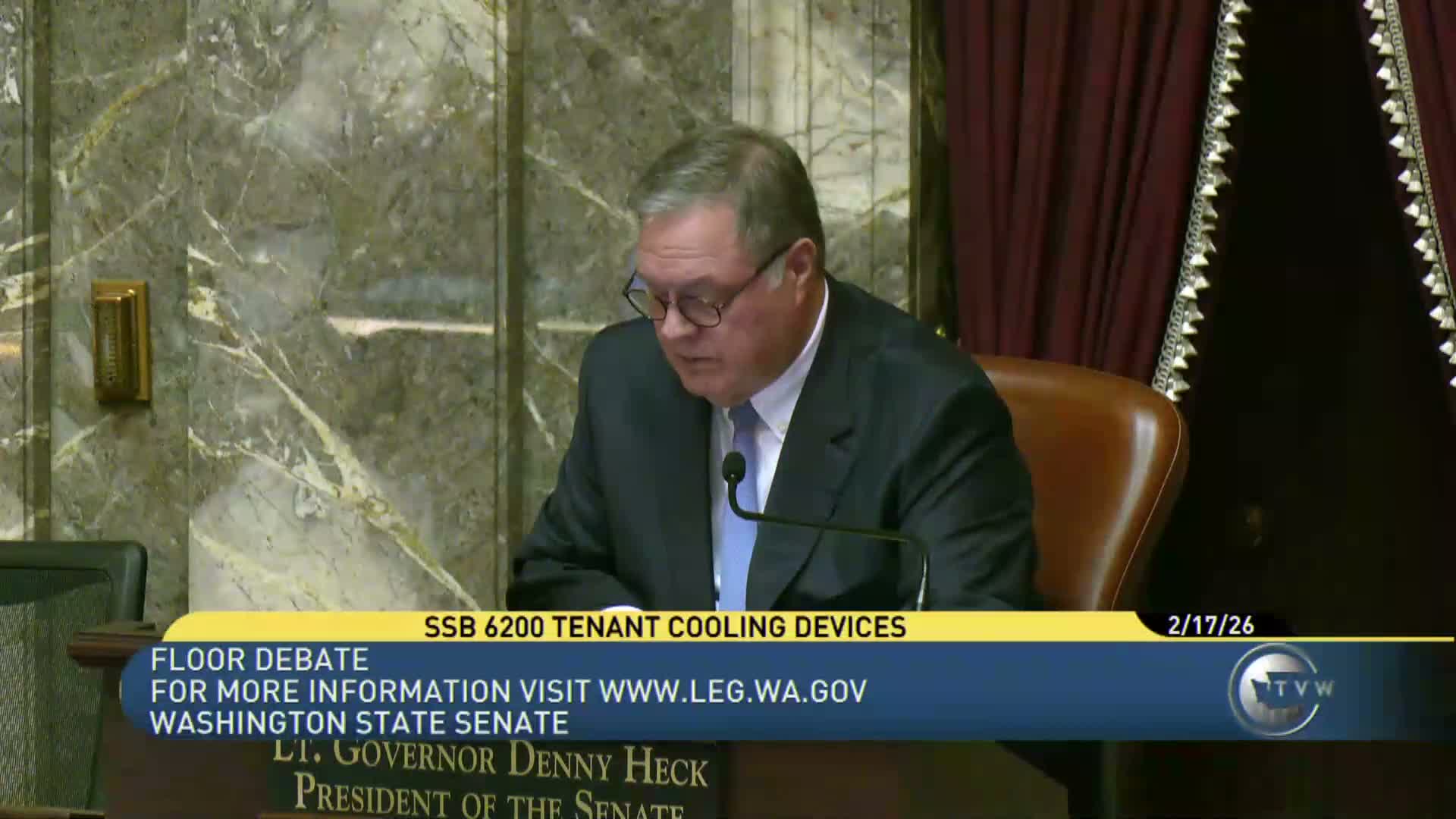
Senate passes bill letting renters install portable cooling devices during extreme heat with guardrails
Loading...
Summary
The Senate approved substitute Senate Bill 6200, allowing renters and mobile‑home occupants to use approved portable cooling devices during extreme heat events under safety and notification rules; the measure passed after debate about landlord liability and building safety.
The Washington State Senate on Monday passed substitute Senate Bill 6200, a measure to allow renters and mobile‑home occupants to install and use portable cooling devices during extreme heat events subject to building‑code, safety and landlord notification requirements.
Sponsor Senator Slatter argued the bill addresses deadly indoor heat exposures and provides modest, targeted relief for tenants: "Extreme heat is not just a nuisance. It's a mass casualty health emergency," she said on the floor while urging colleagues to adopt the measure and its technical amendments. The bill's sponsor and supporters emphasized guardrails: devices must comply with building codes and manufacturer guidelines, tenants may not damage property, and landlords can deny approval on insurance or safety grounds.
Opponents acknowledged the public‑health rationale but raised practical concerns. Senator Wagner noted questions about installation standards and long‑term ownership of units, asking, “Who owns the unit? Under most leases it says once you make a permanent fixture the landlord owns it,” and warned of potential property damage and utility cost disputes. Senator Gaynor and others supported changes adopted in amendments that addressed notification, liability and unit types.
Floor debate included examples of earlier policy models (Oregon and local ordinances) and technical amendments to clarify unit types and liability. The final roll call recorded 35 ayes and 14 nays; the presiding officer declared a constitutional majority and the bill passed.
The measure does not require landlords to retrofit properties; instead it authorizes tenants to use portable devices that meet specified safety standards and preserves landlord protections where insurance or code compliance is an issue. The bill was advanced and will proceed through enrollment and the remaining steps to become law.
Next steps: The bill passed on final passage and is to be enrolled; the transcript did not state an effective date in floor remarks.