
Bill would create statewide low‑income energy assistance program to address $270M estimated need
Get AI-powered insights, summaries, and transcripts
Subscribe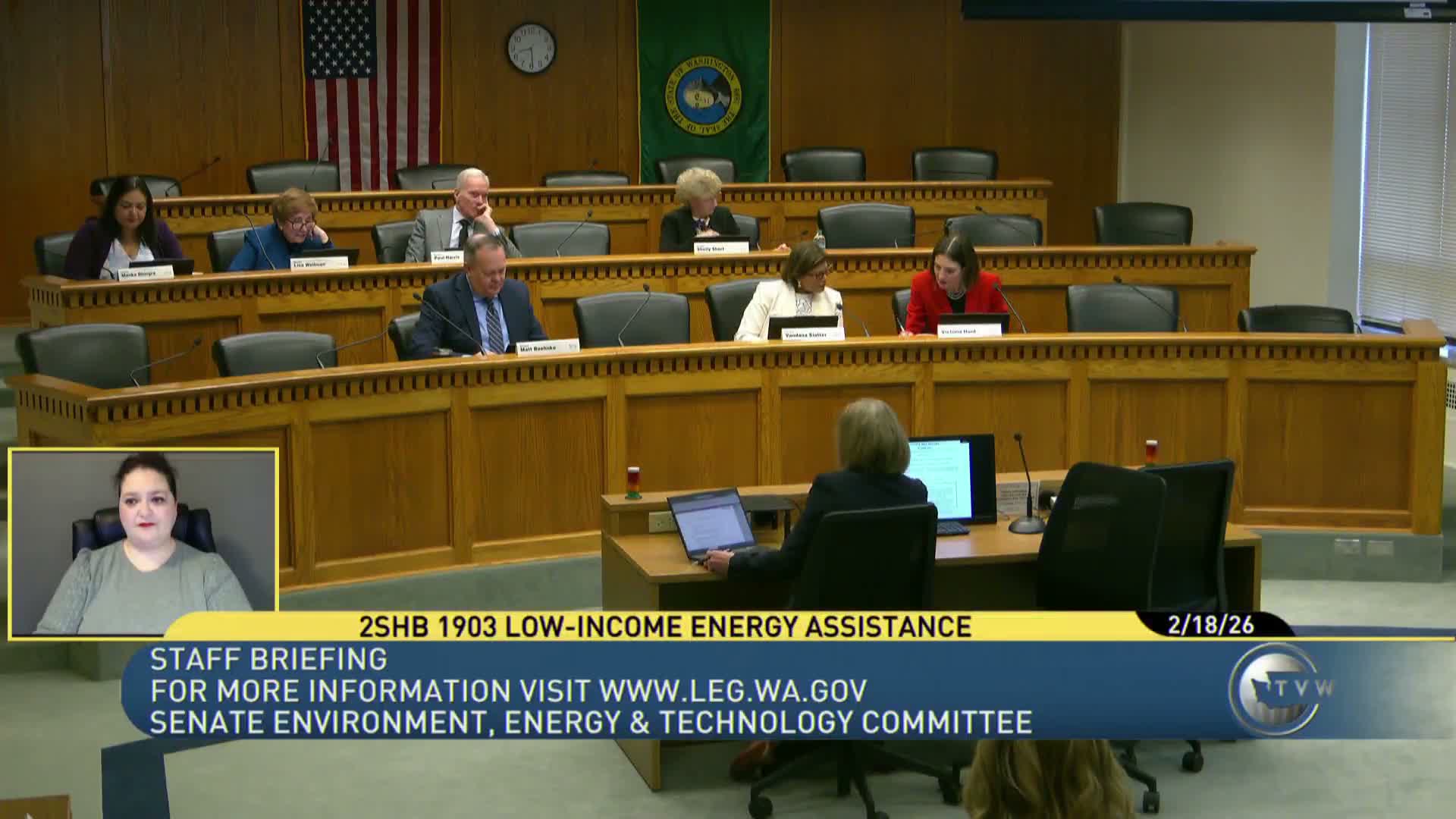
Summary
HB 1903 would establish a phased, statewide low‑income energy assistance program administered by Commerce, designed to build on existing utility and community action agency programs; supporters say the state faces about $270–275 million in unmet annual need for energy assistance.
Engrossed Second Substitute House Bill 1903 would create a statewide low‑income energy assistance program at the Department of Commerce to reduce energy burden for households across Washington. Committee staff described the program as phased in subject to appropriation, with enrollment options via utilities, community action agencies, or direct application, and a requirement that participating utilities not reduce existing assistance levels.
Supporters from community action agencies, utilities, environmental justice groups and local officials testified extensively. Jeff DeLuca of the Washington State Community Action Partnership said the Department of Commerce estimates approximately $275,000,000 in annual unmet low‑income energy assistance needs and that the bill is the product of extensive stakeholder collaboration. Representative Mena, sponsor of the bill, said the program is intended to be opt‑in for utilities, phased, and targeted to areas with high energy burden.
Utility representatives and public utility districts supported the bill in principle but expressed concerns about voluntary participation, funding apportionment, administrative burden, and ensuring the state does not shift costs onto ratepayers. Avista and other utilities urged careful design of grant vs. reimbursement pathways and equitable distribution. Advocates and rural commissioners emphasized the importance of returning Climate Commitment Act (CCA) funds or general funds to help the most energy‑burdened households.
Committee members and witnesses also discussed coordinating the program with weatherization and other long‑term efficiency measures to reduce energy burden permanently. The hearing closed after broad testimony with stakeholders agreeing to further technical conversations.