Lawmakers weigh repeal of Clark County freight-rail overlay after years of conflict
Loading...
Summary
Sen. Adrian Cortez and local residents urged repeal of a 2017 exemption that allows freight-rail dependent use overlays in Clark County, citing alleged unpermitted activity, environmental investigations and roughly $1 million in county legal costs; railroad operators and business groups warned repeal would strand investments and undermine competitiveness.
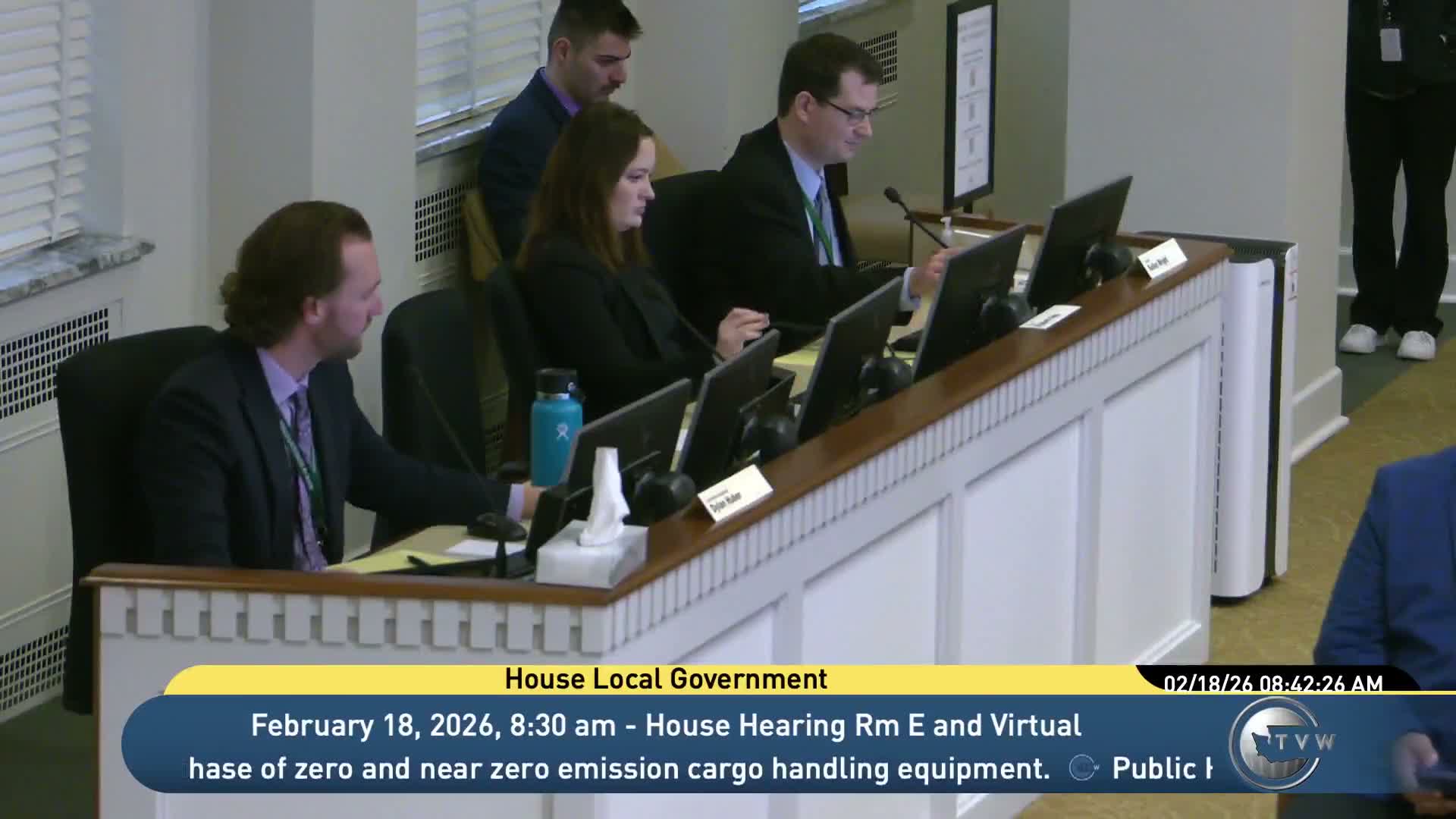
A House Local Government Committee public hearing on Senate Bill 5820 ranged across competing accounts of land-use policy, environmental compliance and economic development tied to a short-line railroad in Clark County.
Sen. Adrian Cortez (18th Legislative District) asked the committee to restore uniform Growth Management Act protections to Clark County by repealing a 2017 carve-out he said has "undermined the very purpose of the Growth Management Act." Cortez accused the railroad operator of repeated unpermitted activities that triggered investigations and consent decrees by federal and state agencies and said those issues cost local taxpayers "close to $1,000,000 in litigation fees." (Adrian Cortez)
Operators and industry groups pushed back. Amber Carter, representing the Portland Vancouver Junction Railroad (operator of the Cholachee Prairie Railroad), said repeal would affect contractual rights, strand significant public and private investments in infrastructure and industrial parcels planned for rail-served development, and that the record includes legal opinions and Department of Natural Resources correspondence arguing preemption concerns. "Duty, due process and contractual obligations would be impacted if this bill becomes law," she told the committee. (Amber Carter)
Business representatives including Ken Chubb of the Association of Washington Business said repealing the FRDU authority would undermine a carbon-efficient freight option and limit communities' ability to plan for rail-served industrial development. "Rail is one of the most carbon efficient modes of freight mobility and supports Washington's climate goals," Chubb said. (Ken Chubb)
Local elected officials and community groups urged repeal. Troy McCoy, council member and former mayor of Battle Ground, said his city had unanimously passed a resolution opposing the overlay and that the unused rail corridor bisects efforts to create a walkable downtown. John Nanny of the Cholachee Prairie Coalition said SB 5517 was a "failed experiment" that has cost Clark County close to $1,000,000 in staff time and legal fees and alleged environmental harms at multiple sites. (Troy McCoy; John Nanny)
Committee members asked for documentation cited by Cortez and for more specific measures of economic benefit from the short line (truck trip reduction, carload data, timing for possible bridge-staging work). Amber Carter and other witnesses said technical and contractual materials had been sent to committee members and that some questions would require follow-up.
The hearing recorded sharply divided testimony on whether the FRDU carve-out enables necessary low-emission freight access and jobs or instead opens the county to environmental damage and legal costs. The committee closed the public hearing after receiving testimony from proponents, opponents and local officials; no vote was taken that day.