
Committee hears debate over keeping ban on public funding for fully automated port equipment
Get AI-powered insights, summaries, and transcripts
Subscribe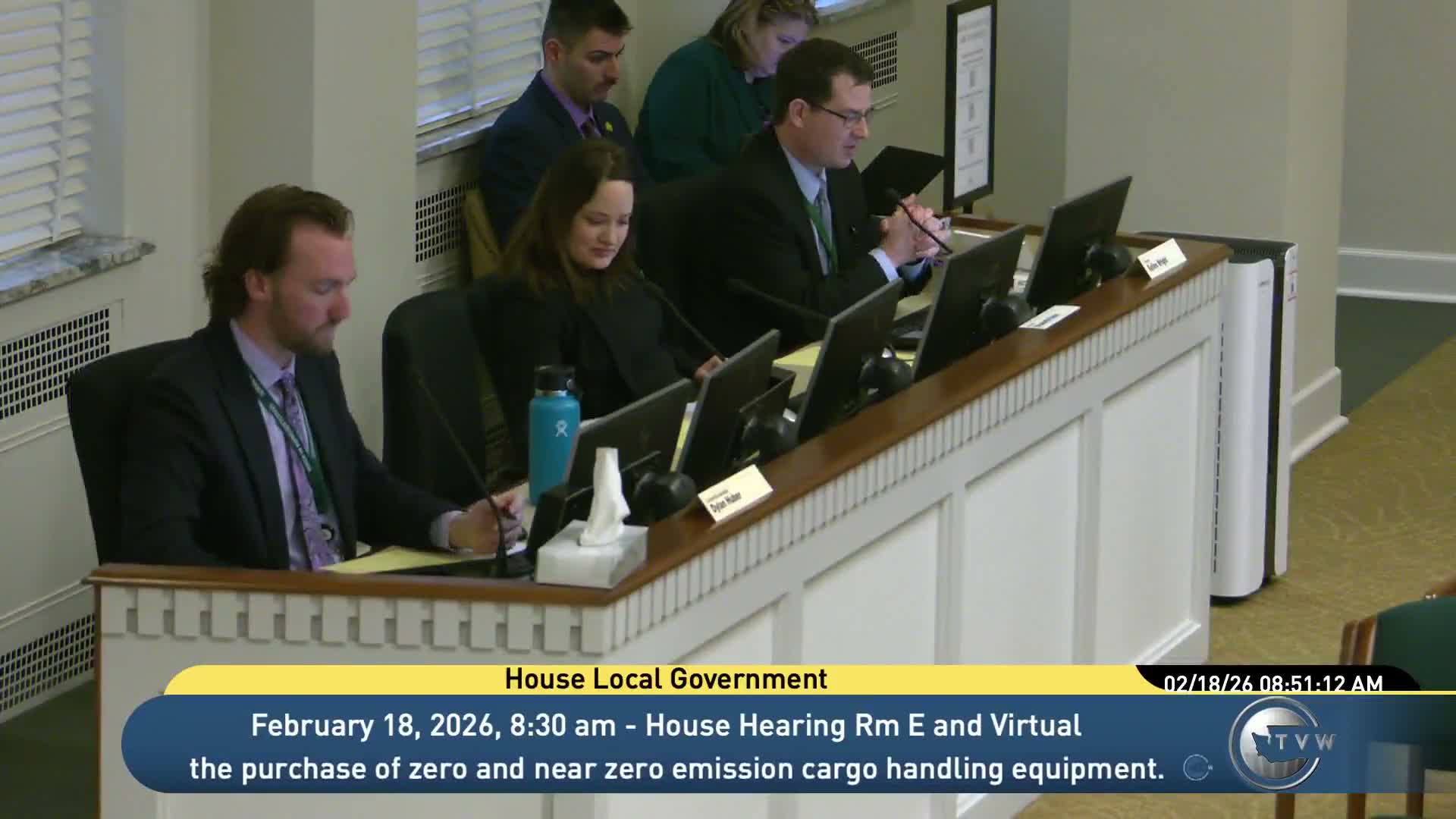
Summary
Supporters including longshore unions urged the House Local Government Committee to remove a sunset and make permanent a restriction on using public funds to buy fully automated marine cargo-handling equipment, while industry groups warned the change could limit competitiveness and public investment into port modernization.
A House Local Government Committee public hearing on Senate Bill 5995 featured competing arguments over whether state funds should ever be used to purchase fully automated cargo-handling equipment at public ports.
Sen. Salman, sponsor of SB 5995, told the committee the bill removes a 2031 sunset on a 2021 law that authorizes ports to buy zero- and near-zero-emission equipment while prohibiting use of public dollars to purchase fully automated container-handling systems. "It just says we're gonna remove that sunset clause," Salman said, adding that the change helps protect "working wage family jobs at ports." (Sen. Salman)
Labor witnesses described job preservation, worker safety and operational reliability as central reasons to keep the prohibition in place. Dan McKisson, president of the ILWU Washington Area District Council, said taxpayer dollars often make automation affordable for multinational tenants and "do not benefit ports, workers, or the community." He urged the committee to "support SB 5995, eliminate the sunset clause" so public funds do not underwrite automation that eliminates local jobs. (Dan McKisson)
Sarah Esch of ILWU Local 19 argued automation is not a cure for declining cargo volumes and is inferior in nonideal conditions: "Automated systems are terrible at handling non ideal conditions, like bad weather, or in emergency scenarios where critical thinking is required." She said the bill does not ban private automation purchases but prevents state money from being used to automate jobs away. (Sarah Esch)
Industry representatives urged caution. Scott Hazelgrove of the Pacific Merchant Shipping Association said Washington ports have suffered long-term declines in cargo volume and that public investment can be one tool to improve competitiveness. "Is automation absolutely the answer? We don't know," Hazelgrove said, but he warned that removing the sunset eliminates a potential public-investment lever to sustain ports and jobs and described the bill as premature. (Scott Hazelgrove)
Union and safety advocates emphasized safety risks they say would increase without human oversight. Dan Tuohig, vice president of the International Organization of Masters, Mates and Pilots, described maritime scenarios where in-person coordination is essential, recalling a recent container-ship incident to illustrate the need for human judgment. (Dan Tuohig)
The hearing included a mix of in-person and remote testimony from rank-and-file longshore workers and union leaders who argued that taxpayers should fund the transition to zero-emission, human-operated equipment rather than subsidize private automation. Industry groups countered that limiting investment options could reduce ports' ability to compete for cargo. The committee closed the public hearing on SB 5995 without taking a vote and moved on to other items on the agenda.