
Bill would let social‑housing public development authorities use housing‑cooperation tools
Get AI-powered insights, summaries, and transcripts
Sign Up Free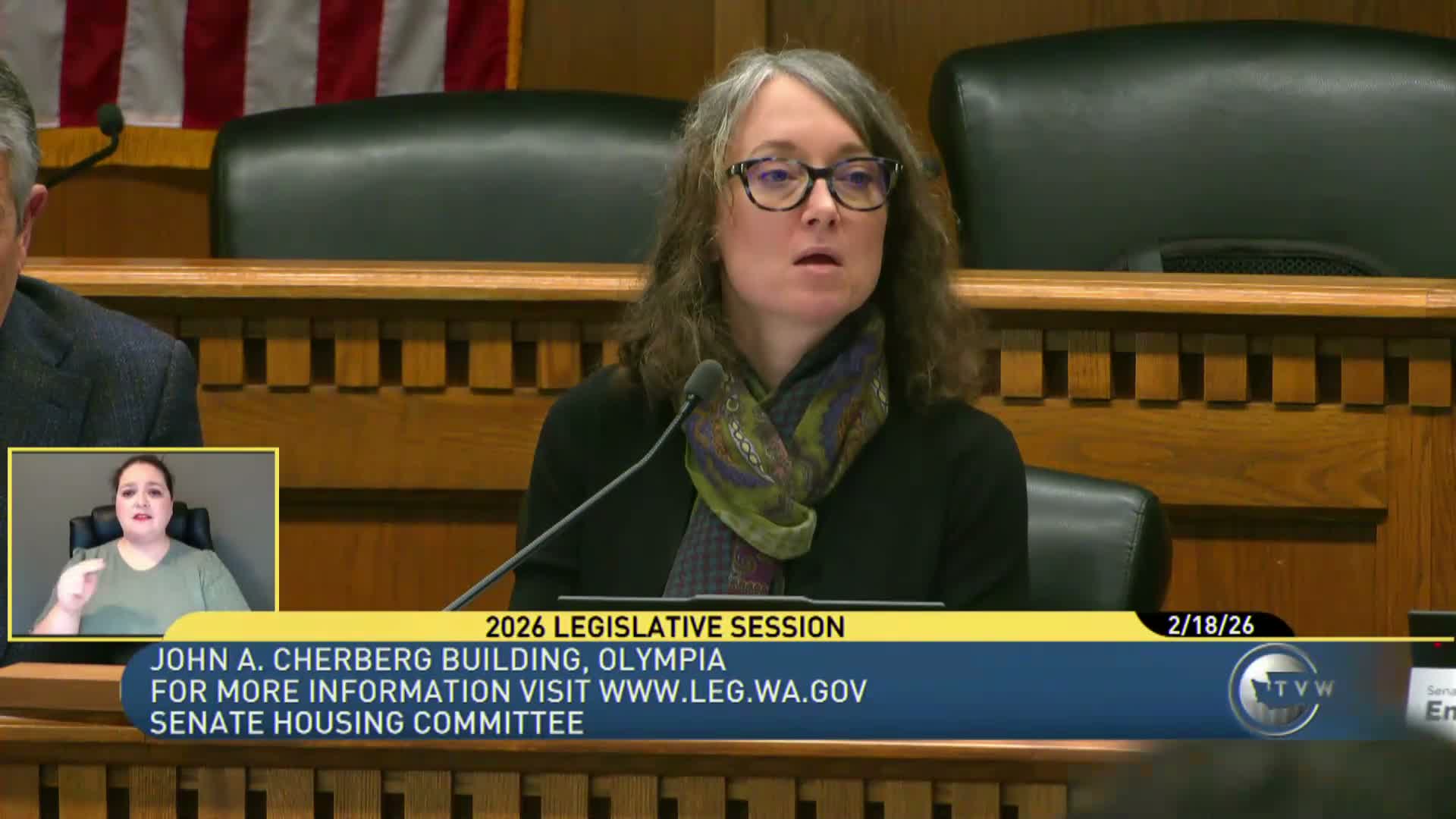
Summary
EHB 1687 would extend the state's housing cooperation law to include social housing public development authorities, enabling local governments to support social housing PDAs with tools now available to public housing authorities.
Engrossed House Bill 1687, before the Senate Housing Committee on Feb. 18, would add social‑housing public development authorities to the list of entities eligible for assistance under the state housing cooperation law. Committee staff defined social housing as subsidized or cross‑subsidized rental housing that is publicly owned in perpetuity and available to households across income levels.
John Kim, committee staff, said the bill authorizes state and local governments to assist social housing PDAs with lending, land conveyances, infrastructure, service provision and regulatory flexibility under the housing cooperation framework. The Department of Commerce fiscal note cited no state or local fiscal impacts.
Rep. Julia Reed (36th Legislative District), the prime sponsor, described the change as a targeted tool that “really only applies to one city greater than 800,000 people west of the Cascade Mountains currently,” and said the bill does not allow social housing developers to act without city approval from both executive and legislative branches. She emphasized the measure is meant to be an optional local tool to expand the toolkit for housing development.
Remote testimony from Seattle social‑housing advocates and organizers emphasized local voter support for social housing initiatives, the importance of public ownership for long‑term affordability, and argued the bill would make existing funding and infrastructure investments more effective by clarifying the authorities available to PDAs.
The committee closed the public hearing and will take further action on the bill in committee business.