Get Full Government Meeting Transcripts, Videos, & Alerts Forever!
Get email alerts on the Service Of Notices topic
No spam. Unsubscribe anytime.
Senate committee moves to ease certified‑mail requirement for rent‑increase notices
Summary
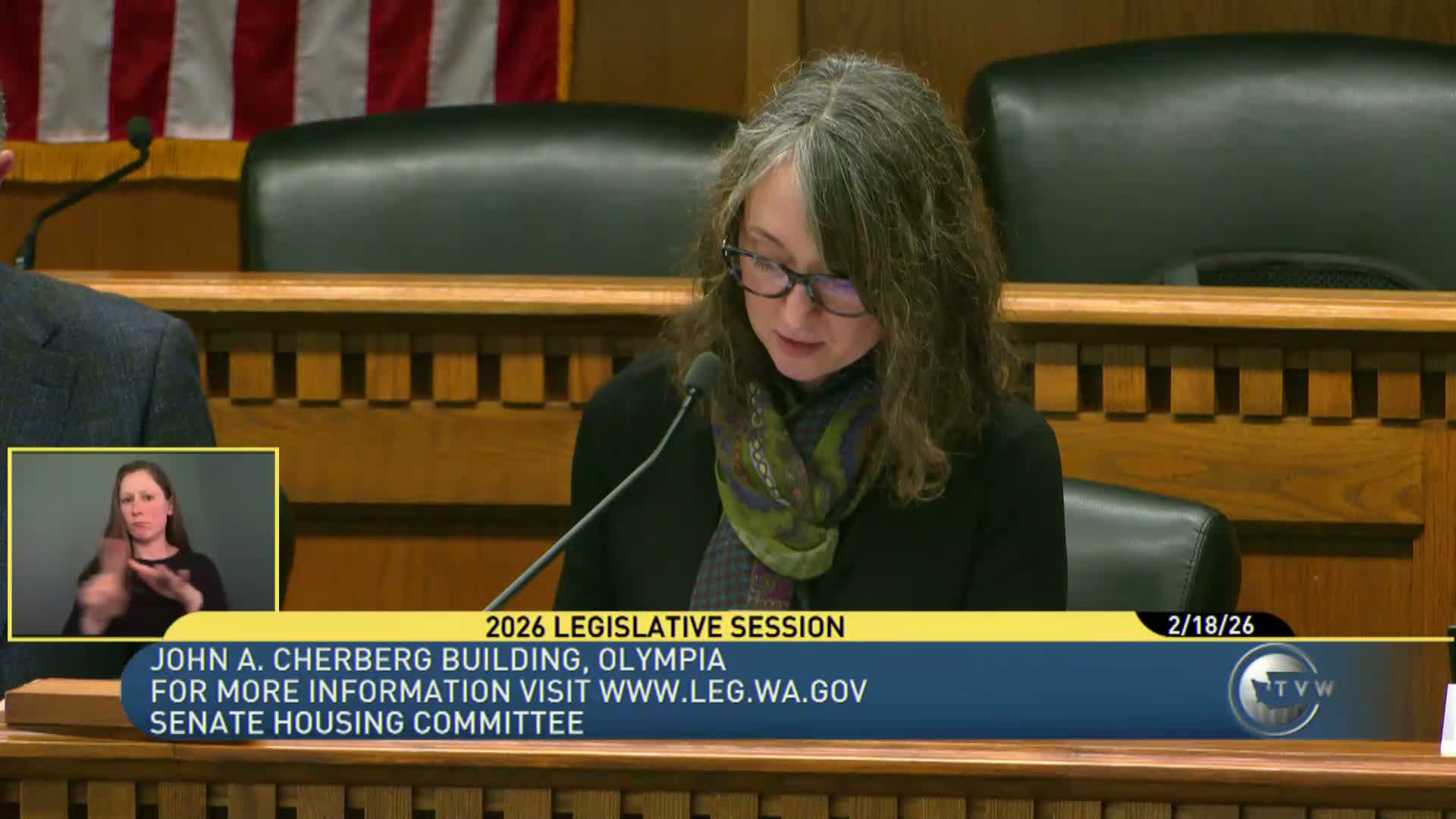
Lawmakers on the Senate Housing Committee on Feb. 18 advanced companion bills to remove a certified‑mail mandate for rent‑increase notices, saying returned certified mail has left many tenants unaware of increases and created burdens for housing providers.
The Senate Housing Committee on Feb. 18 advanced substitute House Bill 2452 and House Bill 2664, measures that would roll back a recent change requiring certain rent‑increase notices to be served like unlawful‑detainer notices. Committee staff said the bills would permit landlords to use the same service methods required for other MHLTA notices — including ordinary mail and conspicuous posting — instead of insisting on certified mail when a notice is mailed from within the state.
Rep. Veil Connors, the prime sponsor, told the committee the bills respond to an unintended consequence of last year’s legislation that made “every single notice … have to be sent via certified mail, including rent increase notices.” She said certified mail often is returned unclaimed and that some tenants “don’t have time to go get their mail at the post office,” creating missed notices and extra costs for housing providers.
John (Ben) and other committee staff explained that the Manufactured Mobile Home Landlord‑Tenant Act requires certain notices and that the proposed fix removes the requirement that rent‑increase notices be served in the same manner as unlawful‑detainer notices. Staff said no fiscal note was requested for the manufactured‑housing bill and that the change would deem service complete when a mailed copy is properly deposited from within the state (in the case of HB 2664).
Supporters at public testimony described operational burdens from the certified‑mail rule. William Zimmerman, a property manager, said the current practice requires printing multiple copies, travel to properties, door‑posting and mailing that “adds up” and provides little tenant benefit; industry representatives estimated substantial time and printing costs. Jake Mason of the Washington Multifamily Housing Association urged the committee to adopt the change to improve timely notice delivery and reduce administrative burden.
The committee adopted a motion to suspend the five‑day notice rule to hear the bills and closed the public hearing after testimony; no formal roll‑call was taken in public for a final passage in the meeting, but committee staff carried the bills forward for further consideration.
The next procedural steps will be committee action on a recommendation and any subsequent referral to the rules or floor process.