
Committee hears bill to double device‑use penalties in school and playground speed zones
Get AI-powered insights, summaries, and transcripts
Subscribe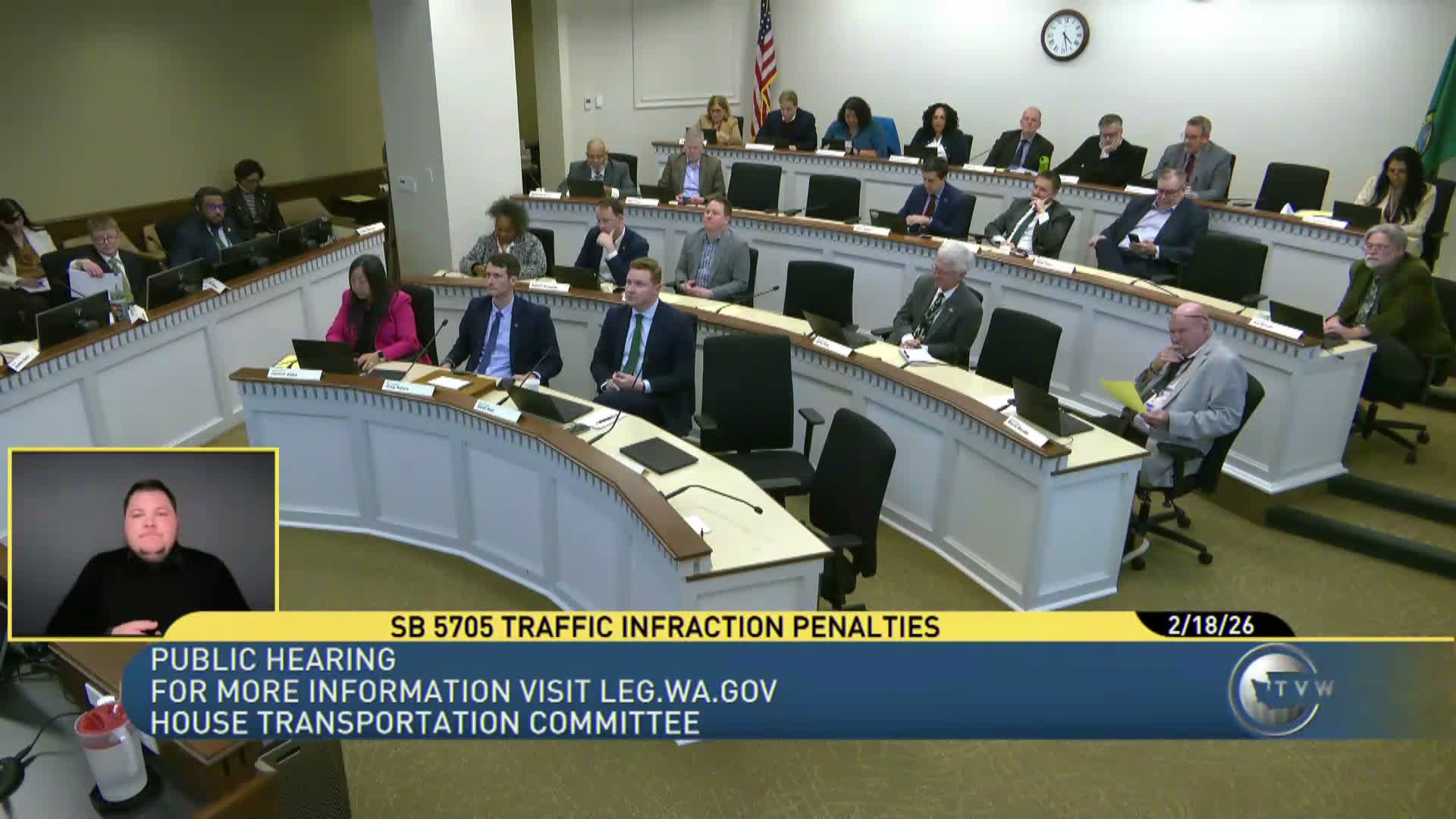
Summary
ESSB 5705 would make use of personal electronic devices while driving a traffic infraction and double penalties when the violation occurs in marked school or playground speed zones; agency staff cited rising distracted‑driving fatalities and local training costs in fiscal notes.
The House Transportation Committee heard testimony Feb. 18 on ESSB 5705, a bill that makes the use of personal electronic devices while driving a traffic infraction and increases penalties where the offense occurs in school or playground speed zones.
Jennifer Harris and staff outlined the measure’s penalty structure: a first infraction carries a base penalty that results in about $150 after fees and assessments, and the bill would double the penalty for infractions committed in school or playground speed zones — increasing the total first‑offense amount to approximately $248; second and subsequent infractions would also reflect the doubled assessments in those zones. Staff said doubled penalty amounts in those zones could not be waived, reduced or suspended and that proceeds would be deposited into the school zone safety account to fund projects administered by the Washington Traffic Safety Commission.
Mark McKechnie of the Traffic Safety Commission urged the committee to support the bill, describing distracted driving as dangerous and noting that 2024 had the highest number of distracted‑driving‑involved deaths (138) since the 2017 law. He emphasized device use is often higher on lower‑speed, local roads where school zones are located, and said telematics data show device use patterns that align with the bill’s focus on school areas.
Committee members asked about behavioral causes for higher device use on local roads; staff suggested plausible explanations such as trip familiarity and typical trip start/end behavior and said local signage and enforcement messaging would be part of a broader compliance strategy. The fiscal note lists modest local costs for law enforcement training (one‑time) and some administrative updates to forms and tables.
The public hearing record for ESSB 5705 included the Traffic Safety Commission’s support and the committee closed testimony and moved to other agenda items; no vote was taken during the hearing.