Get Full Government Meeting Transcripts, Videos, & Alerts Forever!
Get email alerts on the Active Transportation topic
No spam. Unsubscribe anytime.
Bill to integrate active‑transportation planning into highway projects draws mixed praise and funding questions
Summary
ESSB 5581 would require WSDOT to identify existing or planned shared‑use and active‑transportation facilities and, in some cases, allow state projects to use those local or tribal facilities as mitigation; advocates said it modernizes definitions and improves safety while some local officials warned unfunded complete‑streets obligations could delay maintenance.
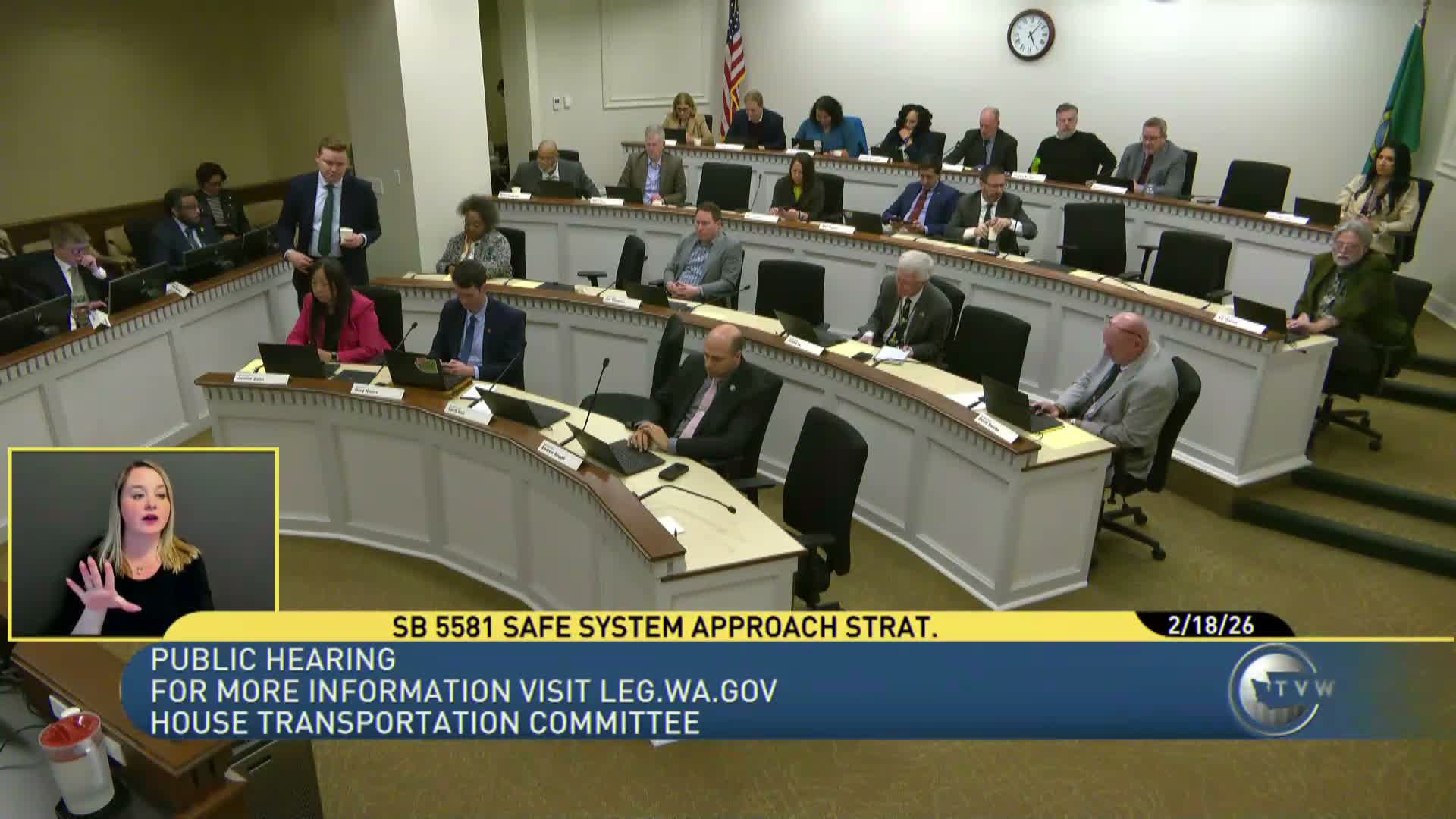
Committee staff briefed members on Engrossed Senate Bill 5581 and the committee received public testimony from transportation safety advocates, local governments and trail groups.
Sandy Myers, committee staff, said ESSB 5581 integrates shared‑use paths and active‑transportation connections into state highway planning and construction, updates definitions for roundabouts and crosswalks, and requires WSDOT to coordinate with local and tribal jurisdictions to determine whether existing or planned active‑transportation facilities provide equal or better access to destinations. Where appropriate, WSDOT may treat these facilities as mitigation in lieu of constructing new facilities on state right of way.
Advocates said the bill will clarify statutory language and support multimodal safety. Bryce Aden of the Transportation Choices Coalition and Vicki Clark of Washington Bikes supported the bill as a practical update that will help the state implement Safe System and Complete Streets principles and meet road‑safety goals. Tim Homan, a Bellingham public‑works official, described a local example where allowing state funds to enhance a parallel route rather than building new facilities on the state route would better serve safety and active‑transportation goals.
Several local officials praised the bill’s safety aims but warned about unfunded mandates. Tracy Furutani, council chair of Lake Forest Park, said routine maintenance projects that cross the $500,000 threshold can trigger complete‑streets obligations that exceed available funding and therefore delay necessary repairs. Council Member Klitschke (Spokane) urged clarity about mitigation and cost allocation to avoid expensive retrofits and unnecessary right‑of‑way acquisition.
Staff described a fiscal note indicating no expected net fiscal impact to WSDOT because the department anticipates exercising its new authority only when cost neutral or cost saving; local officials noted that incremental costs could fall to cities if additional improvements are required. The committee closed the public hearing after hearing supporters and cautionary local testimony and adjourned to brief caucuses to review the bills.