
Committee hears support for increasing distracted‑driving penalties in school and playground zones
Get AI-powered insights, summaries, and transcripts
Subscribe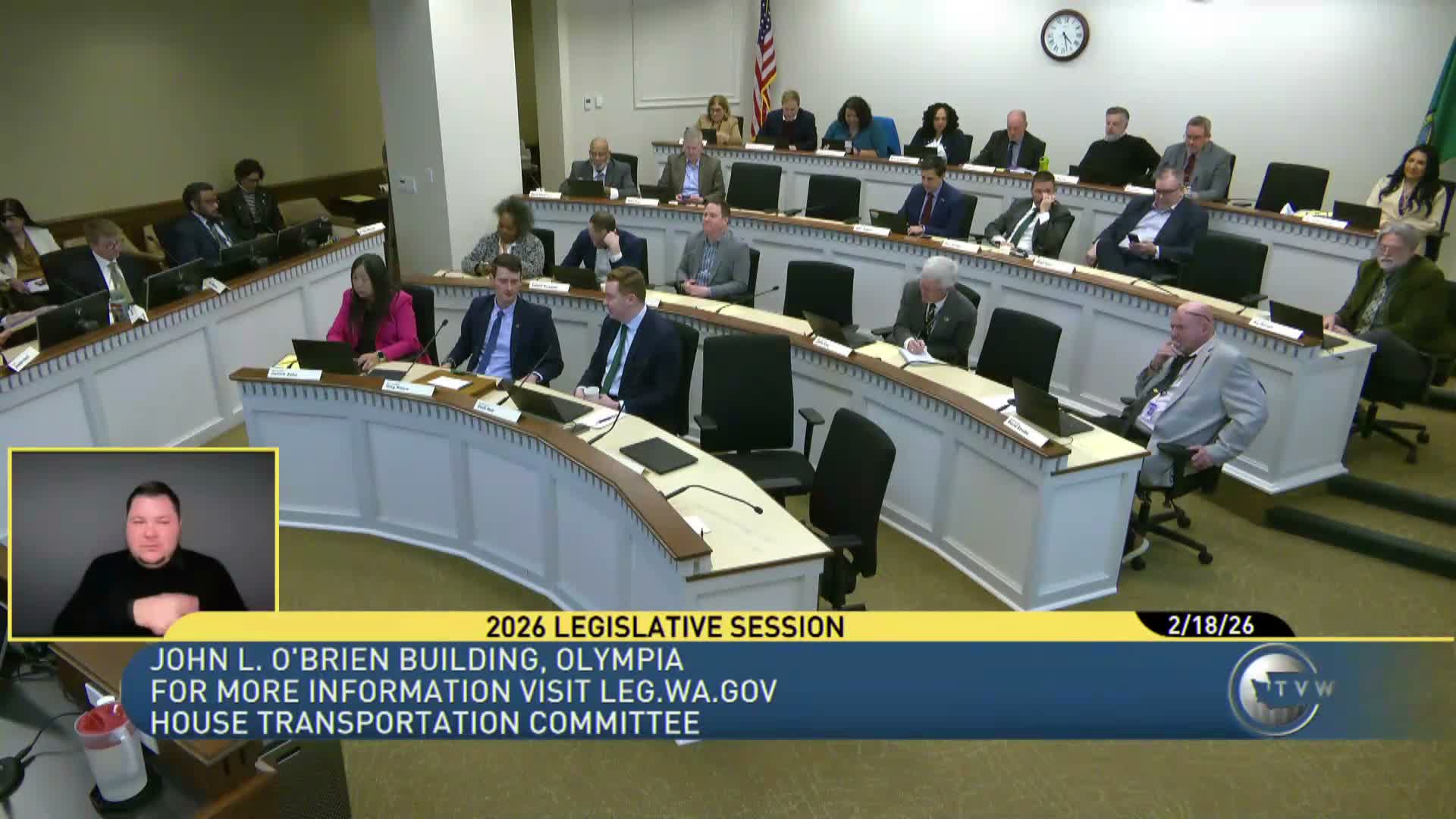
Summary
ESSB 5705 would double base penalties for using a personal electronic device while driving in school playground and crosswalk speed zones, deposit doubled amounts into a school zone safety account, and include non‑waivable provisions; the Traffic Safety Commission and other witnesses urged support citing a rise in distracted‑driving fatalities.
Committee members heard a briefing and public testimony on Engrossed Senate Bill 5705, which raises penalties for use of personal electronic devices while driving in designated school playground and crosswalk speed zones.
Committee staff explained the bill’s mechanics: the base civil penalty for a first device‑use infraction would be increased (staff summarized the underlying fee structure, noting an illustrative total of $150 for a base first infraction that would increase to $248 when doubled for school/playground zones); second and subsequent infractions would be doubled as well. The bill also makes doubled penalty amounts non‑waivable and directs those revenues to the school zone safety account to fund local safety projects and pupil transportation safety work administered by the Washington Traffic Safety Commission.
Mark McKechnie, external relations director for the Washington Traffic Safety Commission, told the committee the measure would deter dangerous device use and protect vulnerable road users. "Distracted driving is dangerous because it takes a driver's eyes and attention off the road," McKechnie said, and he noted 2024 saw an increase in fatalities involving distracted drivers. He cited telematics evidence that device contact with screens is more common on lower‑speed, local roads — the very places where school zones are located — supporting the bill’s targeted approach.
Members questioned behavioral drivers of device use close to home, whether the policy would be enforced consistently, and how communities would communicate increased penalties. Sponsor Marco Lias said the bill anticipates local signage (similar to "fines double" school‑zone signs) and relies on local law enforcement for enforcement. The committee also reviewed a fiscal note that identified one‑time training costs to local law enforcement and administrative adjustments to court forms; local governments listed a one‑time law‑enforcement training cost of roughly $60,000 and the Office of Administrative Hearings listed a one‑time impact for form and table updates.
The committee closed the public hearing after testimony and moved on to the next agenda item. The bill is positioned as a targeted safety intervention pending scheduling action and any amendments developed from committee follow‑up.