Get Full Government Meeting Transcripts, Videos, & Alerts Forever!
Bill would auto-qualify Passport to Careers students for Washington College Grant
Summary
Substitute Senate Bill 5,963 would automatically make eligible Passport to Careers participants income-eligible for the Washington College Grant beginning in 2026–27 and align need calculations with the federal student aid index; witnesses said it would reduce barriers for former foster and unaccompanied homeless youth.
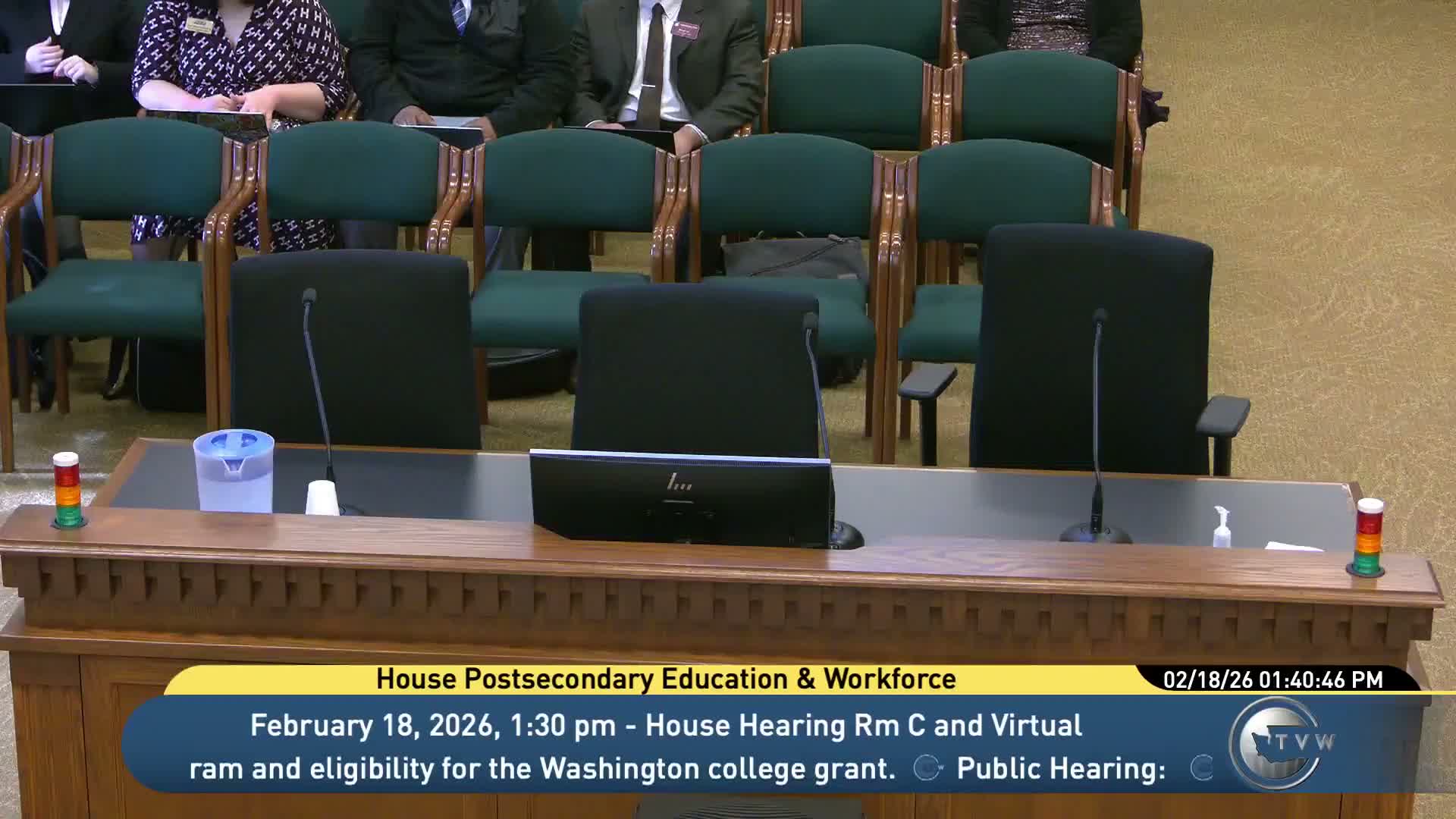
The committee heard Substitute Senate Bill 5,963 on Feb. 18, a measure that would automatically qualify students enrolled in the Passport to Careers program for the Washington College Grant beginning in the 2026–27 academic year and align the program’s financial-need calculation with the federal student aid index.
Staff presented the bill and said it also requires the Office of Student Financial Assistance to deposit Passport to Careers funds into the state financial aid account so appropriations…
Already have an account? Log in
Subscribe to keep reading
Unlock the rest of this article — and every article on Citizen Portal.
- Unlimited articles
- AI-powered breakdowns of topics, speakers, decisions, and budgets
- Instant alerts when your location has a new meeting
- Follow topics and more locations
- 1,000 AI Insights / month, plus AI Chat