Washington committee hears competing views on bill to distribute state stockpile of abortion medication
Loading...
Summary
Lawmakers heard testimony for and against SSB 5917, which would clarify how the state can donate or sell previously purchased mifepristone and misoprostol and authorize the Department of Corrections to coordinate distribution to health providers and tribal organizations.
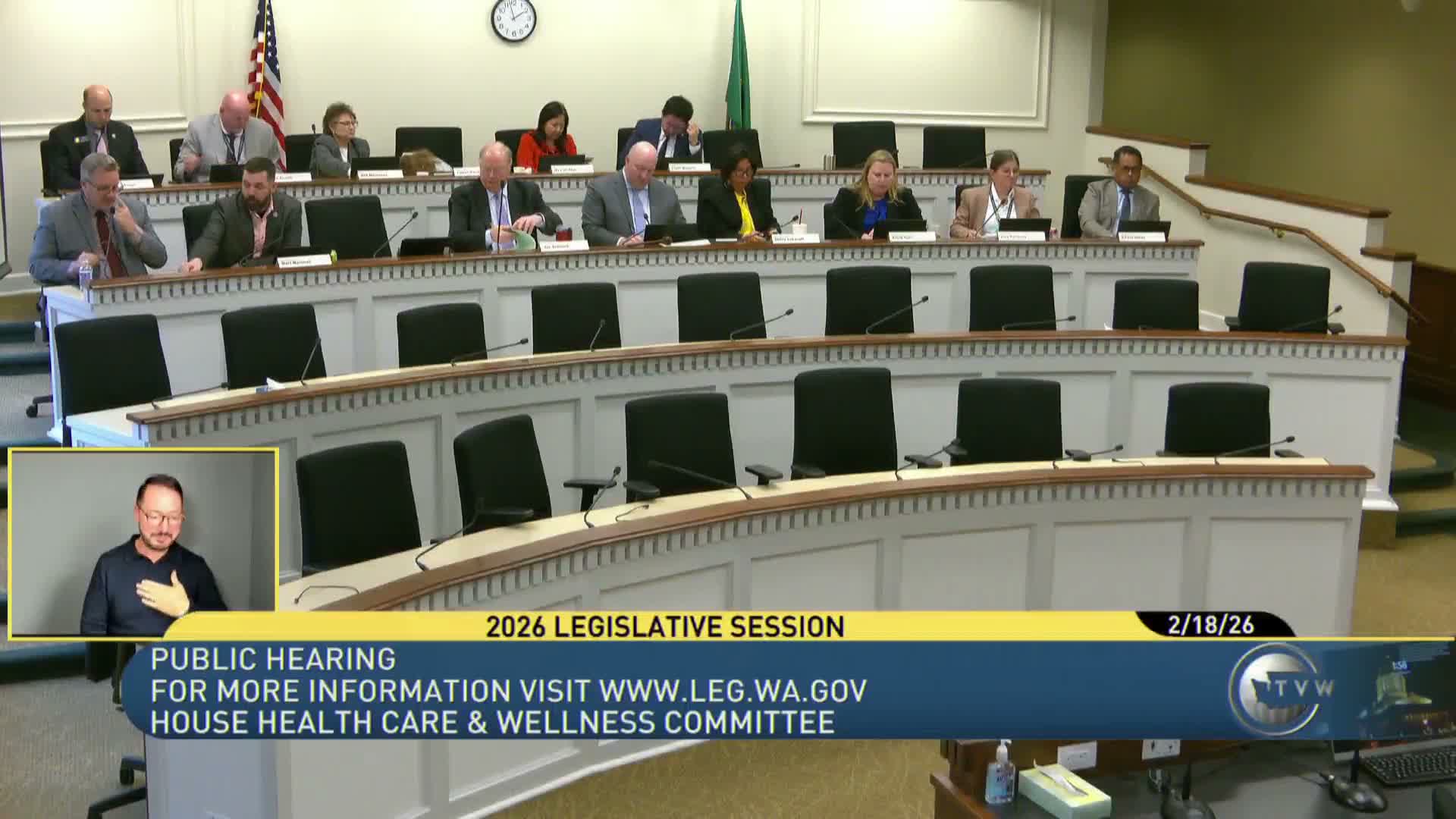
The Washington House Health Care and Wellness Committee heard emotional testimony Feb. 18 on SSB 5917, a bill that would change how the state distributes a stockpile of medication (mifepristone and misoprostol) purchased in 2023. Staff told the committee the bill would remove requirements that the Department of Corrections sell the drugs at cost plus a $5 handling fee and would allow DOC to prioritize bulk distribution to health providers and tribal health organizations while authorizing — but not requiring — payment for distribution.
Proponents said the change is a practical fix to ensure medication already purchased by the state can reach people who need it. Samantha Grama of the Washington State Women's Commission said the measure would not require additional state purchases and would “clarif[y] how the stockpiled medication that has already been purchased can be made available if and when necessary.” Pro‑choice advocates, including Gabby Nazary of Pro Choice Washington, told the committee the DOC was chosen for its statewide pharmacy infrastructure and that the bill removes restrictive conditions that make distribution difficult.
Opponents framed the proposal as wasteful or unethical. Eric Lundberg, a pastor testifying remotely, urged lawmakers to vote no and called the pills “life‑stealing,” while Theresa Shrimp, a retired attorney, said the original purchase was “millions of taxpayer dollars wasted” and questioned transparency and accounting for the stockpile.
Clinicians who testified in support emphasized safety and access. Dr. Zoe Taylor, a family physician who works with miscarriage and abortion care hotlines, said mifepristone and misoprostol are “extremely safe and effective” and warned the state is letting medication expire while patients lack local access. Department of Health policy director Megan Veith said the department and tribal partners preferred the state continue providing patient‑centered accreditation and distribution services rather than moving to national systems that can be burdensome.
No formal action or vote was recorded during the hearing. Chair closed public testimony on the bill and the committee returned to its remaining agenda items. The bill will next be considered through the legislature’s regular amendment and scheduling process.